## Image: Action Control Examples
### Overview
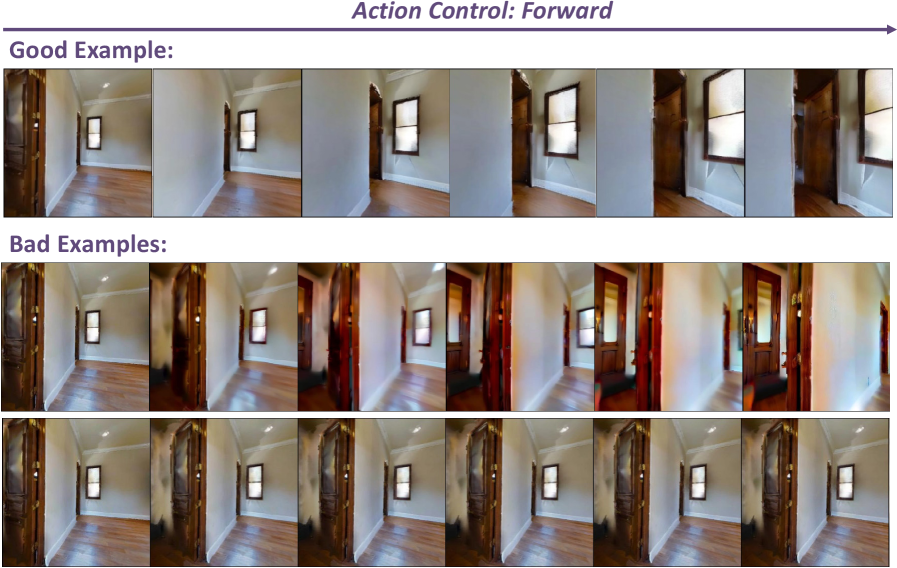
The image presents examples of "Good" and "Bad" action control, specifically for the "Forward" action. It shows a sequence of images depicting a hallway, with the "Good Example" row showing a consistent and clear progression forward, while the "Bad Examples" rows show distorted or inconsistent movement.
### Components/Axes
* **Title:** Action Control: Forward
* **Rows:**
* Good Example: (Top row)
* Bad Examples: (Middle and Bottom rows)
* **Content:** Each row contains a sequence of images depicting a hallway.
### Detailed Analysis
* **Good Example:** The top row shows a sequence of images that smoothly transition forward through a hallway. The perspective and lighting are consistent across the images, creating a clear sense of movement.
* **Bad Examples:** The middle and bottom rows show sequences of images that are distorted or inconsistent. The perspective shifts abruptly, the lighting changes erratically, and the overall sense of forward movement is disrupted. The images in these rows appear blurry or warped.
### Key Observations
* The "Good Example" demonstrates a smooth and consistent forward movement.
* The "Bad Examples" demonstrate distorted, inconsistent, or erratic movement.
### Interpretation
The image illustrates the difference between successful and unsuccessful action control in a simulated environment. The "Good Example" represents a desired outcome where the agent moves forward smoothly and predictably. The "Bad Examples" highlight potential problems with the action control system, such as jerky movements, disorientation, or failure to maintain a consistent trajectory. The image suggests that the action control system needs to be refined to avoid the issues demonstrated in the "Bad Examples". The consistent perspective and lighting in the "Good Example" are key indicators of successful action control, while the distortions and inconsistencies in the "Bad Examples" indicate failures in the system.