\n
## Code Snippet: C Function for Sequence Creation and Memory Management
### Overview
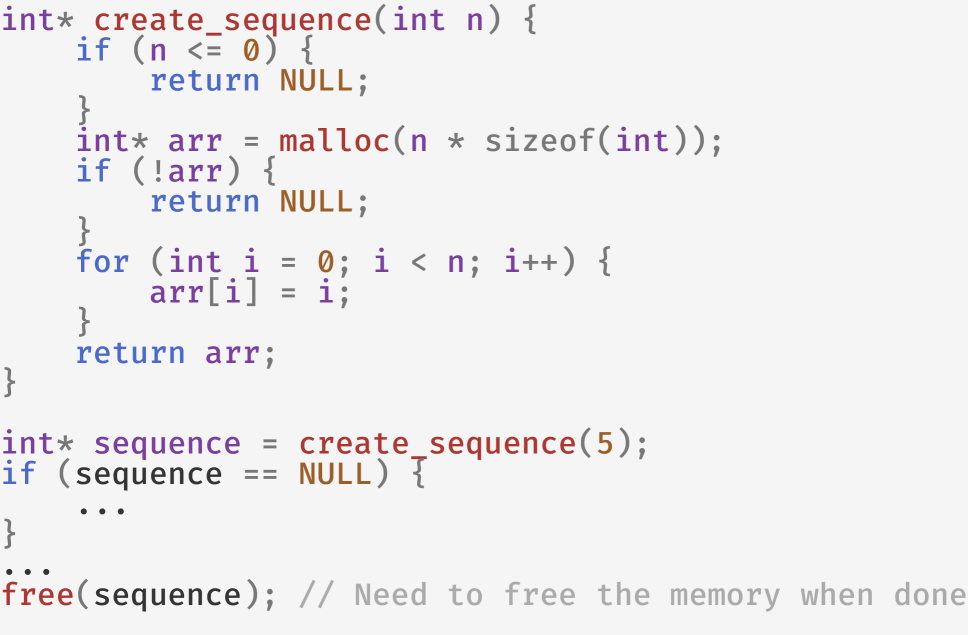
The image presents a C code snippet defining a function `create_sequence` that dynamically allocates an integer array of size `n` and initializes it with values from 0 to `n-1`. It also demonstrates how to call this function and the importance of freeing the allocated memory.
### Content Details
The code consists of two main parts: the function definition and an example of its usage.
**1. Function Definition:**
```c
int* create_sequence(int n) {
if (n <= 0) {
return NULL;
}
int* arr = malloc(n * sizeof(int));
if (!arr) {
return NULL;
}
for (int i = 0; i < n; i++) {
arr[i] = i;
}
return arr;
}
```
* **Function Signature:** `int* create_sequence(int n)` - The function takes an integer `n` as input and returns a pointer to an integer array.
* **Error Handling:** If `n` is less than or equal to 0, the function returns `NULL`.
* **Memory Allocation:** `int* arr = malloc(n * sizeof(int));` - Dynamically allocates memory for an integer array of size `n`.
* **Allocation Failure Check:** `if (!arr) { return NULL; }` - Checks if the memory allocation was successful. If not, it returns `NULL`.
* **Initialization Loop:** `for (int i = 0; i < n; i++) { arr[i] = i; }` - Initializes the array elements with values from 0 to `n-1`.
* **Return Value:** `return arr;` - Returns a pointer to the newly created and initialized array.
**2. Function Usage Example:**
```c
int* sequence = create_sequence(5);
if (sequence == NULL) {
...
}
free(sequence); // Need to free the memory when done
```
* **Function Call:** `int* sequence = create_sequence(5);` - Calls the `create_sequence` function with `n = 5`, allocating an array of 5 integers.
* **Null Check:** `if (sequence == NULL) { ... }` - Checks if the function returned `NULL`, indicating a memory allocation failure. The `...` suggests further error handling would be implemented here.
* **Memory Deallocation:** `free(sequence);` - Deallocates the memory pointed to by `sequence` using the `free` function. A comment explicitly states the importance of this step to prevent memory leaks.
### Key Observations
* The code demonstrates a common pattern for dynamically allocating and initializing arrays in C.
* The inclusion of error handling (checking for `n <= 0` and `malloc` failure) is good practice.
* The comment `// Need to free the memory when done` highlights the crucial aspect of memory management in C. Failure to `free` allocated memory leads to memory leaks.
* The `...` in the error handling block suggests incomplete code.
### Interpretation
This code snippet illustrates a fundamental concept in C programming: dynamic memory allocation. The `create_sequence` function provides a way to create an array of a size determined at runtime. The use of `malloc` allows the program to request memory from the heap, which is essential when the array size is not known at compile time. However, dynamic memory allocation comes with the responsibility of explicitly deallocating the memory when it is no longer needed, using `free`. The example demonstrates this best practice, emphasizing the importance of preventing memory leaks. The code is a simple but effective illustration of how to manage memory in C, a skill critical for writing robust and efficient programs.