\n
## Photographs: Interior Scenes - Likely Religious or Cultural Spaces
### Overview
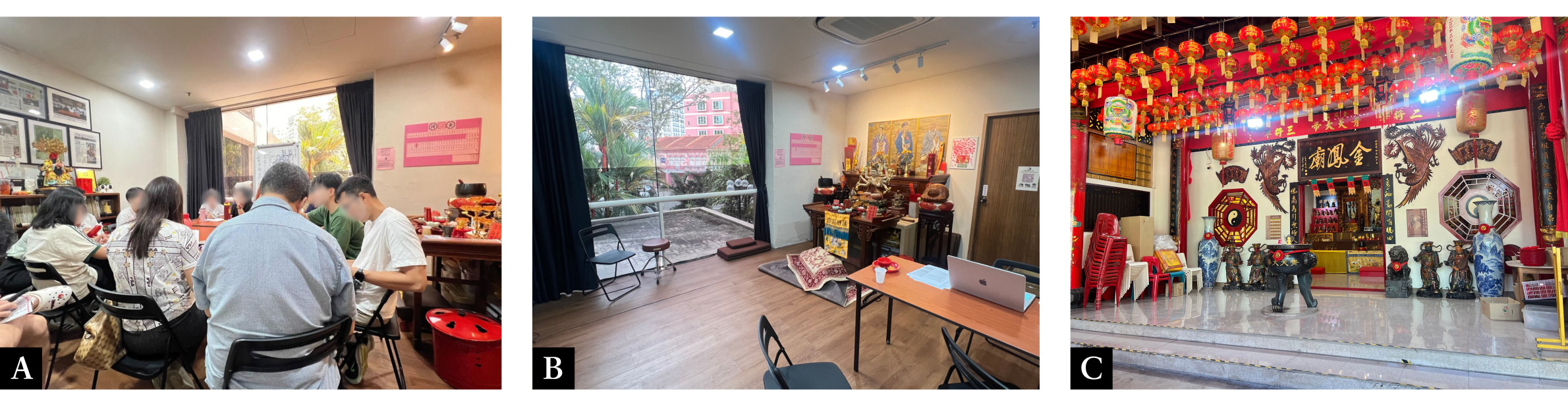
The image presents three separate interior photographs (labeled A, B, and C) depicting what appear to be spaces associated with religious or cultural practices, potentially Chinese folk religion or a related tradition. The scenes feature altars, offerings, and individuals engaged in activities that suggest reverence or ritual. The images lack quantitative data, so the analysis will focus on descriptive details.
### Components/Axes
There are no axes or charts in these images. The components are the physical objects and people within each scene.
### Detailed Analysis or Content Details
**Image A:**
* **Setting:** A room with a window overlooking a garden or outdoor area. The room is lit by overhead lighting.
* **People:** Four individuals are seated around a table. They appear to be engaged in a discussion or ritual. One person is wearing a white shirt and appears to be leading the interaction.
* **Altar/Offerings:** A red altar is visible, adorned with various objects, including what appear to be incense burners, fruit, and other offerings.
* **Wall Decorations:** The wall is decorated with framed pictures or calligraphy.
* **Furniture:** Black chairs are arranged around the table.
**Image B:**
* **Setting:** A room with a large window offering a view of a building exterior. The room is brightly lit.
* **Altar/Offerings:** An altar is present, with red decorations and offerings. A framed picture is visible above the altar.
* **Furniture:** A black chair and a small table are visible. A laptop is open on the table.
* **Decorations:** A circular patterned rug is on the floor.
**Image C:**
* **Setting:** A richly decorated room with a high ceiling. The room is illuminated by multiple light sources, including lanterns.
* **Altar/Offerings:** A prominent altar is the focal point, featuring statues, incense burners, and various offerings. The altar is decorated with red and gold elements.
* **Wall Decorations:** The walls are adorned with numerous lanterns and framed pictures.
* **Text (Chinese):** A large banner with Chinese characters is visible above the altar. The characters appear to read “廣賢堂” (Guǎngxián Táng), which translates to "Hall of Broad Wisdom" or "Hall of Extensive Virtue".
* **Statues:** Several statues of deities or figures are present on the altar.
* **Furniture:** Red stools are positioned in front of the altar.
### Key Observations
* **Red Color Scheme:** The color red is dominant in all three images, particularly in the altars and decorations. Red is a significant color in Chinese culture, symbolizing luck, prosperity, and happiness.
* **Altar Focus:** Each image centers around an altar, suggesting a space dedicated to religious or ancestral veneration.
* **Presence of Offerings:** The presence of offerings (fruit, incense, etc.) indicates ongoing rituals or practices.
* **Chinese Text:** The Chinese text in Image C provides a clue to the cultural context of the space.
* **Modern Elements:** The presence of a laptop in Image B suggests a blend of traditional practices with modern life.
### Interpretation
These images likely depict spaces used for Chinese folk religion or ancestral worship. The altars serve as focal points for communication with deities or ancestors. The offerings are presented as a sign of respect and gratitude. The Chinese text in Image C identifies the space as “Hall of Broad Wisdom”, suggesting a place for spiritual cultivation or communal worship. The combination of traditional elements (altars, offerings, red decorations) with modern elements (laptop) indicates that these practices are still relevant and integrated into contemporary life. The scenes suggest a strong emphasis on family, tradition, and spiritual beliefs. The images do not provide any quantitative data, but they offer valuable insights into the cultural and religious practices of the people who use these spaces. The scenes are likely private or semi-private, as they depict intimate rituals and personal devotion. The overall impression is one of reverence, respect, and continuity of tradition.