## [Photograph Composite]: Three Interior Spaces of a Cultural/Religious Center
### Overview
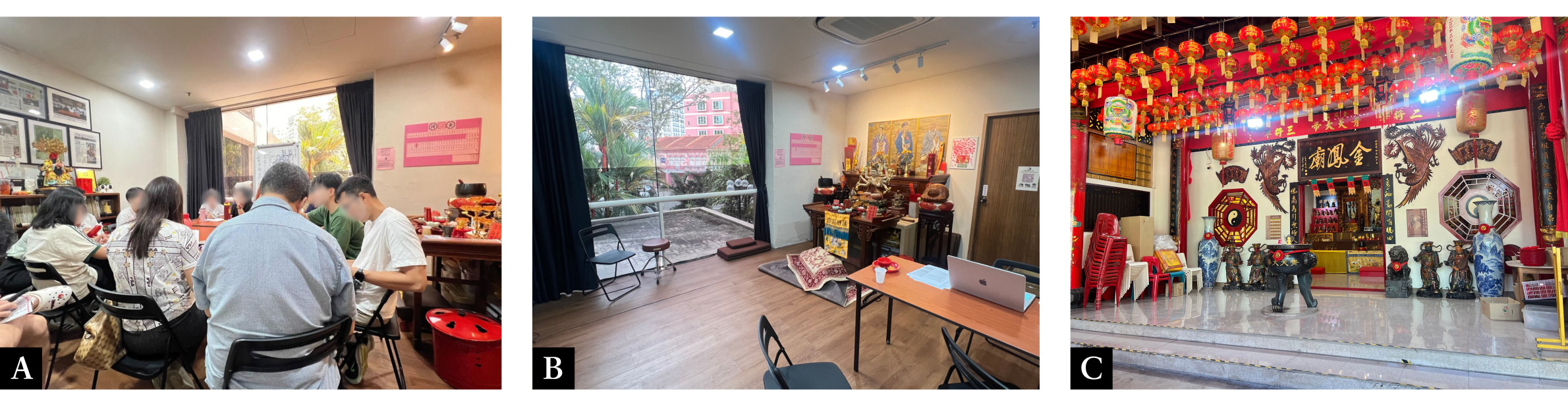
The image is a horizontal composite of three distinct photographs, labeled A, B, and C from left to right. Each photograph depicts a different interior space within what appears to be a single cultural or religious community center, likely of Chinese origin. The spaces range from a communal meeting area (A), to a hybrid shrine/meditation room (B), to a formal temple sanctuary (C). The composite serves to document the variety of functional environments within the institution.
### Components/Axes (Spatial & Functional Elements)
The image is segmented into three panels, each with a clear label in the bottom-left corner:
* **Panel A (Left):** A communal meeting or workshop room.
* **Panel B (Center):** A multi-purpose room combining a shrine with a modern workspace.
* **Panel C (Right):** A formal, ornately decorated temple hall.
### Detailed Analysis
**Panel A: Communal Meeting Room**
* **Subjects:** A group of approximately 8-10 people (faces blurred for privacy) are seated around tables, engaged in a focused activity, possibly writing, studying, or a ritual. They are dressed in casual modern clothing.
* **Setting:** A well-lit room with large windows covered by dark curtains. The walls are painted a light color.
* **Visible Text & Objects:**
* A large, pink **wall calendar** is mounted on the right wall. It features a monthly grid layout with Chinese characters for the days of the week and dates. The specific month/year is not legible.
* On the left wall, a series of **framed documents or photographs** are hung in a grid. The content is not decipherable.
* A small **altar or shrine** is visible in the back-left corner, with a golden statue and offerings.
* Tables are cluttered with papers, cups, and what appear to be ritual or craft supplies.
* A red plastic stool is in the foreground.
**Panel B: Hybrid Shrine & Workspace**
* **Setting:** A room with wooden flooring and a large floor-to-ceiling window offering a view of lush greenery and a pink building outside.
* **Key Elements:**
* **Shrine Area (Right):** A wooden altar table holds multiple statues (likely of deities), incense burners, candles, and offering vessels. Behind it, a large, colorful **religious painting or tapestry** depicts multiple figures.
* **Workspace (Foreground):** A modern wooden table holds an open **silver laptop** (Apple logo visible), a red cup, and papers. A black chair is pulled up to it.
* **Meditation Area (Center):** Floor cushions and a low table are placed on a rug near the window.
* **Wall Text:** A pink poster or notice is affixed to the wall near the window. The text is too small to read but appears to be informational.
* **Other Details:** A door is visible on the far right. Track lighting is installed on the ceiling.
**Panel C: Formal Temple Hall**
* **Setting:** A highly decorated, traditional temple interior with a polished stone floor.
* **Key Elements & Text:**
* **Central Signage:** A large, horizontal black sign with gold Chinese characters hangs above the main altar. The characters read **"金鳳廟"** (Jīn Fèng Miào), which translates to **"Golden Phoenix Temple."**
* **Vertical Couplets:** On either side of the altar are vertical red banners with gold calligraphy. The right banner partially reads **"...風調雨順"** (...fēng tiáo yǔ shùn), a common idiom meaning "favorable weather" or "peace and prosperity."
* **Altar:** The central altar features a large, ornate incense burner, statues, and vases. Behind it is a recessed shrine with more figures.
* **Decorations:** The ceiling is densely hung with dozens of **red paper lanterns** with gold tassels. The walls feature large, octagonal **Bagua (Eight Trigrams) mirrors** and intricate wood carvings of dragons and phoenixes.
* **Other Objects:** Stacks of red plastic chairs are on the left. Blue-and-white porcelain vases flank the altar. A yellow step ladder is visible on the far right.
### Key Observations
1. **Functional Progression:** The three images show a progression from a secular, communal space (A), to a transitional hybrid space (B), to a sacred, ritual space (C).
2. **Cultural Syncretism:** Panel B explicitly shows the integration of traditional religious practice (shrine) with modern technology (laptop), indicating an active, contemporary community.
3. **Linguistic Consistency:** All legible text is in **Chinese**. The primary identified name is "Golden Phoenix Temple" (金鳳廟).
4. **Material Culture:** The spaces contain a mix of traditional religious artifacts (statues, incense, lanterns, Bagua mirrors) and modern, utilitarian items (plastic stools, laptop, track lighting).
### Interpretation
This composite documents the physical and functional ecosystem of a Chinese cultural or religious center. It demonstrates how such an institution caters to different needs: community gathering and education (A), personal devotion and administrative work (B), and formal worship and ceremony (C). The presence of the laptop in the shrine room is particularly telling, suggesting the community's adaptation to modern life while maintaining traditional practices. The explicit naming of the "Golden Phoenix Temple" in Panel C provides a specific identity for the sacred core of this complex. The overall impression is of a living, active community space where tradition and modernity coexist.