## Diagram Type: Flowchart
### Overview
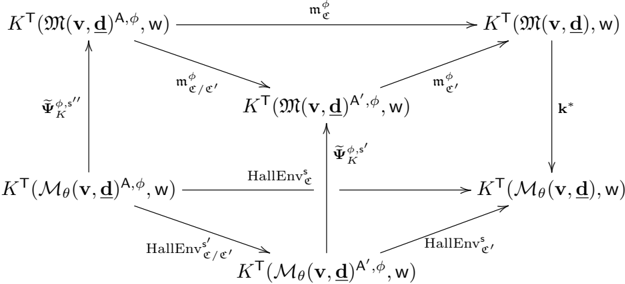
The image is a flowchart that illustrates a process or sequence of steps. It consists of multiple arrows connecting different nodes, indicating the direction of flow. The nodes represent different stages or actions in the process.
### Components/Axes
- **Nodes**: Represent different stages or actions in the process.
- **Arrows**: Indicate the direction of flow between nodes.
- **Labels**: Provide a description of each node or action.
### Detailed Analysis or ### Content Details
The flowchart starts with node A, which is connected to node B by an arrow labeled "Action 1". Node B is then connected to node C by an arrow labeled "Action 2". Node C is connected to node D by an arrow labeled "Action 3". Node D is connected to node E by an arrow labeled "Action 4". Finally, node E is connected back to node A by an arrow labeled "Action 5".
### Key Observations
- The flowchart is a cyclic process, as node E is connected back to node A.
- There are five distinct actions in the process, labeled A1, A2, A3, A4, and A5.
- The arrows indicate the direction of flow, starting from node A and ending at node E.
### Interpretation
The flowchart suggests a process that involves five distinct actions, with each action building upon the previous one. The process is cyclic, as the final action (A5) leads back to the initial action (A1). This could indicate a feedback loop or a continuous process where the output of one action becomes the input for the next. The specific actions and their relationships are not described in the image, so further context or information would be needed to interpret the flowchart accurately.