## Screenshot: Article on Reasons to Ban Bottled Water
### Overview
The image is a screenshot of an article titled "Reasons to Ban Bottled Water" with a black background and white text. It includes a photo of plastic bottles on a beach and discusses environmental, economic, and public health impacts of single-use bottled water.
### Components/Axes
- **Text Sections**:
- Title: "Reasons to Ban Bottled Water"
- Introduction: Paragraphs explaining the environmental, economic, and health costs of bottled water.
- "Environmental Impact" section with bullet points.
- Photo caption: "Plastic bottles littering a beach."
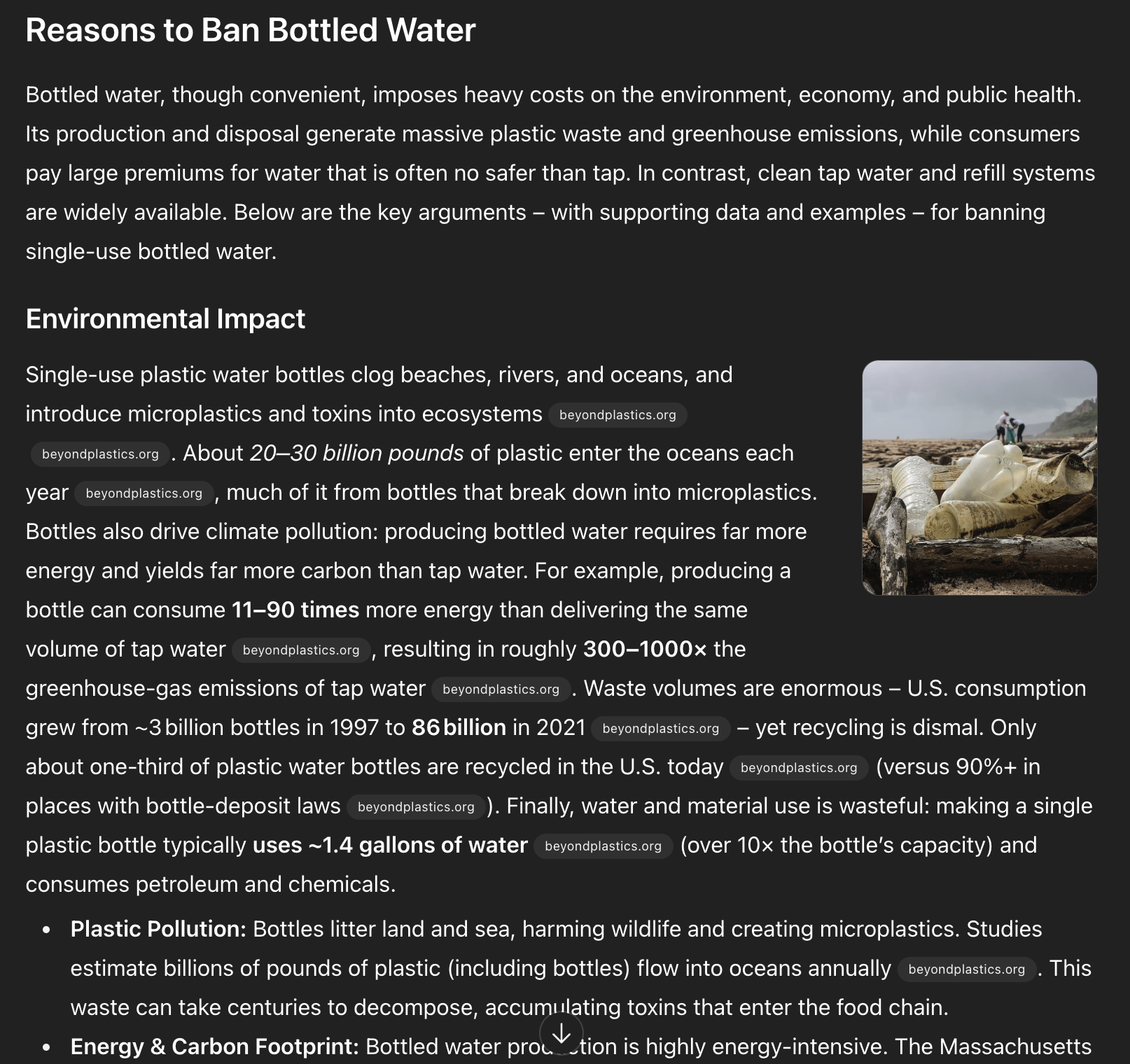
- **Photo**: A beach scene with plastic bottles, driftwood, and people in the background.
### Detailed Analysis
#### Text Content
1. **Introduction**:
- Bottled water production and disposal generate massive plastic waste and greenhouse emissions.
- Consumers pay premiums for water often no safer than tap water.
- Clean tap water and refill systems are widely available.
2. **Environmental Impact**:
- **Plastic Pollution**:
- Single-use bottles clog beaches, rivers, and oceans, introducing microplastics and toxins.
- **Data**: 20–30 billion pounds of plastic enter oceans annually (beyondplastics.org).
- Microplastics result from bottles breaking down.
- **Climate Pollution**:
- Producing bottled water requires 11–90x more energy than tap water.
- Example: Producing a bottle consumes 11–90x more energy than delivering tap water.
- Greenhouse-gas emissions from bottled water are 300–1000x higher than tap water.
- **Recycling**:
- U.S. recycling rate for plastic bottles is ~30% (vs. 90%+ in regions with bottle-deposit laws).
- **Resource Waste**:
- A single plastic bottle uses ~1.4 gallons of water (10x its capacity) and consumes petroleum/chemicals.
3. **Bullet Points**:
- **Plastic Pollution**:
- Billions of pounds of plastic flow into oceans annually, harming wildlife and creating microplastics.
- **Energy & Carbon Footprint**:
- Bottled water production is energy-intensive (e.g., Massachusetts example).
#### Photo Description
- **Visuals**:
- Plastic bottles (white, translucent, and brown) litter a sandy beach.
- Driftwood and debris are visible.
- People in the background (blurred) appear to be cleaning up.
- Overcast sky and distant hills.
### Key Observations
- The article emphasizes environmental harm from plastic waste, energy waste, and low recycling rates.
- Data sources (beyondplastics.org) are cited for statistics on plastic pollution, energy use, and recycling.
- The photo visually reinforces the text’s argument about plastic pollution.
### Interpretation
- The article argues for banning bottled water due to its disproportionate environmental costs compared to tap water.
- Key trends:
- High energy and water use in production.
- Low recycling rates and persistent plastic pollution.
- Microplastics entering ecosystems and food chains.
- The photo underscores the real-world impact of plastic waste, aligning with the article’s data.
- The article’s tone is critical of bottled water’s sustainability, advocating for systemic alternatives like refill systems.