\n
## Diagram: Conceptual Network
### Overview
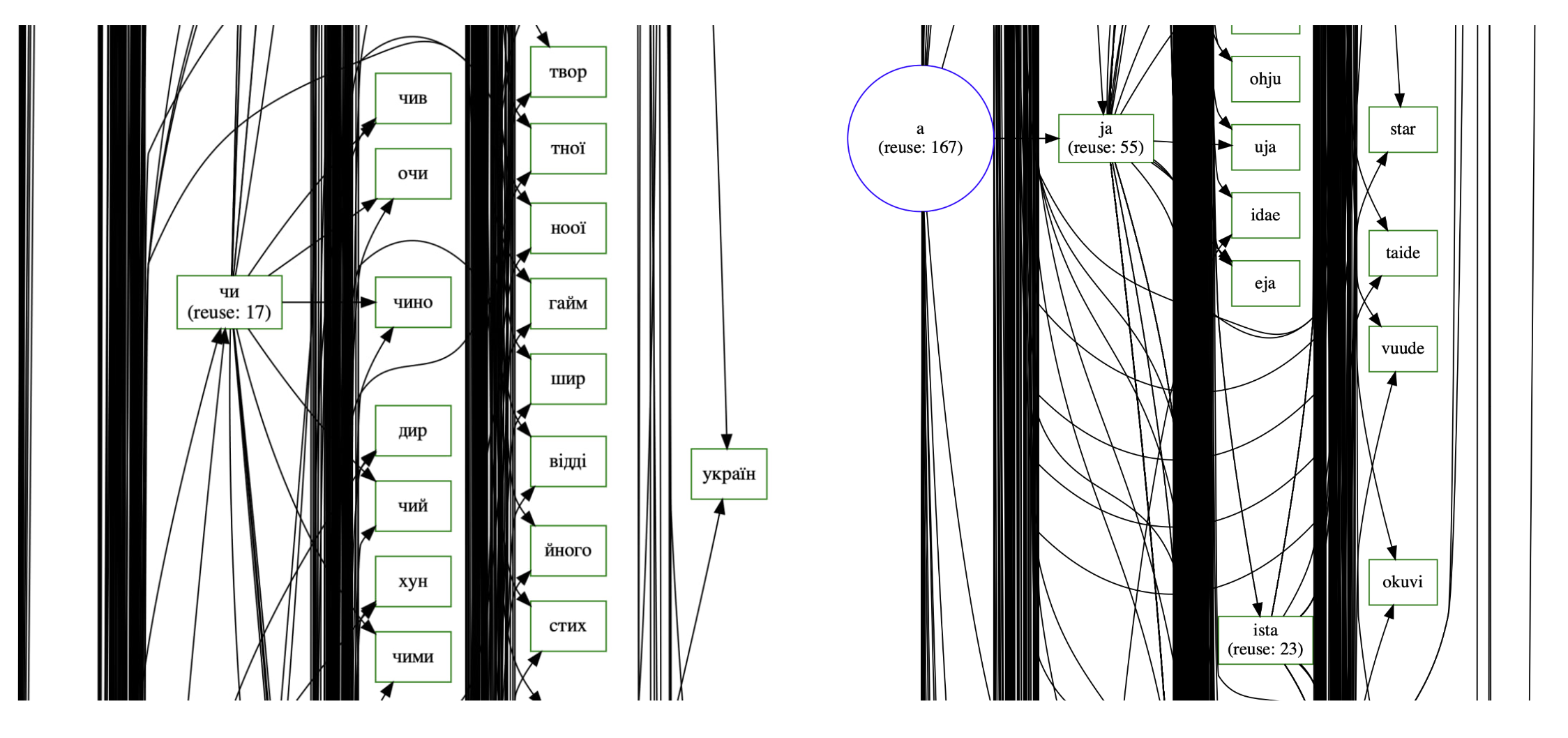
The image depicts a conceptual network diagram composed of interconnected nodes (ovals) representing concepts or ideas. The diagram is structured into three main vertical columns, with connections (arrows) indicating relationships between these concepts. Each node is labeled with a word, some of which are in Ukrainian. "Reuse" values are associated with some nodes, indicating a frequency or importance metric.
### Components/Axes
The diagram consists of:
* **Nodes:** Oval-shaped elements containing text labels.
* **Connections:** Arrows indicating relationships between nodes.
* **Reuse Values:** Numbers in parentheses next to some nodes, labeled as "reuse".
* **Columns:** Three distinct vertical groupings of nodes.
### Detailed Analysis or Content Details
**Left Column:**
* **чи (reuse: 17):** This node is central to the left column, with numerous connections originating from it.
* **чиb:** Connected to "чи".
* **очи:** Connected to "чи".
* **твоp:** Connected to "чи".
* **твої:** Connected to "чи".
* **ної:** Connected to "чи".
* **гайма:** Connected to "чи".
* **шир:** Connected to "чи".
* **двр:** Connected to "чи".
* **відці:** Connected to "чи".
* **україни:** Connected to "чи".
* **йного:** Connected to "чи".
* **стих:** Connected to "чи".
* **хун:** Connected to "чи".
* **чини:** Connected to "чи".
**Middle Column:**
* **a (reuse: 167):** This node is central to the middle column, with numerous connections originating from it.
* **ja (reuse: 55):** Connected to "a".
**Right Column:**
* **ohju:** Connected to "ja".
* **uja:** Connected to "ja".
* **idae:** Connected to "ja".
* **taide:** Connected to "ja".
* **vuude:** Connected to "ja".
* **okuvi:** Connected to "ja".
* **ista (reuse: 23):** Connected to "ja".
**Language Identification:**
The labels within the nodes are a mix of Cyrillic and Latin characters. The words "чи", "очи", "твої", "ної", "гайма", "шир", "двр", "відці", "україни", "йного", "стих", "хун", "чини" are Ukrainian. The words "a", "ja", "ohju", "uja", "idae", "taide", "vuude", "okuvi", "ista" are not immediately identifiable as belonging to a common language.
**Connection Patterns:**
* The left column has a fan-like structure, with many nodes converging on "чи".
* The middle column has a similar structure, with nodes converging on "a".
* The right column has a fan-like structure, with nodes converging on "ja".
* There are numerous connections between the left and middle columns, all directed towards "a".
* There are numerous connections between the middle and right columns, all directed towards "ja".
### Key Observations
* The nodes "чи" and "a" have the highest number of incoming connections, suggesting they are central concepts in the network.
* The "reuse" values indicate the relative importance or frequency of these concepts. "a" has the highest reuse value (167), followed by "ja" (55), and then "ista" (23) and "чи" (17).
* The diagram appears to represent a hierarchical or associative network, where concepts are linked based on their relationships.
* The presence of Ukrainian words suggests a cultural or linguistic context for the network.
### Interpretation
This diagram likely represents a conceptual map or semantic network. The nodes represent concepts, and the connections represent relationships between them. The "reuse" values could indicate the frequency with which these concepts appear in a particular corpus of text or the strength of their association with other concepts.
The diagram suggests a flow of information or association from the Ukrainian concepts on the left, through the central nodes "чи" and "a", to the concepts on the right. The high "reuse" value of "a" suggests it is a particularly important or central concept in this network. The presence of both Ukrainian and other language labels suggests a potential bridging of cultural or linguistic domains.
The diagram could be used to visualize the relationships between ideas in a particular domain, such as literature, philosophy, or linguistics. It could also be used to identify key concepts and their connections in a given body of text. The diagram's structure suggests a hierarchical organization, with "a" and "ja" acting as central hubs for information flow. The diagram is a visual representation of abstract relationships, and its precise meaning would depend on the context in which it was created.