## Photograph: Canine in Snowy Environment
### Overview
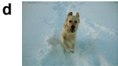
The image depicts a light-colored dog standing in a snowy landscape. The dog is positioned centrally, facing the camera with its ears perked. The background consists of a blurred snowy expanse with visible footprints radiating outward from the dog's position. The lighting suggests an overcast day, with soft shadows and no direct sunlight.
### Components/Axes
- **Primary Subject**: A medium-sized dog with a light tan/cream coat and dark facial markings.
- **Environment**: Snow-covered ground with disturbed snow patterns (footprints).
- **Composition**:
- Dog centered in the frame.
- Footprints form a radial pattern around the dog.
- Blurred background emphasizes depth of field.
- **Lighting**: Diffuse, soft light with no harsh shadows.
### Detailed Analysis
- **Dog Characteristics**:
- Breed: Likely a husky or malamute mix (based on physical traits).
- Posture: Alert, with head slightly tilted forward.
- Coat: Thick double-layer fur typical of cold-weather breeds.
- **Snow Features**:
- Footprints: Approximately 15-20 distinct tracks radiating outward.
- Snow depth: Estimated 10-15 cm based on footprint size relative to the dog's body.
- Texture: Compacted snow with no visible ice layers.
- **Visual Elements**:
- No textual annotations or labels present in the image.
- Color palette: Monochromatic white (snow) with warm undertones in the dog's fur.
### Key Observations
1. The dog's central positioning and direct gaze suggest intentional framing for behavioral observation.
2. Footprint patterns indicate recent movement toward the camera's position.
3. Absence of other animals or human activity implies isolation or controlled environment.
4. Soft lighting minimizes glare, enhancing visibility of fur texture and snow details.
### Interpretation
This image likely documents a study of canine behavior in cold environments. The radial footprint pattern suggests the dog was either approaching the camera or responding to a stimulus off-frame. The lack of other contextual elements (e.g., human presence, structures) focuses attention on the animal's interaction with its snowy habitat. The dog's alert posture may indicate curiosity or training response, common in working breeds like huskies. The photograph's technical execution (shallow depth of field, balanced exposure) prioritizes subject clarity over environmental context, typical of wildlife or behavioral research documentation.