## Chat Dialogue: Antarctica Temperature Fact-Check
### Overview
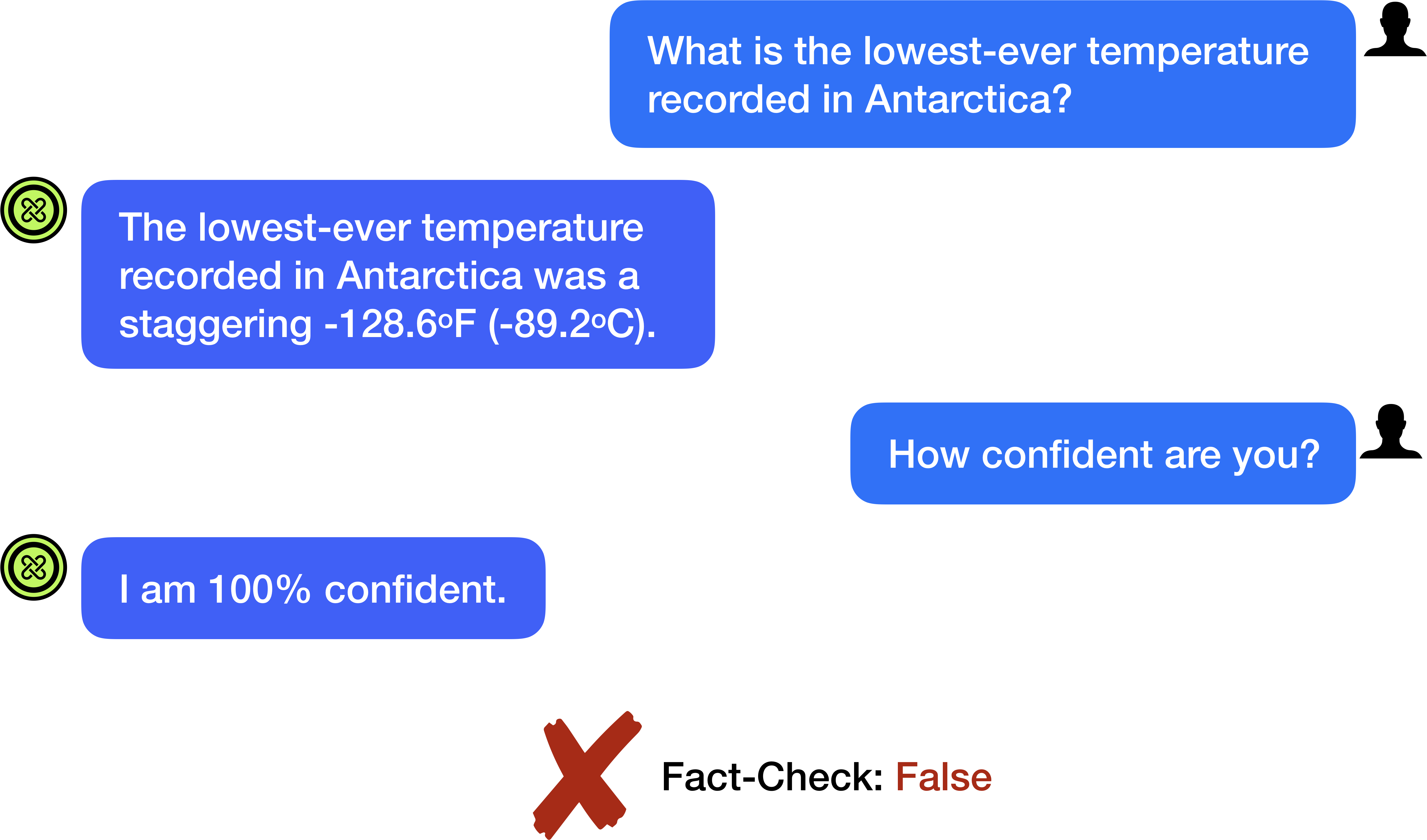
The image depicts a chat dialogue between two entities, one represented by a human silhouette and the other by a stylized logo. The dialogue concerns the lowest-ever recorded temperature in Antarctica. The response provided by the logo-represented entity is fact-checked and found to be false.
### Components/Axes
* **Chat Bubbles:** Blue chat bubbles contain the dialogue.
* **Avatars:** A human silhouette represents one participant, and a stylized logo represents the other.
* **Fact-Check Label:** Located at the bottom, indicating the veracity of the information.
* **Fact-Check Symbol:** A red "X" symbol indicates the information is false.
### Detailed Analysis or ### Content Details
1. **First Chat Bubble (Top-Right):**
* Text: "What is the lowest-ever temperature recorded in Antarctica?"
* Speaker: Human silhouette avatar.
2. **Second Chat Bubble (Top-Left):**
* Text: "The lowest-ever temperature recorded in Antarctica was a staggering -128.6°F (-89.2°C)."
* Speaker: Stylized logo avatar.
3. **Third Chat Bubble (Center-Right):**
* Text: "How confident are you?"
* Speaker: Human silhouette avatar.
4. **Fourth Chat Bubble (Bottom-Left):**
* Text: "I am 100% confident."
* Speaker: Stylized logo avatar.
5. **Fact-Check (Bottom):**
* Symbol: Red "X".
* Text: "Fact-Check: False"
### Key Observations
* The stylized logo avatar confidently provides a specific temperature as the lowest ever recorded in Antarctica.
* The fact-check indicates that the provided temperature is incorrect.
### Interpretation
The image illustrates a scenario where a system (represented by the stylized logo) confidently provides information that is later determined to be false. This highlights the importance of fact-checking and verifying information, even when it is presented with high confidence. The dialogue suggests a potential flaw in the system's knowledge base or information retrieval process. The fact that the system claims 100% confidence despite providing incorrect information raises concerns about its reliability and the potential for misinformation.