## Diagram: Theory of Mind Illustration
### Overview
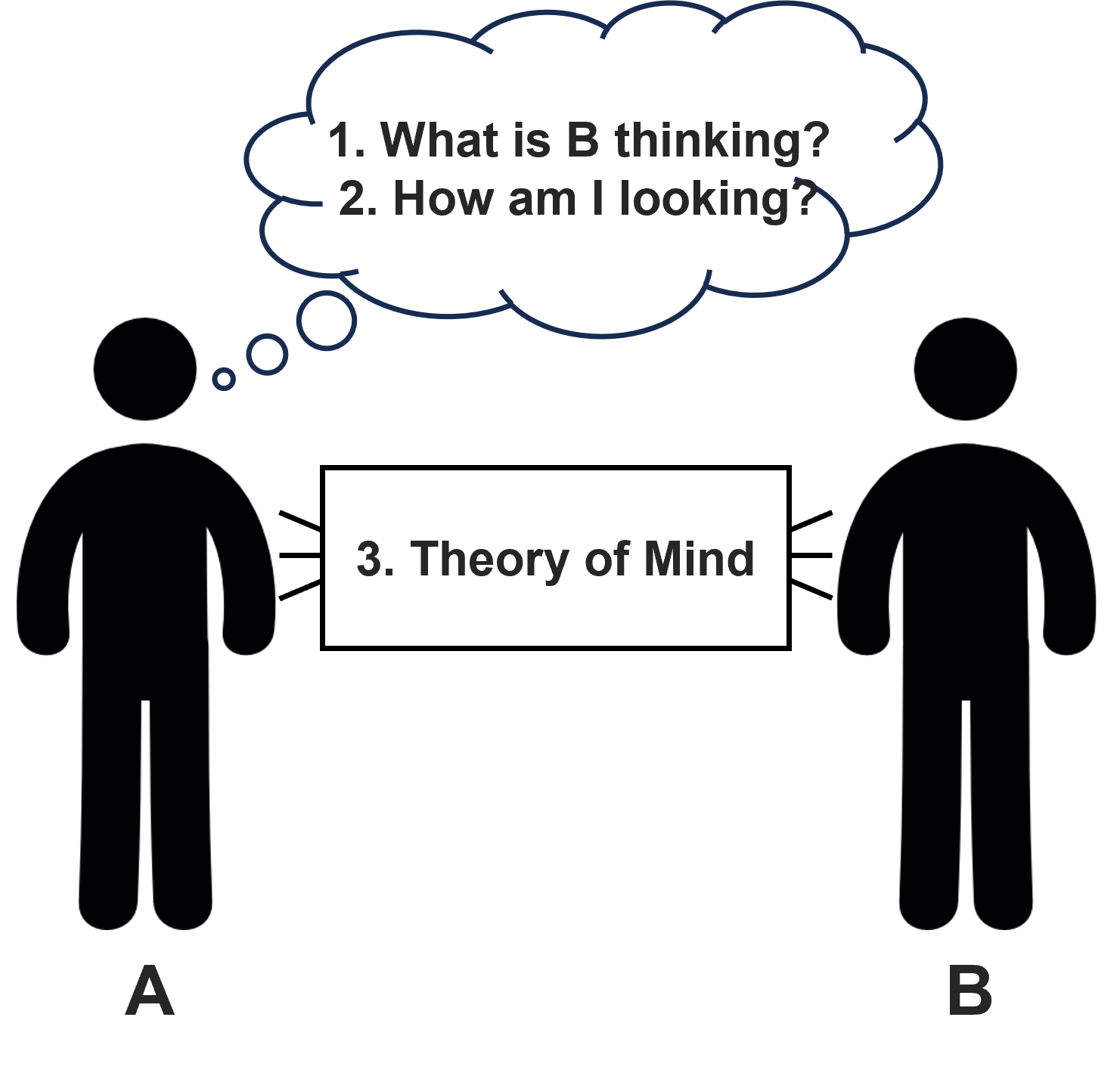
The image is a diagram illustrating the concept of "Theory of Mind." It depicts two stick figures, labeled A and B, with connecting elements representing thoughts and understanding.
### Components/Axes
* **Stick Figures:** Two black stick figures, labeled "A" on the left and "B" on the right.
* **Thought Bubble:** A navy blue thought bubble above figure A, containing the questions: "1. What is B thinking? 2. How am I looking?"
* **Theory of Mind Box:** A white rectangle with a black border positioned between the two figures, containing the text "3. Theory of Mind." Short black lines connect the box to the heads of both figures.
* **Labels:** The figures are labeled "A" and "B" below them, respectively.
### Detailed Analysis or ### Content Details
* **Figure A's Thoughts:** The thought bubble indicates that figure A is considering the thoughts of figure B and how they themselves are perceived.
* **Theory of Mind Connection:** The "Theory of Mind" box represents the cognitive ability to understand that others have beliefs, desires, intentions, and perspectives that are different from one's own. The lines connecting the box to the figures suggest a bidirectional understanding or exchange.
### Key Observations
* The diagram simplifies the complex concept of Theory of Mind into a visual representation.
* The thought bubble is associated with figure A, indicating that A is actively engaging in Theory of Mind processes.
* The "Theory of Mind" box acts as a central element connecting both figures, suggesting a shared or interactive understanding.
### Interpretation
The diagram illustrates the core idea of Theory of Mind, which involves understanding another person's mental state. Figure A is shown contemplating figure B's thoughts and self-perception, demonstrating an attempt to understand B's perspective. The "Theory of Mind" box symbolizes the cognitive framework that enables this understanding, suggesting that both individuals are involved in this process. The diagram highlights the importance of recognizing that others have different thoughts and perspectives, which is crucial for social interaction and communication.