\n
## Diagram: Theory of Mind Illustration
### Overview
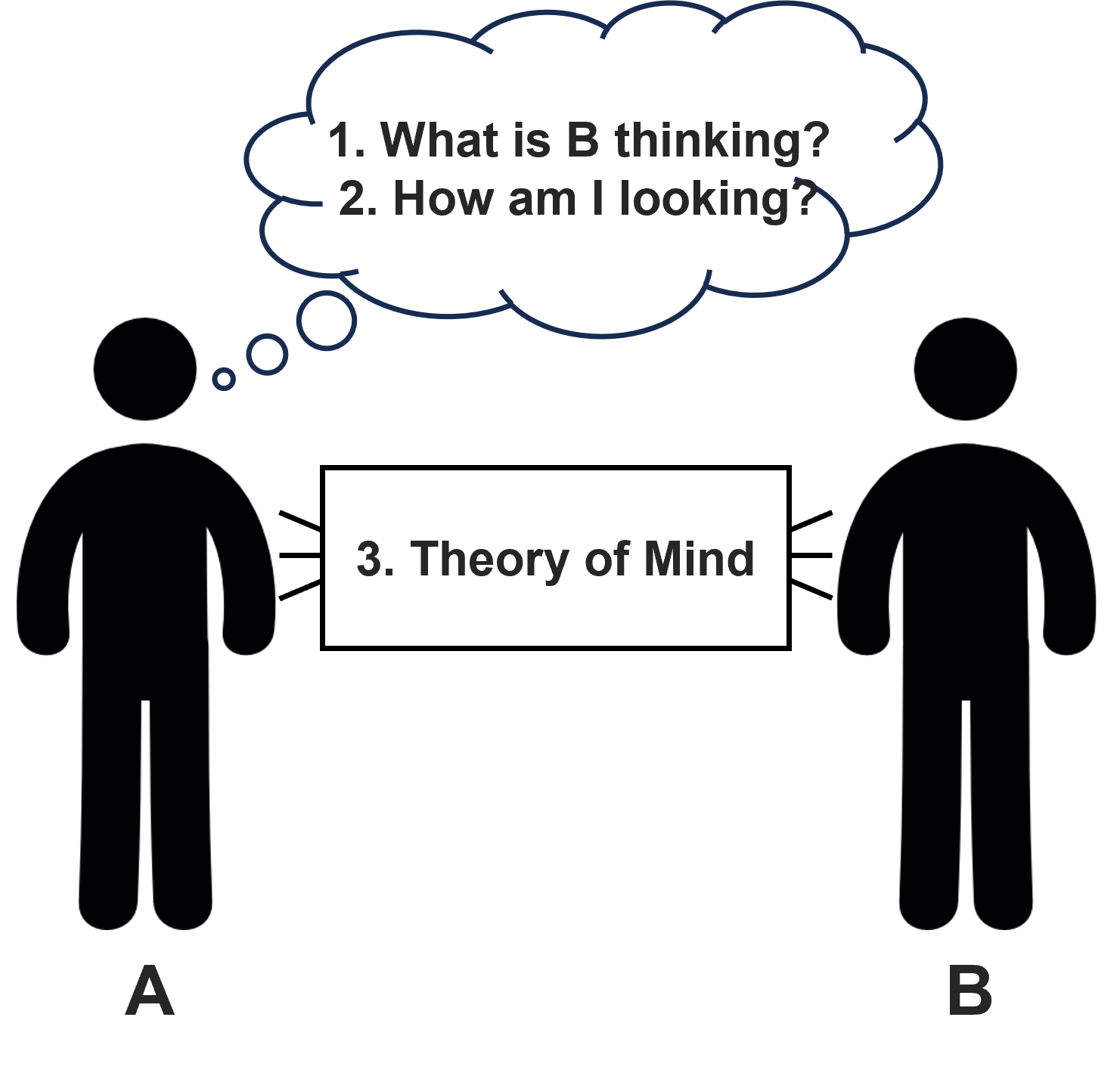
The image is a diagram illustrating the concept of "Theory of Mind." It depicts two human figures, labeled 'A' and 'B', with a thought bubble emanating from figure 'A'. The thought bubble contains two questions and a label defining the concept. The diagram uses simple shapes and text to convey a psychological idea.
### Components/Axes
* **Figures:** Two silhouetted human figures, labeled 'A' (left) and 'B' (right).
* **Thought Bubble:** A cloud-shaped bubble originating from figure 'A'.
* **Text within Thought Bubble:**
* "1. What is B thinking?"
* "2. How am I looking?"
* **Rectangle with Text:** A rectangular box with the text "3. Theory of Mind" and radiating lines, positioned between the figures.
* **Background:** A light gray background.
### Detailed Analysis or Content Details
The diagram presents a visual representation of the internal thought processes involved in understanding another person's perspective.
* **Figure A:** Positioned on the left side of the image. The thought bubble originates from this figure, indicating the source of the questions and the concept.
* **Figure B:** Positioned on the right side of the image. This figure is the object of figure A's consideration.
* **Question 1:** "What is B thinking?" - This question represents the attempt to understand the mental state of another person.
* **Question 2:** "How am I looking?" - This question represents self-awareness and considering how one's own actions or appearance might be perceived by others.
* **"Theory of Mind":** The label "Theory of Mind" is presented as the overarching concept that encompasses these questions. The radiating lines suggest that this concept is the result of considering the questions within the thought bubble.
### Key Observations
The diagram is conceptual and does not contain numerical data. It relies on visual representation and text to convey its message. The positioning of the figures and the thought bubble emphasizes the direction of thought – from 'A' towards 'B'. The numbering of the elements suggests a sequence of thought: first considering the other person's thoughts, then one's own presentation, and finally arriving at the concept of Theory of Mind.
### Interpretation
The diagram illustrates the core idea of "Theory of Mind," which is the ability to attribute mental states—beliefs, intents, desires, emotions, and knowledge—to oneself and to others. It suggests that understanding others requires both considering their perspective ("What is B thinking?") and being aware of how one is perceived ("How am I looking?"). The diagram highlights that Theory of Mind is not simply about knowing what others are thinking, but also about understanding how one's own actions and appearance influence those thoughts. The radiating lines from "Theory of Mind" suggest that it is a complex concept that arises from these considerations. The simplicity of the diagram makes it accessible for explaining this complex psychological concept.