\n
## Gauge: Color-Coded Scale
### Description
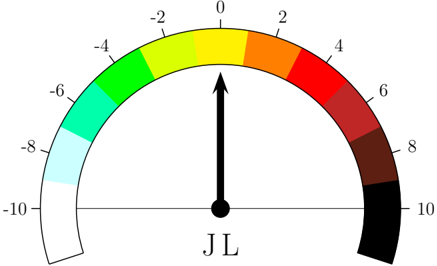
This image depicts a gauge with a color-coded scale, commonly used to represent a measurement or performance indicator. The gauge features a needle pointing to a specific value on the scale.
**Key Features:**
* **Scale:** The gauge has a circular scale with markings indicating different values.
* **Color Coding:** The scale is color-coded to provide a quick visual representation of the measurement's status. Typically:
* **Green:** Represents a satisfactory or optimal range.
* **Yellow:** Indicates a warning or caution zone.
* **Red:** Signals a critical or dangerous level.
* **Needle:** A pointer indicates the current value on the scale.
* **Units:** The scale is labeled with appropriate units of measurement (e.g., PSI, temperature, percentage).
* **Range:** The gauge displays a defined minimum and maximum value.
**Applications:**
* **Pressure Gauges:** Monitoring pressure levels in systems.
* **Temperature Gauges:** Displaying temperature readings.
* **Performance Indicators:** Tracking key performance metrics in business or manufacturing.
* **Fuel Gauges:** Indicating fuel levels in vehicles.
**Technical Details:**
| Component | Description |
|---|---|
| Scale | Circular arc with calibrated markings |
| Needle | Pointer indicating the measured value |
| Color Zones | Visual cues for status (Green, Yellow, Red) |
| Units | Measurement labels (e.g., PSI, °C, %) |
| Range | Minimum and maximum measurable values |
| Housing | Protective casing for the gauge mechanism |
### Visual Elements
* The gauge is typically enclosed in a protective housing.
* The face of the gauge is clear and easy to read.
* The needle is distinct and contrasts with the scale.
* The color coding is consistent and intuitive.
```