## Photograph: Crime Scene Investigation Office
### Overview
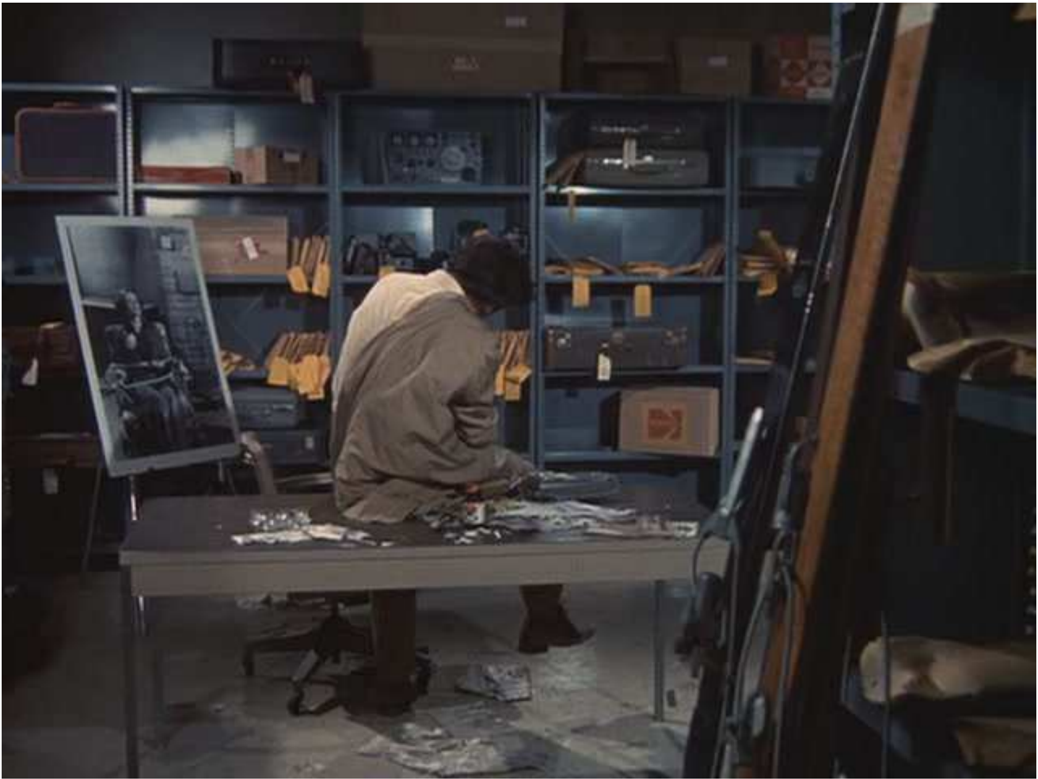
The image depicts a dimly lit, cluttered office or archive space, likely part of a crime investigation or forensic analysis setting. A person in a trench coat is seated at a desk covered in scattered papers, leaning forward with their head bowed, suggesting intense focus or distress. A framed black-and-white photograph of a person in a chair is mounted on an easel to the left, while shelves in the background hold labeled boxes, files, and equipment. The scene conveys a sense of urgency or secrecy.
### Components/Axes
- **Desk**: Central object, cluttered with papers, folders, and miscellaneous items.
- **Easel**: Holds a framed black-and-white photograph of a seated individual.
- **Shelves**: Blue metal shelving units filled with labeled boxes, file folders, and equipment (e.g., a typewriter, binders).
- **Lighting**: Dim, with a single overhead light casting shadows, emphasizing the tense atmosphere.
### Detailed Analysis
- **Desk Contents**: Papers are scattered haphazardly, with no discernible labels or text visible. A typewriter and a stack of folders are partially visible under the desk.
- **Photograph**: The black-and-white image on the easel shows a person in a chair, possibly a suspect or victim. No text or labels are visible on the photograph.
- **Shelves**: Boxes and files are labeled with yellow tags, but the text is illegible due to image resolution. A cardboard box with a red arrow symbol is visible on the lower shelf.
- **Person**: Wearing a trench coat, seated with their back to the viewer. Their posture suggests deep concentration or emotional strain.
### Key Observations
- **Cluttered Environment**: The disarray of papers and files implies a high-pressure or chaotic situation, possibly mid-investigation.
- **Photograph as Evidence**: The framed image on the easel is likely a critical piece of evidence, given its prominent placement.
- **Lighting and Mood**: The dim lighting and shadows create a suspenseful, investigative atmosphere.
### Interpretation
The scene suggests a narrative of a detective or investigator analyzing evidence in a high-stakes case. The photograph on the easel may represent a key clue or a person of interest, while the cluttered desk and shelves indicate a workspace overwhelmed by case details. The absence of visible text or labels leaves the specific context ambiguous, but the visual cues strongly imply a crime-solving scenario. The person’s posture and the chaotic environment hint at emotional or professional tension, possibly reflecting the gravity of the investigation.
**Note**: No textual data (labels, axis titles, legends, or embedded text) is present in the image. The analysis is based solely on visual elements and contextual inference.