## Image Analysis: Bridge Collapse
### Overview
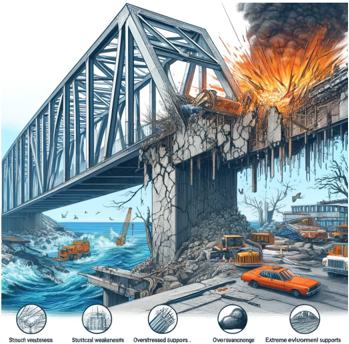
The image depicts a bridge that has partially collapsed, with a section of the bridge deck destroyed and debris falling. The image shows the structural damage and potential causes of the collapse.
### Components/Axes
The image contains the following visual elements:
* A steel truss bridge, partially collapsed.
* Debris and destruction around the collapsed section.
* Vehicles and construction equipment in the surrounding area.
* Water and land surrounding the bridge.
* Five circular insets at the bottom, each illustrating a potential cause of the collapse.
The five circular insets at the bottom are labeled as follows:
1. Stouch weakness
2. Stuttical weaknesses
3. Overstressed supports
4. Oversanchorage
5. Extreme evutement supports
### Detailed Analysis or Content Details
The bridge structure shows significant damage, with a large section of the deck missing and the supporting structure fractured. The surrounding area is filled with debris, indicating a violent collapse. The presence of vehicles and construction equipment suggests ongoing activity or rescue efforts.
The five circular insets at the bottom each illustrate a potential cause of the collapse:
1. **Stouch weakness:** Shows a close-up of a structural joint with signs of corrosion or degradation.
2. **Stuttical weaknesses:** Shows a close-up of a structural support with signs of cracking or deformation.
3. **Overstressed supports:** Shows a close-up of a structural support with signs of excessive stress or strain.
4. **Oversanchorage:** Shows a close-up of an anchorage point with signs of failure or slippage.
5. **Extreme evutement supports:** Shows a close-up of an abutment support with signs of damage or instability.
### Key Observations
The image highlights the catastrophic consequences of structural failure in bridges. The various insets suggest multiple potential causes, ranging from material degradation to design flaws.
### Interpretation
The image serves as a visual representation of the potential dangers associated with aging infrastructure and the importance of regular inspection and maintenance. The various causes of collapse illustrated in the insets emphasize the need for a comprehensive approach to bridge safety, considering factors such as material properties, structural design, and environmental conditions. The image suggests that a combination of factors may have contributed to the collapse, highlighting the complexity of bridge engineering and the need for careful attention to detail.