## Photograph: Three Scenes of a Curly-Coated Dog
### Overview
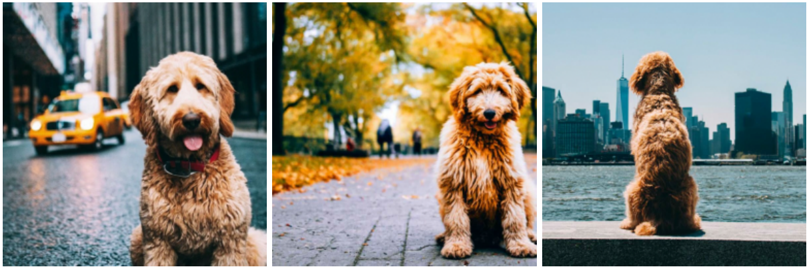
The image is a triptych of three distinct photographs featuring a single curly-coated dog (likely a Labradoodle or similar breed) in different environments. Each panel captures the dog in a unique setting, with no textual elements present in the image.
### Components/Axes
- **Panel 1 (Left)**: Urban street scene with a yellow taxi in the background.
- **Panel 2 (Center)**: Autumnal park pathway with blurred trees and pedestrians.
- **Panel 3 (Right)**: Waterfront cityscape with a skyline and body of water.
### Detailed Analysis
#### Panel 1 (Urban Street)
- **Subject**: Dog sitting on a wet asphalt road, facing the camera.
- **Details**:
- Dog has a light brown, curly coat with a red collar.
- Tongue slightly out, eyes focused on the viewer.
- Background: Yellow taxi with headlights on, blurred city buildings.
- Lighting: Overcast, diffused light.
#### Panel 2 (Autumn Park)
- **Subject**: Dog sitting on a paved pathway, facing the camera.
- **Details**:
- Dog’s coat appears slightly darker, with autumn leaves scattered on the ground.
- Background: Blurred trees with yellow/orange foliage, two indistinct pedestrians.
- Lighting: Soft, natural daylight with warm tones.
#### Panel 3 (Waterfront Cityscape)
- **Subject**: Dog sitting on a concrete ledge, back to the camera, facing a city skyline.
- **Details**:
- Dog’s coat is uniformly light brown, with a calm posture.
- Background: Modern skyscrapers (including a prominent tower resembling One World Trade Center), calm water, and clear blue sky.
- Lighting: Bright, high-contrast daylight.
### Key Observations
1. **Consistency in Subject**: The dog’s breed, coat texture, and collar (red in Panel 1, absent in others) remain consistent across panels.
2. **Environmental Contrast**:
- Panel 1 emphasizes urban hustle (taxi, wet road).
- Panel 2 highlights seasonal tranquility (autumn leaves, blurred figures).
- Panel 3 conveys urban grandeur (skyline, waterfront).
3. **Lighting Variations**: Each panel uses distinct lighting to evoke mood—diffused urban light, warm autumn tones, and stark cityscape contrast.
### Interpretation
The triptych likely aims to showcase the dog’s adaptability to diverse environments, from bustling cities to serene parks. The absence of text suggests the focus is on visual storytelling, emphasizing the dog’s calm demeanor across contrasting settings. The red collar in Panel 1 may symbolize ownership or identity, while its absence in later panels could imply a narrative of exploration or freedom. The skyline in Panel 3 might represent aspiration or a sense of scale, contrasting with the intimate, grounded perspectives of the other panels.
No textual data, charts, or diagrams are present in the image. All descriptions are based on visual analysis.