## Text Excerpt: Health and Safety Concerns Regarding Bottled Water
### Overview
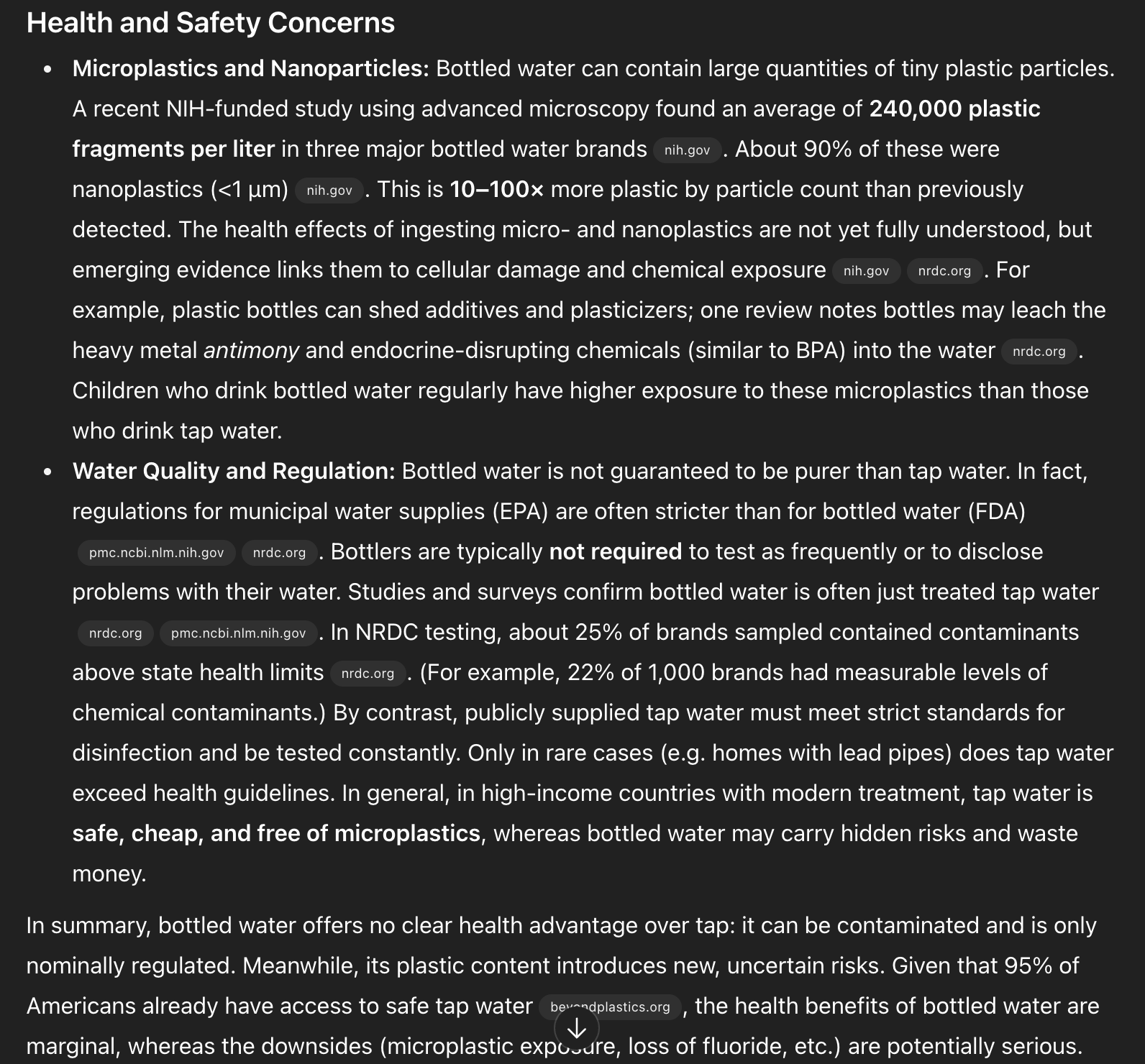
The image presents a text excerpt discussing health and safety concerns related to bottled water, contrasting it with tap water. It covers microplastics and nanoparticles, water quality regulations, and a summary of the advantages and disadvantages of bottled water.
### Components/Axes
The text is structured into paragraphs and bullet points, covering the following main topics:
* **Health and Safety Concerns** (Title)
* **Microplastics and Nanoparticles**: Discusses the presence and quantity of plastic particles in bottled water.
* **Water Quality and Regulation**: Compares the regulations and testing requirements for bottled water versus tap water.
* **Summary**: Concludes with a comparison of the health benefits and risks of bottled water versus tap water.
### Detailed Analysis or ### Content Details
* **Microplastics and Nanoparticles:**
* Bottled water contains large quantities of tiny plastic particles.
* A NIH-funded study found an average of 240,000 plastic fragments per liter in three major bottled water brands.
* About 90% of these were nanoplastics (<1 µm).
* Bottled water has 10-100x more plastic by particle count than previously detected.
* Ingesting micro- and nanoplastics has uncertain health effects, but emerging evidence links them to cellular damage and chemical exposure.
* Plastic bottles can shed additives and plasticizers, and may leach heavy metal antimony and endocrine-disrupting chemicals (similar to BPA) into the water.
* Children who drink bottled water regularly have higher exposure to these microplastics than those who drink tap water.
* **Water Quality and Regulation:**
* Bottled water is not guaranteed to be purer than tap water.
* Regulations for municipal water supplies (EPA) are often stricter than for bottled water (FDA).
* Bottlers are typically not required to test as frequently or to disclose problems with their water.
* Studies and surveys confirm bottled water is often just treated tap water.
* In NRDC testing, about 25% of brands sampled contained contaminants above state health limits.
* 22% of 1,000 brands had measurable levels of chemical contaminants.
* Publicly supplied tap water must meet strict standards for disinfection and be tested constantly.
* Tap water exceeds health guidelines only in rare cases (e.g., homes with lead pipes).
* Tap water is generally safe, cheap, and free of microplastics in high-income countries with modern treatment, whereas bottled water may carry hidden risks and waste money.
* **Summary:**
* Bottled water offers no clear health advantage over tap.
* Bottled water can be contaminated and is only nominally regulated.
* Plastic content introduces new, uncertain risks.
* 95% of Americans already have access to safe tap water.
* The health benefits of bottled water are marginal, whereas the downsides (microplastic exposure, loss of fluoride, etc.) are potentially serious.
### Key Observations
* Bottled water contains a significant amount of microplastics and nanoparticles.
* Bottled water regulations are often less strict than tap water regulations.
* Tap water is often safer, cheaper, and free of microplastics compared to bottled water.
### Interpretation
The text suggests that bottled water may not be as safe or beneficial as commonly perceived. The presence of microplastics and the less stringent regulations compared to tap water raise concerns about its overall health impact. The text advocates for tap water as a safer and more cost-effective alternative, especially in regions with modern water treatment facilities. The information presented aims to inform consumers about the potential risks associated with bottled water consumption.