## Pixel Art: Castle
### Overview
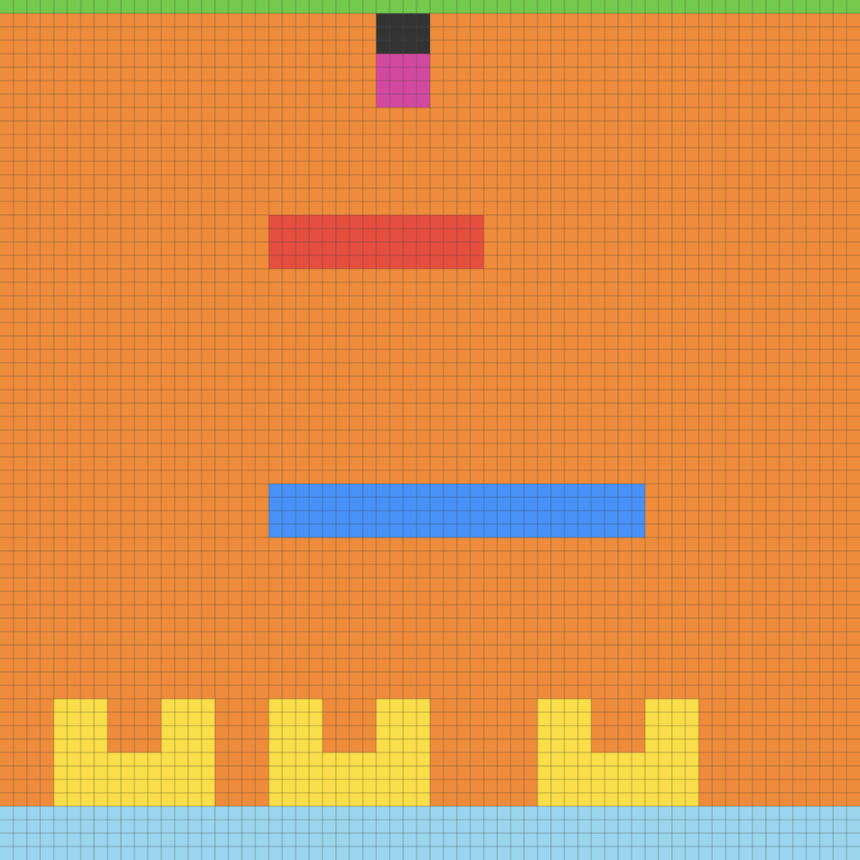
The image is a pixel art representation of a castle. It features a grid-like structure with different colored blocks forming the castle's components. The castle is primarily orange, with a green top border, a light blue base, yellow crenellations, and red, blue, black, and magenta details.
### Components/Axes
* **Colors:** The image uses a limited color palette: orange, green, light blue, yellow, red, blue, black, and magenta.
* **Grid:** The image is constructed on a grid, with each color block representing a pixel.
* **Castle Elements:** The castle consists of a main body, crenellations, and details that suggest windows or other architectural features.
### Detailed Analysis
* **Green Border:** A horizontal green band runs along the top of the image.
* **Black and Magenta Block:** A small black block is positioned above a magenta block, near the top-center of the image.
* **Red Rectangle:** A horizontal red rectangle is located below the black and magenta blocks, in the upper half of the image.
* **Orange Main Body:** The primary structure of the castle is orange, filling most of the image area.
* **Blue Rectangle:** A horizontal blue rectangle is positioned in the lower half of the orange main body.
* **Yellow Crenellations:** Yellow blocks form crenellations along the bottom edge of the orange main body. These are shaped like repeating "U"s.
* **Light Blue Base:** A light blue band forms the base of the castle at the bottom of the image.
### Key Observations
* The image is symmetrical.
* The pixelated style gives the image a retro, 8-bit aesthetic.
* The use of simple geometric shapes creates a recognizable castle structure.
### Interpretation
The image is a stylized representation of a castle using pixel art. The limited color palette and grid-based construction are characteristic of early computer graphics. The arrangement of colored blocks creates a simple yet recognizable depiction of a castle, evoking a sense of nostalgia for classic video games and digital art. The placement of the colored blocks suggests a deliberate design, with each element contributing to the overall composition and visual appeal of the image.