TECHNICAL ASSET FINGERPRINT
e981e40c421396e60b625e3c
Click to view fullscreen
Press ESC or click to close
FOUND IN PAPERS
EXPERT: gemma-3-27b-it-free VERSION 1
RUNTIME: google-free/gemma-3-27b-it
INTEL_VERIFIED
\n
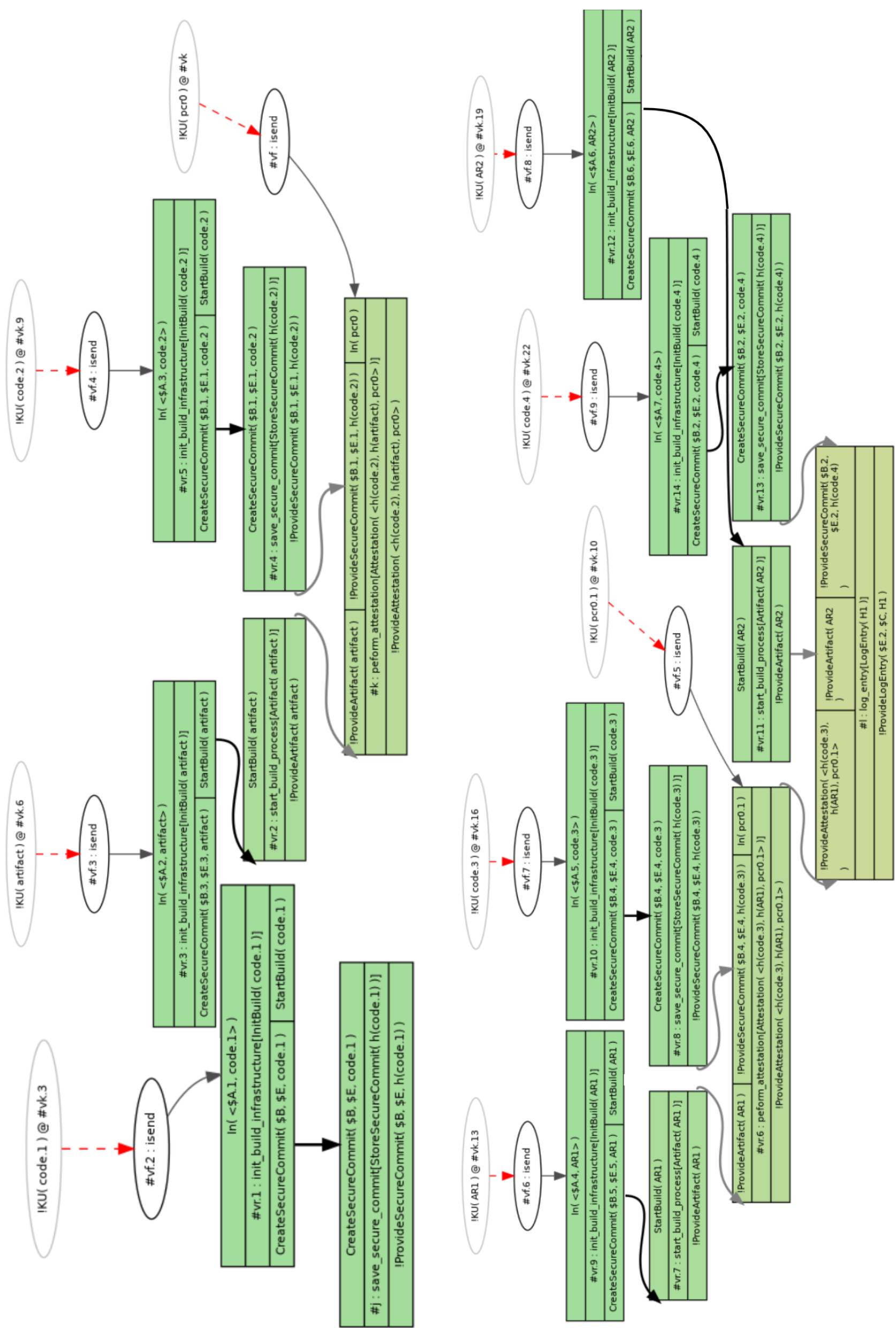
## Flowchart: Process Flow Diagram
### Overview
This image depicts a complex flowchart illustrating a process with multiple decision points, loops, and parallel paths. The flowchart appears to model a system involving "Commitment" and "Procurement" processes, with various checks and balances. The diagram uses rectangular boxes for processes, diamonds for decisions, and ovals for start/end points. Arrows indicate the flow of the process.
### Components/Axes
The diagram does not have traditional axes. Instead, it relies on the visual arrangement of components and the direction of arrows to convey the process flow. Key components include:
* **Start:** Oval labeled "Start"
* **End:** Oval labeled "#4 paid" (appears multiple times)
* **Process Boxes:** Rectangular boxes containing descriptions of actions or steps.
* **Decision Diamonds:** Diamond-shaped boxes containing conditions or questions.
* **Arrows:** Indicate the direction of the process flow.
* **Labels:** Text within boxes and diamonds describing the process steps or conditions.
* **Variables:** Text within boxes like "N=1 (<=3)", "N=2 (>=4)", "K01 (<=2) @ 6%"
* **Text annotations:** Text annotations like "paid", "closed", "discarded"
### Detailed Analysis or Content Details
The flowchart can be broken down into several key paths:
**1. Initial Path (Left Side):**
* **Start** -> "Create/secure commitment (level 1)" -> "ProcurementCommitmentK01 (<= 1)"
* **Decision:** "ProcurementCommitmentK01 (<= 1)?"
* **Yes:** -> "N=1 Mill local/international (code 1) Supplier (detail 1)" -> "N=1 paid" -> "#4 paid"
* **No:** -> "ProcurementCommitmentK02 (<= 2)"
* **Decision:** "ProcurementCommitmentK02 (<= 2)?"
* **Yes:** -> "N=2 Mill local/international (code 2) Supplier (detail 2)" -> "N=2 paid" -> "#4 paid"
* **No:** -> "ProcurementCommitmentK03 (<= 3)"
* **Decision:** "ProcurementCommitmentK03 (<= 3)?"
* **Yes:** -> "N=3 Mill local/international (code 3) Supplier (detail 3)" -> "N=3 paid" -> "#4 paid"
* **No:** -> "ProcurementCommitmentK04 (<= 4)"
* **Decision:** "ProcurementCommitmentK04 (<= 4)?"
* **Yes:** -> "N=4 Mill local/international (code 4) Supplier (detail 4)" -> "N=4 paid" -> "#4 paid"
* **No:** -> "discarded"
**2. Middle Path:**
* "Create secure commitment K01 (<=2)" -> "ProcurementK01 (<= 2)?"
* **Yes:** -> "K01 (<=2) @ 6%" -> "#4 paid"
* **No:** -> "ProcurementK02 (<= 3)?"
* **Yes:** -> "K02 (<=3) @ 5%" -> "#4 paid"
* **No:** -> "ProcurementK03 (<= 4)?"
* **Yes:** -> "K03 (<=4) @ 4%" -> "#4 paid"
* **No:** -> "ProcurementK04 (<= 5)?"
* **Yes:** -> "K04 (<=5) @ 3%" -> "#4 paid"
* **No:** -> "ProcurementK05 (<= 6)?"
* **Yes:** -> "K05 (<=6) @ 2%" -> "#4 paid"
* **No:** -> "ProcurementK06 (<= 7)?"
* **Yes:** -> "K06 (<=7) @ 1%" -> "#4 paid"
* **No:** -> "discarded"
**3. Right Side Path:**
* "Create secure commitment K02 (<= 2)" -> "ProcurementCommitmentK02 (<= 2)?"
* **Yes:** -> "ProcurementCommitmentK02 (<= 2) Mill local/international (code 1) Supplier (detail 1)" -> "#4 paid"
* **No:** -> "ProcurementCommitmentK03 (<= 3)?"
* **Yes:** -> "ProcurementCommitmentK03 (<= 3) Mill local/international (code 2) Supplier (detail 2)" -> "#4 paid"
* **No:** -> "ProcurementCommitmentK04 (<= 4)?"
* **Yes:** -> "ProcurementCommitmentK04 (<= 4) Mill local/international (code 3) Supplier (detail 3)" -> "#4 paid"
* **No:** -> "ProcurementCommitmentK05 (<= 5)?"
* **Yes:** -> "ProcurementCommitmentK05 (<= 5) Mill local/international (code 4) Supplier (detail 4)" -> "#4 paid"
* **No:** -> "discarded"
**4. Bottom Path:**
* "Create secure commitment K03 (<= 2)" -> "ProcurementCommitmentK03 (<= 2)?"
* **Yes:** -> "ProcurementCommitmentK03 (<= 2) Mill local/international (code 1) Supplier (detail 1)" -> "#4 paid"
* **No:** -> "ProcurementCommitmentK04 (<= 3)?"
* **Yes:** -> "ProcurementCommitmentK04 (<= 3) Mill local/international (code 2) Supplier (detail 2)" -> "#4 paid"
* **No:** -> "ProcurementCommitmentK05 (<= 4)?"
* **Yes:** -> "ProcurementCommitmentK05 (<= 4) Mill local/international (code 3) Supplier (detail 3)" -> "#4 paid"
* **No:** -> "ProcurementCommitmentK06 (<= 5)?"
* **Yes:** -> "ProcurementCommitmentK06 (<= 5) Mill local/international (code 4) Supplier (detail 4)" -> "#4 paid"
* **No:** -> "discarded"
### Key Observations
* The flowchart has multiple paths leading to "#4 paid", indicating successful completion of the process.
* The "discarded" outcome suggests a failure or rejection point in the process.
* The decision points are based on numerical thresholds (e.g., "K01 (<= 2)?", "ProcurementCommitmentK01 (<= 1)?").
* The process involves multiple levels of "Commitment" (K01, K02, K03) and "Procurement" (ProcurementK01, ProcurementK02, etc.).
* The process appears to be tiered, with different paths based on the value of commitment levels.
* The percentages associated with K01-K06 (6%, 5%, 4%, 3%, 2%, 1%) likely represent some form of cost or fee.
### Interpretation
This flowchart represents a complex procurement and commitment process with multiple decision points and potential outcomes. The process seems designed to handle varying levels of commitment and procurement, with different paths based on numerical thresholds. The "discarded" outcome suggests a quality control or rejection mechanism. The percentages associated with the K values likely represent fees or costs associated with each level of commitment. The diagram suggests a hierarchical structure, where initial commitments are evaluated and then routed through a series of procurement steps. The repeated "#4 paid" outcome indicates a successful completion of the process, regardless of the specific path taken. The diagram is a visual representation of a business process, likely used for documentation, training, or process improvement. The complexity suggests a significant investment in process control and management.
DECODING INTELLIGENCE...