## Exploiting Language Models as a Source of Knowledge for Cognitive Agents
James R. Kirk, Robert E. Wray, John E. Laird
Center for Integrated Cognition @ IQMRI 24 Frank Lloyd Wright Drive Suite H 1200, Box 464 Ann Arbor, Michigan 48106 { james.kirk,robert.wray,john.laird@cic.iqmri.org }
## Abstract
Large language models (LLMs) provide capabilities far beyond sentence completion, including question answering, summarization, and natural-language inference. While many of these capabilities have potential application to cognitive systems, our research is exploiting language models as a source of task knowledge for cognitive agents, that is, agents realized via a cognitive architecture. We identify challenges and opportunities for using language models as an external knowledge source for cognitive systems and possible ways to improve the effectiveness of knowledge extraction by integrating extraction with cognitive architecture capabilities, highlighting with examples from our recent work in this area.
## Introduction
Cognitive architectures 1 (Anderson et al. 2004; Laird 2012; Kotseruba and Tsotsos 2020; Newell 1990) are foundational tools for research toward the realization of cognitive capabilities. Architectures also facilitate development of cognitive systems ('agents') that manifest various integrated cognitive capabilities, including planning, learning, plan execution, and many others. An agent uses these capabilities in concert to act, to perform sophisticated tasks, and to achieve short- and long-term goals.
A key limitation of scaling agents to ever larger and more complex tasks and applications is their ability to acquire and integrate new task knowledge. As a consequence, a significant thrust of applied cognitive architecture research over the years has been exploring various knowledge engineering (Yost 1993; Crossman et al. 2004; Ritter et al. 2006), experiential learning (Nejati, Langley, and Konik 2006; Choi and Langley 2018; Pearson and Laird 1998), and instructional (Huffman and Laird 1995; Gluck, Laird, and Lupp 2019) approaches intended to mitigate the costs of acquiring new, effective, and robust task knowledge. While improvements have been achieved, none of these approaches has resulted in routine, low-cost, large-scale knowledge resources for cognitive agents.
In contrast, Large Language Models (LLMs) (OpenAI 2023; Driess et al. 2023) provide a huge breadth of potential knowledge. However, exploiting this knowledge is challenging because the production of knowledge is unreliable
1 Portions of this paper draw from and update Wray, Kirk, and Laird (2021).
and untrustworthy (Lenat and Marcus 2023). As a knowledge source, LLM responses can be corrupted by hallucination, irrelevancy, incorrectness and can be unethical and/or unsafe. Further, for most applications of LLMs, the models themselves are fixed: they do not learn or adapt to the specific situations in which they are used.
We are exploring the hypothesis that an integration of LLMs and cognitive architectures can offset the limitations of each in the context of reliable knowledge scaling. LLMs can be used as a rich, (largely) low-cost source of knowledge for agents to extend their task knowledge. In concert, agent cognitive capabilities, realized within a cognitive architecture, can be applied to the LLM to improve the 'precision' and correctness of the task knowledge that an LLM is asked to produce. This approach emphasizes what cognitive architectures do best (support end-to-end integration of interaction, reasoning, language processing, learning, etc., using structured, curated knowledge) and what language models do best (provide associational retrieval from massive stores of latent unstructured, possibly unreliable knowledge). We expect that by using LLMs to acquire new task knowledge, agents can reduce their reliance on more costly sources of task knowledge (e.g., extensive training, human instruction, explicit knowledge engineering) and, consequently, scale more readily to larger task domains and applications.
In this paper, we discuss the dimensions of this problem, requirements for a solution, and some examples of some interactions between LLMs and cognitive architectures that appear important for task acquisition.
## Potential Patterns of Integration
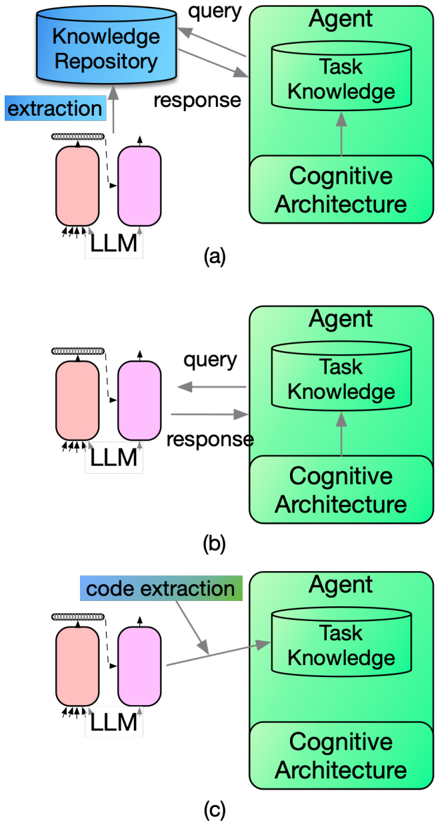
We introduce three different ways cognitive-architectureLLMintegration could be realized for acquiring task knowledge, and we outline potential benefits and costs of each. 2 The alternatives are illustrated in Figure 1. In the diagrams, an agent is viewed as a combination of its (cognitive) architecture and content (task knowledge), the standard formulation of an agent (Russell and Norvig 1995). While this structure (over-)simplifies the details of most cognitive agents,
2 This list is not comprehensive and other options for considering LLMs as source of knowledge for cognitive agents are feasible; e.g., see Lenat and Marcus (2023) for an alternative list.
it is a reasonable approximation for considering systemsintegration alternatives.
In the figure, we assume LLMs (and in 1a, external knowledge repositories) as sources of general or unspecialized knowledge. In some cases, for a particular task, domainor task-specific knowledge bases may be available or an LLMthat has been fine-tuned for a specific problem domain. When these are available, an agent should generally attempt to use them. However, we are more focused on the case of a general intelligent agent where the agent (or developer) cannot assume that a special-purpose knowledge source is readily available. In this case, the agent generally will need to attempt to extract knowledge from more general resources, like an LLM or a world-knowledge repository such as ConceptNet (Speer, Chin, and Havasi 2017).
The three integration patterns we consider are:
- (a) Indirect extraction: In this option, general extraction processes designed for LLMs are used and responses from an LLM are placed in a knowledge store. The agent then accesses the knowledge store to obtain task knowledge. For example, general knowledge extraction from LLMs is being developed to populate knowledge graphs (Bosselut et al. 2019) which is a specific example of the use of LLMs as a knowledge base (Petroni et al. 2019). As a consequence, this alternative leverages that ongoing research. Further, any existing cognitive agent capabilities that draw and exploit external knowledge stores could also be re-purposed for exploring this alternative (Wray, Kirk, and Laird 2021).
- (b) Direct extraction: In this option, the agent directly formulates and sends queries to the LLM and then interprets the responses it receives. The responses are interpreted and internalized within with agent's processing, resulting in situation-specific learning of new task knowledge (represented by the arrow from the cognitive architecture to task knowledge components). This option requires that the agent encode capabilities that perform the same kinds of processes needed for indirect extraction (i.e., the blue 'extraction' process in 1a, but within its own agent knowledge).
- (c) Direct Knowledge Encoding: This option provides 'direct wiring' for the agent, encoding task knowledge directly into the agent's internal knowledge representations and memories. For instance, using programcode generation capabilities of LLMs (Chen et al. 2021; Austin et al. 2021), researchers have shown that LLMs can be used to create programs for robotic control of embodied agents (Singh et al. 2023; Brohan et al. 2023). Because cognitive architectures generally provide programmable interfaces, code generation might be apt for cognitive-architecture agents. This option could thus employ an external extraction process that programmed agent knowledge directly. However, while these extraction processes might be able to build on existing extraction methods, the extraction processes would need to be specialized for cognitive architectures (and likely for individual architectures).
Our work to-date focuses on direct extraction. We chose
Figure 1: Possible approaches to CA-LLM integration in support of task-knowledge acquisition.
<details>
<summary>Image 1 Details</summary>
### Visual Description
## Diagram: Agent-Cognitive Architecture Workflow
### Overview
The diagram illustrates a three-stage workflow of an AI agent interacting with a knowledge repository and cognitive architecture. It uses color-coded components (blue, green, pink) and directional arrows to represent data flow, extraction processes, and response generation. Three sub-diagrams (a, b, c) show variations in interaction patterns.
### Components/Axes
1. **Key Elements**:
- **Knowledge Repository** (blue cylinder, top-left in (a))
- **Agent** (green rectangle, right side of all sub-diagrams)
- **Task Knowledge** (green cylinder within Agent)
- **Cognitive Architecture** (green rectangle below Task Knowledge)
- **LLM** (pink cylinder, left side of all sub-diagrams)
- **Extraction/Response Arrows** (black/dashed lines with labels)
2. **Process Flow**:
- **Extraction** (dashed arrow from LLM to Agent in (a))
- **Response** (solid arrow from Agent to LLM in (a))
- **Code Extraction** (green highlighted arrow in (c))
3. **Spatial Grounding**:
- **Knowledge Repository**: Top-left in (a), absent in (b/c)
- **Agent**: Center-right in all sub-diagrams
- **LLM**: Left side in all sub-diagrams
- **Arrows**:
- Solid arrows = direct data flow
- Dashed arrows = extraction processes
- Green highlights = code-specific operations
### Detailed Analysis
1. **Sub-diagram (a)**:
- **Flow**:
- LLM → Knowledge Repository (extraction)
- Knowledge Repository → Agent (response)
- **Components**: Full system with external knowledge integration
2. **Sub-diagram (b)**:
- **Flow**:
- LLM → Agent (direct query)
- Agent → LLM (response)
- **Components**: Simplified loop without external repository
3. **Sub-diagram (c)**:
- **Flow**:
- LLM → Agent (code extraction)
- Agent → LLM (response)
- **Components**: Specialized code-handling pathway
### Key Observations
1. **Modular Design**: The Agent's Cognitive Architecture is consistently separated from Task Knowledge across all sub-diagrams.
2. **Knowledge Dependency**: Sub-diagram (a) shows explicit reliance on external Knowledge Repository, while (b/c) operate in closed loops.
3. **Specialization**: Sub-diagram (c) introduces code extraction as a distinct process from general extraction in (a).
4. **Bidirectional Flow**: All sub-diagrams show cyclical interaction between LLM and Agent components.
### Interpretation
This diagram represents an AI agent framework with three operational modes:
1. **Knowledge-Augmented Mode** (a): Combines LLM capabilities with external knowledge repositories for enhanced responses.
2. **Self-Contained Mode** (b): Demonstrates basic agent-LLM interaction without external data sources.
3. **Code-Specialized Mode** (c): Highlights a dedicated pathway for handling code-related queries.
The color coding (blue for knowledge storage, green for cognitive processing, pink for language models) suggests a hierarchical relationship where:
- **Knowledge Repository** serves as foundational data source
- **Agent** acts as processing hub
- **LLM** handles language understanding/generation
The progressive simplification from (a)→(b)→(c) implies a design philosophy where complexity increases with specialized functionality, while maintaining core agent-cognitive architecture integration. The code extraction pathway in (c) indicates potential for domain-specific optimization within the general framework.
</details>
direct extraction over indirect extraction for two reasons. First, in indirect extraction (1a), task-knowledge extraction is not tied to the agent's specific, current knowledge needs. We hypothesize that direct extraction enables the agent to use its specific situation and context (including its embodiment) to query the LLM resulting in improved precision (relevance to the specific situation). Second, because extraction processes not tied to the agent cannot fully anticipate agent needs, the knowledge base in 1a cannot be assumed to be an exhaustive resource for all the knowledge that could be extracted from the LLM. Thus, even an agent that used 1a might need to sometimes resort to processes akin to 1b when the knowledge base was found lacking.
The primary potential downside of the direct extraction approach is that the agent must have the ability to manage the potential challenges of extraction from the LLM it- self (e.g., determining whether some response is plausible) rather than depending on specialized extraction processes (as in 1a). In other words, the agent must have more sophisticated capabilities to directly query and interpret LLM responses.
Direct encoding is another option that we recommend be explored in the community, although we do not discuss it further here. Because task specification languages and tools have already been developed (for both general AI systems and cognitive agents), it may be feasible to leverage the code generation capabilities of LLMs to generate executable task knowledge. Fine-tuning a code generation model with examples that illustrate how task capabilities are realized within the distinct representational and memory systems of cognitive architectures is likely to result in better results than incontext learning because the execution models of cognitive architectures often differ substantially from traditional programming languages.
## Direct Extraction: Challenges and Opportunities
Knowledge extraction is the process by which an agent gains knowledge of its task and/or environment from an external knowledge source. Successful extraction results in the agent having (new) knowledge it can bring to bear on its tasks. From a cognitive-systems perspective, what is important is that the knowledge produced by an extraction process is 'actionable' by the agent. Thus, the goal of extraction is not simply to add knowledge but to add knowledge that allows the agent to improve its ability to function as an autonomous entity in a multitask environment.
Direct extraction requires that an agent directly interact with an LLM (send queries, receive responses) rather than through an intermediary. In this section, we characterize some of the features of LLMs relevant to direct extraction and, in some cases, contrast those extraction processes with extraction from more curated knowledge sources (e.g., Cyc, WordNet, ConceptNet). Relevant features include:
- Breadth and Depth of Knowledge: A major strength of LLMs, such as GPT3, GPT4 or PALM-E, compared to curated knowledge bases (KBs) is their extensive breadth of encoded knowledge.
- Provenance and Accuracy of Knowledge: The quality of behavior for a cognitive agent is invariably tied to the quality of knowledge it reasons with. With traditional KBs, task knowledge is typically either curated or at least derived from the agent's own experience with the world. In contrast, LLMs are (largely) derived from uncurated web resources, and the knowledge's provenance is unknown and very likely includes errors and conflicts.
- Relevance of Knowledge: Even when the LLM contains the knowledge relevant to the agent's needs, extracting it can be highly sensitive to the specific query sent to the LLM (Pezeshkpour and Hruschka 2023). In addition to the basic question, a query to an LLM will often include additional context (Reynolds and McDonell 2021), related examples (Brown et al. 2020), and additional instructions, such as 'show your reasoning steps' (Wang
- et al. 2023). The resulting responses are highly dependent on all these factors. This sensitivity to the query context makes it difficult to ensure that whatever information is retrieved from the LLM is actually relevant to the context of the agent.
- Situatedness of Knowledge: Curated knowledge bases (such as Cyc) and LLMs encode 'ungrounded' knowledge about the world. As general-purposes resources, they do not encode knowledge about an agent's current situation, its embodiment (what it can sense and how it can act), and its goals and plans, which may be encoded in an agent's long-term semantic or episodic memory. Thus, an open question is the extent to which the agent can embed relevant information from its understanding of its situation to obtain knowledge that can be connected or 'grounded' to its performance context. As mentioned above, the potential disconnect between the general knowledge of an LLM and the specific knowledge needs of an agent motivates the exploration of direct extraction methods in particular.
- Accessibility of Knowledge: In a typical AI knowledge base, the APIs for query/response and knowledge representation are well-defined, making it straightforward for an agent to attempt to retrieve information and to parse any responses. For an LLM, the specific form of a request and response are (generally) less structured, e.g., naturallanguage sentences. While tools such as LangChain's output parser 3 are designed to bridge accessibility issues, it remains a challenge for an agent to interpret responses from the LLM; in the extreme, an agent must parse natural language to extract what information is provided in a response.
- Structural Integration: Traditional knowledge bases impose low to moderate computational costs and latency and have reliable access. In contrast, many LLMs, especially the largest, are web resources with restricted access, high relative latency, and access depends on internet connectivity. Many LLMs charge by the token sent and received, imposing direct economic constraints on efficient and robust interaction. A cognitive agent will thus need to be strategic in using an LLM in applications that involve real-time environmental and human interaction.
## Requirements and Measures
For our research, we have pursued a strategy that prioritizes the issues of Accuracy, Relevance, Situatedness, and Accessibility from the previous section. For direct extraction to be practical, an embodied agent needs methods that allow it to elicit responses from the LLM in a manner that produces highly relevant ones (when an LLM has the capacity to potentially produce almost anything), that are appropriate given the situation, and that the agent can access or interpret (which is required for any internalization and use in actual task execution). Here, we further define and refine four requirements (Kirk, Wray, and Lindes 2023) that an agent must meet to successfully extract actionable task knowledge
3 https://github.com/langchain-ai/langchain
from an LLM. Specifically, responses from the LLM must be:
1. Interpretable: To use responses, the agent must be able to parse and understand them. Responses that are represented as code can often be directly executed by an agent; e.g., JSON, first-order logic (Olmo, Sreedharan, and Kambhampati 2021), action commands as in RT2 (Brohan et al. 2023) or even Python programs (Singh et al. 2023). More typically, natural language (NL) responses from an LLM require NLP capabilities that the agent can use to interpret those responses. Because responses from the LLM must be interpretable given the agent's existing capabilities (as above), the agent's query construction process must attempt to guide LLM responses so that the resulting responses conform to whatever those native agent language capabilities are.
2. Groundable to Situation: As above, an agent must determine if/how it can situate an LLM response to its current environment. Objects, properties, relations, actions, etc. referenced in the response must be connected to the agent's situation. In the simplest case, groundedness requires the agent to map from perceptions to responses.
3. Compatible with Affordances and Embodiment: The LLM response must also be compatible with the agent's embodiment and the affordances known to the agent. For example, an agent might be embodied in a robot with a single arm or as a phone app acting as a personal assistant. When the affordances or embodiment of the agent are not comparable to those of humans, eliciting compatible responses may be particularly challenging for an LLM trained on a corpus (typically and primarily) describing human activities that presume human embodiment and affordances.
4. Match Human Expectations: Users will have differing preferences about how tasks or actions should be performed and what behavior is appropriate for different situations (Kirk et al. 2022). This criterion is important because it is impossible for the LLM (alone) to provide responses that ensure a match to human preferences. For example, imagine a household robotic agent tasked with putting away groceries. Should a can of beans be stored in a cupboard or a pantry? Either answer is plausible (Lenat and Marcus 2023). However, in some specific home, there is likely a clear preference for one location for the beans to be stored. The resulting requirement, from the point of view of extraction, is that an agent must anticipate the need to elicit human preferences because the LLM cannot disambiguate between plausible alternatives when the user has a preference for one or another.
The first three requirements are related to the viability of extracted task knowledge; in other words, is the agent able to interpret, internalize, and use a response in service of a task? The fourth requirement derives from constraints that arise from particular task environments: responses should be aligned with human expectations.
As above, the threshold for the fourth requirement is that the responses produced by the LLM must be plausible. A response that was viable, but that suggested that the can beans
Figure 2: Schematic process for direct extraction of task knowledge for task learning in a cognitive agent.
<details>
<summary>Image 2 Details</summary>

### Visual Description
Icon/Small Image (434x62)
</details>
from the previous example should be stored in the sink or dish rack is very likely to be wrong. For our research, the more important criterion is that the response should be not just reasonable or plausible but also responsive and relevant to a specific human user's expectations for that situation.
Agents must evaluate LLM responses to identify if responses meet these requirements. When these requirements are not met, if the agent attempts to use them (as is), the result will be incorrect learning or failure.
These requirements also suggest how we can, as researchers, measure and evaluate progress toward direct extraction. What fraction of responses were viable when attempting to extract knowledge in support of a new task? For those that were not viable, what fraction failed due to incompatibility with affordances vs. interpretability, etc? Measuring performance on these kinds of questions can facilitate the evaluation of progress and comparison of alternative approaches.
## Supporting Direct Extraction
In this section, we briefly summarize our high-level approach to direct extraction. We have used this approach to enable agents to learn new tasks, demonstrating the feasibility of the direct extraction approach (Kirk et al. 2022; Kirk, Wray, and Lindes 2023; Kirk et al. 2023).
Figure 2 illustrates the basic process. Rather than extracting knowledge for only the sake of gaining new knowledge, the cognitive agent seeks to extract knowledge for a specific purpose: enabling the agent to perform a (current or anticipated) task. Our extraction strategy takes advantage of prior work in cognitive systems in accessing and using external knowledge sources (some of these steps are also used for internal knowledge access).
Steps that overlap with general extraction patterns are illustrated in green; process steps specific to LLMs are in blue. Our current implementations use an existing agent (Kirk and Laird 2019; Mininger 2021) that learns from human instruction. These components provide general extraction capabilities that can be employed for LLMs (i.e., the agent is already 'extracting' knowledge from a human instructor via naturallanguage interaction). In what follows, we refer to this agent and its capabilities as the 'Interactive Task Learning Agent' (or ITL Agent). We have extended this ITL Agent, which previously obtained new knowledge from natural-language interaction with a user, to now also extract knowledge thru interaction with an LLM. Roughly, the extraction process comprises the following six steps:
1. The agent identifies a knowledge need, such as a gap in its knowledge. The ITL agent already has existing capabilities to detect knowledge gaps (including assessing what kinds of gaps it has encountered, such as needing
a goal or action, not understanding a term, etc.) In our current work, we assume that the agent seeks the LLM first as a resource for potentially providing the ability to bridge these knowledge gaps and then relies on human input only when the LLM is insufficient. (Longer term, cognitive agents will likely need to evaluate if/when an LLM is an appropriate source for a specific gap.)
Importantly, from the point of view of the integration patterns described in Section 2, the agent's fine-grained identification of a gap or need makes direct extraction highly relevant to resolving the gap. The agent can use its specific need to develop a more precise and targeted query to the LLM. We employ a template-based prompting approach, a common method in prompt engineering (Reynolds and McDonell 2021). Templates are focused on specific gaps that the agent may encounter (Wray, Kirk, and Laird 2021), such as eliciting the steps needed to perform a task (Kirk et al. 2022), eliciting task subgoals, such as putting away the can of beans as part of tidying the kitchen (Kirk et al. 2023), and refining a prior response (Kirk, Wray, and Lindes 2023).
2. The agent prompts an LLM, choosing a specific prompt template based on its evaluation of its knowledge gap/need. It instantiates the template with information/data it has from the situation and context, and sets parameters to the LLM given the situation (e.g., setting the temperature or 'variability' in the LLM response). Thus, the resulting, agent-constructed prompt is not only specific to the context but also the particular type of knowledge gap. (We further detail this approach to prompting in a subsequent section.)
3. The agent then interprets the response(s) from the LLM. Although we did briefly explore having an LLM generate logical expressions (Kirk et al. 2022), interpretation for our approach requires the agent to use its internal naturallanguage understanding capabilities to convert the LLM response text to the agent's internal knowledge representation. Because the ITL Agent already has naturallanguage processing (NLP) capabilities for learning from human instruction, the extended approach leverages that existing NLP capability. However, this choice also limits what the agent can interpret because the ITL Agent's NLP capabilities are fairly modest. To date, one of the primary pain points in our explorations has been determining if/when an interpretation problem should be resolved by further refining LLM responses to match our agent's NLP capabilities or whether to change/refine the existing NLP capabilities.
4. Because the results from the LLM are not necessarily accurate and reliable (as noted above), the agent evaluates, tests, and attempts to verify extracted results from the LLM. Although verification of acquired knowledge has been explored in cognitive systems, verification of knowledge derived from LLMs presents new challenges. For example, in the ITL Agent, we assumed that the human instructor would provide accurate, grounded, interpretable knowledge to the agent that reflected the instructor's preferences. None of these assumptions are likely to
consistently hold for a response from an LLM, resulting in verification processes that must address all the requirements introduced above. We have developed a novel, multi-step approach to verification, detailed further below.
5. Following verification, the agent encodes the knowledge it has obtained into its own memory(-ies) as appropriate for current and future use in task performance. In the ITL Agent, this encoding is accomplished via a 2-step process. First, the agent takes the step(s) indicated by a verified LLM response (such as planning to achieve a goal or executing an action), allowing the agent to determine in practice (in addition to the analytic assessment during verification) if the new knowledge suits the task. A second step involves the agent deliberately reviewing the steps of the task ('retrospection'). Using Soar's chunking process (Laird, Rosenbloom, and Newell 1986), the retrospective analysis is compiled into new procedural knowledge that enables the agent to perform the same step/task in the future without resorting to the LLM. While other approaches to encoding could be realized (even others within Soar), this approach, first developed for the ITL Agent, is sufficient for encoding new knowledge that it derives from the LLM.
6. In the final step, the agent uses the knowledge it has acquired and continues to monitor its correctness and utility, and refines it based on its experience in using it. Although it is likely that knowledge could be incomplete, over-general, etc., to date, we have not encountered significant problems that require downstream refinement and thus have not yet explored if LLMs present unique new requirements for this step in the process.
## Prompting Approach
The agent must choose a prompting strategy and then formulate a specific prompt appropriate for its task and environment, the knowledge needed, and the requirements of the LLM itself. Prompt engineering (Reynolds and McDonell 2021), crafting and refining prompts so that they produce desired results, has been shown to be an effective strategy for retrieving reasonable knowledge. Using template-based prompting, one kind of prompt engineering, an agent selects an appropriate template designed to elicit the desired knowledge and then instantiates the template with context specific to the task it is attempting to learn. 4 To date, we have used a template-based approach, although we have only had to develop a few templates, as shown in Table 1.
We combine template-based prompting with few-shot prompting (Brown et al. 2020). Few-shot prompting embeds examples of desired responses in the prompt. Prompt examples include similar queries and the respective desired response to influence the LLM's response to the main prompt. One of the main roles examples play in our approach is biasing responses toward simple and direct language that the ITL Agent's NLP interpreter can parse. Prompt examples
4 This approach is used so routinely that it is now directly supported in LLM development tools such as LangChain.
## Template Description Example
Table 1: Examples of templates used in template-based prompting.
| Goal | Request a goal for a given task, situation, and object of focus. |
|--------|----------------------------------------------------------------------------------------------------------------------------------------|
| Action | Request the next action step given a task, situation, object of focus, and steps thus far. |
| Repair | Request a re-formulation of a response, given the previous prompt, the failed re- sponse, and a categorization of the type of failure. |
```
```
Table 2: Example of an agent-created prompt for eliciting goals. Agent instantiations in the prompt from its situational context are highlighted in bold .
can also introduce patterns for the LLM to follow, such as in Chain of Thought (Wei et al. 2022), which influence the LLM to reason about problems step by step.
This discussion provides a high-level outline of our template-based prompting approach which is detailed elsewhere (Kirk et al. 2022). Table 2 presents an example of a prompt constructed by the agent for a task to 'tidy a kitchen' in which the agent is looking at a mug in a dish rack in that kitchen. 5 In our work to-date, we have primarily used GPT-3 (Brown et al. 2020) as the LLM for research. From the point of view of direct extraction, the relatively simple approach enables the agent to construct prompts that effectively elicit mostly interpretable (and viable) responses.
## Verification Approach
Another burgeoning research area is identifying effective tools to verify the responses of LLMs. These include ranking responses from the LLM based on interaction with and feedback from the environment Logeswaran et al. (2022), re-
5 The indentation is for human readability alone; the prompt is constructed without line breaks.
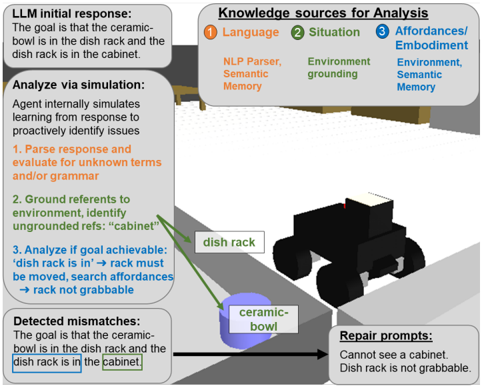
Figure 3: Agent analysis of LLM responses via internal simulation
<details>
<summary>Image 3 Details</summary>
### Visual Description
## Diagram: LLM Goal Analysis and Simulation Workflow
### Overview
This diagram illustrates a workflow for analyzing and simulating a goal-oriented task involving a robotic agent. The process includes parsing language, grounding references in an environment, evaluating goal achievability, detecting mismatches, and generating repair prompts. A visual representation of a robotic agent interacting with objects (ceramic bowl, dish rack, cabinet) is included.
### Components/Axes
#### Textual Elements
1. **LLM Initial Response** (Top-left):
- Text: "The goal is that the ceramic-bowl is in the dish rack and the dish rack is in the cabinet."
- Color: Gray background with black text.
2. **Analyze via Simulation** (Middle-left):
- Subcomponents:
- **1. Parse response and evaluate for unknown terms/grammar** (Orange text).
- **2. Ground refers to environment, identify ungrounded refs: "cabinet"** (Green text).
- **3. Analyze if goal achievable: 'dish rack is in' → rack must be moved, search affordances → rack not grabbable** (Blue text).
- Color: Gray background with orange, green, and blue text.
3. **Detected Mismatches** (Bottom-left):
- Text: "The goal is that the ceramic-bowl is in the dish rack and the dish rack is in the cabinet."
- Highlighted phrases:
- "dish rack is in the cabinet" (Blue box).
- "dish rack is in the cabinet" (Green box).
- Color: Gray background with blue and green highlights.
4. **Repair Prompts** (Bottom-right):
- Text: "Cannot see a cabinet. Dish rack is not grabbable."
- Color: Gray background with black text.
5. **Knowledge Sources for Analysis** (Top-right):
- Color-coded sections:
- **1. Language** (Orange): "NLP Parser, Semantic Memory."
- **2. Situation** (Green): "Environment grounding."
- **3. Affordances/Embodiment** (Blue): "Environment, Semantic Memory."
- Visual: Circular icons with numbers (1, 2, 3) and labels.
#### Visual Elements
- **Robot**: Black robotic agent positioned near a dish rack and cabinet.
- **Objects**:
- **Ceramic Bowl**: Purple object on the floor.
- **Dish Rack**: Black structure near the robot.
- **Cabinet**: Implied by text but not visually depicted.
- **Arrows**: Green arrows connect text boxes to visual elements (e.g., "dish rack" label).
### Detailed Analysis
#### Workflow Steps
1. **LLM Initial Response**:
- Defines the goal: Ceramic bowl in dish rack, dish rack in cabinet.
2. **Analyze via Simulation**:
- **Parsing**: Checks for unknown terms/grammar in the LLM’s response.
- **Grounding**: Identifies ungrounded references (e.g., "cabinet" not visible in the environment).
- **Achievability Analysis**: Determines if the goal is feasible (e.g., dish rack must be moved but is not grabbable).
3. **Detected Mismatches**:
- Highlights contradictions between the LLM’s goal and the environment (e.g., cabinet not visible, dish rack not grabbable).
4. **Repair Prompts**:
- Suggests adjustments to resolve mismatches (e.g., "Cannot see a cabinet," "Dish rack is not grabbable").
#### Knowledge Sources
- **Language**: NLP Parser and Semantic Memory for text analysis.
- **Situation**: Environment grounding to link text to physical objects.
- **Affordances/Embodiment**: Environment and Semantic Memory for action feasibility.
### Key Observations
- The workflow emphasizes **environmental grounding** as critical for aligning language-based goals with physical reality.
- The **detected mismatch** reveals a disconnect between the LLM’s assumption (dish rack in cabinet) and the simulated environment (cabinet not visible).
- **Repair prompts** address both perceptual (unseen cabinet) and actional (ungrabbable dish rack) limitations.
### Interpretation
This diagram demonstrates a closed-loop system where an LLM’s goal is validated through simulation, leveraging language parsing, environmental grounding, and affordance analysis. The mismatch detection and repair prompts highlight the importance of **situational awareness** in robotic tasks. The absence of a visible cabinet in the environment underscores the need for robust grounding mechanisms to prevent hallucinations. The workflow bridges abstract language goals with concrete physical constraints, emphasizing the interplay between **semantic memory** (knowledge of objects) and **embodied action** (robot capabilities).
**Notable Anomalies**:
- The cabinet is referenced in text but not depicted visually, creating ambiguity.
- The dish rack’s ungrabbable state suggests limitations in the robot’s current capabilities.
**Note**: No numerical data or charts are present; the diagram focuses on textual and visual workflow components.
</details>
sponse sampling (Wang et al. 2023), using planning knowledge (Valmeekam et al. 2023), additional LLM prompting about the veracity of retrieved responses (Kim, Baldi, and McAleer 2023), and using human feedback/annotation (Wu et al. 2023; Kirk et al. 2022).
Cognitive architectures provide both a framework for the evaluation of LLM responses and the knowledge (encoded in various memories) required to analyze them. As outlined briefly above, our agent simulates the process of learning from a response in order to evaluate the result of using that response (Kirk, Wray, and Lindes 2023).
Figure 3 summarizes the primary components of this analysis and the relevant memories from the cognitive architecture that the agent relies on for analysis. The agent uses its NLP parser and linguistic knowledge encoded in semantic memory to evaluate if the response is interpretable by the agent (1, orange). It uses knowledge of the current situation (encoded in working memory) to ground references in the LLM response and to evaluate if any references cannot be grounded (2, green). Finally, it uses knowledge encoded in semantic memory, and the context of the current environment from working memory, to analyze if responses align with its embodiment and affordances (3, blue), evaluating if the task goal is achievable by the agent.
Once the analysis is complete, any issues that are identified can be used in subsequent prompts to repair the responses that are misaligned with these requirements. The repair template was (outlined in Table 1) is comparable to the prompt shown in Table 2 but adds the incorrect LLM response, the identified issue (e.g., a word that is unknown), and asks for another response.
A final strategy for evaluation is enabling human oversight by asking a user if a task action or goal is correct before the agent uses the response. Human evaluation enables the agent to conform to the final requirement, aligning with human expectations. Correct task performance often requires
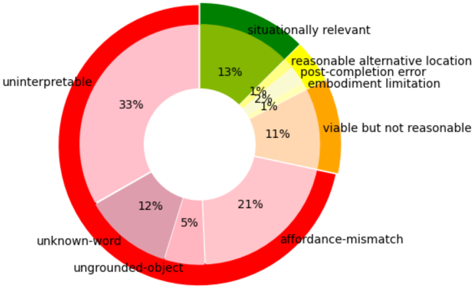
Figure 4: Categorization of responses retrieved from the LLM during agent experiment.
<details>
<summary>Image 4 Details</summary>
### Visual Description
## Pie Chart: Error Categories Distribution
### Overview
The image is a pie chart illustrating the distribution of error categories in a dataset or system. The chart uses distinct colors to represent different error types, with percentages indicating their relative frequency. The largest segment is labeled "uninterpretable" (33%), while smaller segments include categories like "post-completion error" (1%) and "embodiment limitation" (1%).
### Components/Axes
- **Legend**: Located on the right side of the chart, mapping colors to error categories:
- Red: Uninterpretable
- Light Pink: Affordance-mismatch
- Pink: Unknown-word
- Green: Situationally relevant
- Orange: Viable but not reasonable
- Yellow: Reasonable alternative location
- Light Yellow: Post-completion error
- Very Light Yellow: Embodiment limitation
- **Segments**: Each error category is represented as a wedge with a percentage and label.
### Detailed Analysis
1. **Uninterpretable (33%)**: Largest segment, colored red. Represents the most frequent error type.
2. **Affordance-mismatch (21%)**: Second-largest segment, light pink. Indicates issues where user actions conflict with system expectations.
3. **Unknown-word (12%)**: Pink segment. Suggests errors due to unrecognized terms or inputs.
4. **Situationally relevant (13%)**: Green segment. Errors that occur only in specific contexts.
5. **Viable but not reasonable (11%)**: Orange segment. Actions that are technically possible but ethically or practically questionable.
6. **Reasonable alternative location (2%)**: Yellow segment. Errors involving plausible but suboptimal choices.
7. **Post-completion error (1%)**: Light yellow segment. Mistakes occurring after a task is finalized.
8. **Embodiment limitation (1%)**: Very light yellow segment. Physical or hardware-related constraints causing errors.
9. **Ungrounded-object (5%)**: Dark pink segment. Errors tied to objects lacking contextual relevance.
### Key Observations
- **Dominance of "Uninterpretable" Errors**: At 33%, this category far exceeds others, suggesting significant challenges in system interpretability or user comprehension.
- **High Frequency of Affordance-Mismatch**: 21% highlights a critical usability issue where user intentions clash with system functionality.
- **Small but Notable Segments**: Categories like "post-completion error" and "embodiment limitation" (1% each) may represent edge cases but could be critical in specific applications.
- **Rounding Discrepancy**: Total percentages sum to 99% (33+21+12+5+13+11+2+1+1), likely due to rounding.
### Interpretation
The chart underscores systemic issues in interpretability and usability, with "uninterpretable" and "affordance-mismatch" errors dominating. The prevalence of "unknown-word" (12%) and "situationally relevant" (13%) errors suggests context-dependent challenges, possibly in natural language processing or adaptive systems. The small segments (1-2%) indicate rare but potentially high-impact issues, such as hardware limitations ("embodiment limitation") or ethical concerns ("viable but not reasonable"). The near-total sum (99%) hints at minor data aggregation or rounding errors, which should be investigated for precision. Overall, the data points to a need for improved system transparency, user-centered design, and context-aware error handling.
</details>
eliciting individual human preferences, as discussed above.
Figure 4 shows an analysis of responses extracted from the LLM by our agent during an experiment where it learns to tidy a kitchen with 35 common kitchen objects. The chart shows the (human-determined) classification of all the responses retrieved from the LLM, including unviable responses in red (not aligned with the first three requirements), viable but not reasonable responses in orange, reasonable responses in yellow, and situationally relevant responses in green that match the human preferences for this task. A takeaway from this analysis is the large percentage of total responses (over 70%) that are not viable for the embodied agent, indicating the necessity for evaluation of responses for reliable learning. In other words, this iterative promptrefine-re-prompt approach to verification allows the agent to generate and to identify the relatively small proportion of responses that are viable and situationally relevant, resulting in 'actionable' knowledge for the agent.
Further evaluation of responses using other capabilities of cognitive architectures is potentially useful, but not yet explored. A cognitive architecture agent could use episodic memory to see if retrieved knowledge matches actions performed in the past. It could also use planning knowledge to see if retrieved goals are achievable, or retrieved actions are executable. Cognitive architectures also support interfacing with other knowledge sources (e.g., knowledge bases such as WordNet or ConceptNet) which could provide additional information for evaluation (e.g., finding synonyms for unknown words).
## Conclusion
Autonomous systems, whether they are realized with cognitive architectures or not, will have to acquire new knowledge to perform tasks and accomplish their goals. However, the lack of reliable, scalable acquisition of new task knowledge, especially online acquisition of knowledge, has limited the operation and impact of cognitive systems. The integration of LLMs with cognitive architectures presents an intriguing opportunity to exploit the breadth of knowledge in LLMs to overcome limits on knowledge acquisition.
In this paper, we presented various ways one might approach this problem and highlighted the potential of direct extraction from LLMs as an integration path. We summarized the challenges and requirements for exploring this integration and a high-level, step-wise process for pursuing this goal. We outlined some of the ways we are attempting to pursue this research vision, highlighting the use of templatebased prompting and knowledge-driven evaluation that enables more reliable and useful responses from the LLM.
A more complete realization of the entire task-learning pipeline (as envisioned in Figure 2), as well as an evaluation of the pipeline in terms of scaling for knowledge acquisition, remain as future work. One notable result in terms of scaling, however, has been to observe the synergistic interactions between different sources of knowledge within task learning. The extended ITL Agent uses look-ahead planning, human oversight, and the LLM to attempt to acquire new knowledge. Early results (Kirk et al. 2023) suggest that planning can virtually eliminate the need for an agent to ask for actions (at least in the task domains we have explored) when the agent acquires a correct (i.e., verified) goal description. Similarly, using LLMs to elicit goals in conjunction with the verification process requires significantly less human oversight. In summary, this integrated-knowledge approach realized within and enabled by a cognitive architecture, is suggestive of a potential breakthrough in knowledge acquisition and task learning for cognitive agents.
## References
Anderson, J. R.; Bothell, D.; Byrne, M. D.; Douglass, S.; Lebiere, C.; and Qin, Y. 2004. An integrated theory of the mind. Psychological review , 111(4): 1036.
Austin, J.; Odena, A.; Nye, M.; Bosma, M.; Michalewski, H.; Dohan, D.; Jiang, E.; Cai, C.; Terry, M.; Le, Q.; and Sutton, C. 2021. Program Synthesis with Large Language Models. ArXiv:2108.07732 [cs].
Bosselut, A.; Rashkin, H.; Sap, M.; Malaviya, C.; Celikyilmaz, A.; and Choi, Y. 2019. COMET: Commonsense Transformers for Automatic Knowledge Graph Construction. In Proceedings of the 57th Annual Meeting of the Association for Computational Linguistics . ArXiv: 1906.05317.
Brohan, A.; Brown, N.; Carbajal, J.; Chebotar, Y.; Chen, X.; Choromanski, K.; Ding, T.; Driess, D.; Dubey, A.; Finn, C.; Florence, P.; Fu, C.; Arenas, M. G.; Gopalakrishnan, K.; Han, K.; Hausman, K.; Herzog, A.; Hsu, J.; Ichter, B.; Irpan, A.; Joshi, N.; Julian, R.; Kalashnikov, D.; Kuang, Y .; Leal, I.; Lee, L.; Lee, T.-W. E.; Levine, S.; Lu, Y.; Michalewski, H.; Mordatch, I.; Pertsch, K.; Rao, K.; Reymann, K.; Ryoo, M.; Salazar, G.; Sanketi, P.; Sermanet, P.; Singh, J.; Singh, A.; Soricut, R.; Tran, H.; Vanhoucke, V.; Vuong, Q.; Wahid, A.; Welker, S.; Wohlhart, P.; Wu, J.; Xia, F.; Xiao, T.; Xu, P.; Xu, S.; Yu, T.; and Zitkovich, B. 2023. RT-2: Vision-LanguageAction Models Transfer Web Knowledge to Robotic Control. ArXiv:2307.15818 [cs].
Brown, T.; Mann, B.; Ryder, N.; Subbiah, M.; Kaplan, J. D.; Dhariwal, P.; Neelakantan, A.; Shyam, P.; Sastry, G.; Askell, A.; Agarwal, S.; Herbert-Voss, A.; Krueger, G.; Henighan, T.; Child, R.; Ramesh, A.; Ziegler, D.; Wu, J.; Winter,
C.; Hesse, C.; Chen, M.; Sigler, E.; Litwin, M.; Gray, S.; Chess, B.; Clark, J.; Berner, C.; McCandlish, S.; Radford, A.; Sutskever, I.; and Amodei, D. 2020. Language Models are Few-Shot Learners. In Larochelle, H.; Ranzato, M.; Hadsell, R.; Balcan, M. F.; and Lin, H., eds., Advances in Neural Information Processing Systems , volume 33, 18771901. Curran Associates, Inc.
Chen, M.; Tworek, J.; Jun, H.; Yuan, Q.; Pinto, H. P. d. O.; Kaplan, J.; Edwards, H.; Burda, Y.; Joseph, N.; Brockman, G.; Ray, A.; Puri, R.; Krueger, G.; Petrov, M.; Khlaaf, H.; Sastry, G.; Mishkin, P.; Chan, B.; Gray, S.; Ryder, N.; Pavlov, M.; Power, A.; Kaiser, L.; Bavarian, M.; Winter, C.; Tillet, P.; Such, F. P.; Cummings, D.; Plappert, M.; Chantzis, F.; Barnes, E.; Herbert-Voss, A.; Guss, W. H.; Nichol, A.; Paino, A.; Tezak, N.; Tang, J.; Babuschkin, I.; Balaji, S.; Jain, S.; Saunders, W.; Hesse, C.; Carr, A. N.; Leike, J.; Achiam, J.; Misra, V.; Morikawa, E.; Radford, A.; Knight, M.; Brundage, M.; Murati, M.; Mayer, K.; Welinder, P.; McGrew, B.; Amodei, D.; McCandlish, S.; Sutskever, I.; and Zaremba, W. 2021. Evaluating Large Language Models Trained on Code. ArXiv:2107.03374 [cs].
Choi, D.; and Langley, P. 2018. Evolution of the Icarus Cognitive Architecture. Cognitive Systems Research , 48: 25-38. Crossman, J.; Wray, R. E.; Jones, R. M.; and Lebiere, C. 2004. A High Level Symbolic Representation for Behavior Modeling. In Gluck, K., ed., Proceedings of 2004 Behavior Representation in Modeling and Simulation Conference . Arlington, VA.
Driess, D.; Xia, F.; Sajjadi, M. S. M.; Lynch, C.; Chowdhery, A.; Ichter, B.; Wahid, A.; Tompson, J.; Vuong, Q.; Yu, T.; Huang, W.; Chebotar, Y.; Sermanet, P.; Duckworth, D.; Levine, S.; Vanhoucke, V.; Hausman, K.; Toussaint, M.; Greff, K.; Zeng, A.; Mordatch, I.; and Florence, P. 2023. PaLM-E: An Embodied Multimodal Language Model. ArXiv:2303.03378 [cs].
Gluck, K.; Laird, J.; and Lupp, J. R., eds. 2019. Interactive Task Learning: Agents, Robots, and Humans Acquiring New Tasks through Natural Interactions , volume 26 of Str¨ ungmann Forum Reports . Cambridge, MA: MIT Press.
Huffman, S. B.; and Laird, J. E. 1995. Flexibly instructable agents. Journal of Artificial Intelligence Research , 3: 271324.
Kim, G.; Baldi, P.; and McAleer, S. 2023. Language models can solve computer tasks. ArXiv:2303.17491 [cs].
Kirk, J.; Wray, R. E.; Lindes, P.; and Laird, J. E. 2022. Improving Language Model Prompting in Support of Semiautonomous Task Learning. In Proceedings of the 2022 Advances in Cognitive Systems Conference . Washington, DC/Virtual.
Kirk, J. R.; and Laird, J. E. 2019. Learning Hierarchical Symbolic Representations to Support Interactive Task Learning and Knowledge Transfer. In Proceedings of IJCAI 2019 , 6095-6102. International Joint Conferences on Artificial Intelligence.
Kirk, J. R.; Wray, R. E.; and Lindes, P. 2023. Improving Knowledge Extraction from LLMs for Task Learning through Agent Analysis. ArXiv:2306.06770 [cs].
Kirk, J. R.; Wray, R. E.; Lindes, P.; and Laird, J. E. 2023. Integrating Diverse Knowledge Sources for Online One-shot Learning of Novel Tasks. ArXiv:2208.09554 [cs].
Kotseruba, I.; and Tsotsos, J. K. 2020. 40 years of cognitive architectures: core cognitive abilities and practical applications. Artificial Intelligence Review , 53(1): 17-94.
Laird, J. E. 2012. The Soar Cognitive Architecture . Cambridge, MA: MIT Press.
Laird, J. E.; Rosenbloom, P. S.; and Newell, A. 1986. Chunking in Soar: The anatomy of a general learning mechanism. Machine Learning , 1(1): 11-46.
Lenat, D.; and Marcus, G. 2023. Getting from Generative AI to Trustworthy AI: What LLMs might learn from Cyc. ArXiv:2308.04445 [cs].
Logeswaran, L.; Fu, Y.; Lee, M.; and Lee, H. 2022. Few-shot Subgoal Planning with Language Models. In Proceedings of the NAACL 2022 . arXiv. ArXiv:2205.14288 [cs].
Mininger, A. 2021. Expanding Task Diversity in Explanation-Based Interactive Task Learning . Ph.D. Thesis, University of Michigan, Ann Arbor.
Nejati, N.; Langley, P.; and Konik, T. 2006. Learning hierarchical task networks by observation. In Proceedings of the 23rd international conference on Machine learning , ICML '06, 665-672. New York, NY, USA: Association for Computing Machinery. ISBN 978-1-59593-383-6.
Newell, A. 1990. Unified Theories of Cognition . Cambridge, Massachusetts: Harvard University Press.
Olmo, A.; Sreedharan, S.; and Kambhampati, S. 2021. GPT3-to-plan: Extracting plans from text using GPT-3. In Proc. of ICAPS FinPlan and ICAPS KEPS . ArXiv: 2106.07131.
OpenAI. 2023. GPT-4 Technical Report. ArXiv:2303.08774 [cs].
Pearson, D. J.; and Laird, J. E. 1998. Toward incremental knowledge correction for agents in complex environments. Machine Intelligence , 15.
Petroni, F.; Rockt¨ aschel, T.; Lewis, P.; Bakhtin, A.; Wu, Y .; Miller, A. H.; and Riedel, S. 2019. Language Models as Knowledge Bases? In EMNLP 2019 . ArXiv: 1909.01066.
Pezeshkpour, P.; and Hruschka, E. 2023. Large Language Models Sensitivity to The Order of Options in MultipleChoice Questions. ArXiv:2308.11483 [cs].
Reynolds, L.; and McDonell, K. 2021. Prompt Programming for Large Language Models: Beyond the Few-Shot Paradigm. In Extended Abstracts of the 2021 CHI Conference on Human Factors in Computing Systems , CHI EA '21, 1-7. New York, NY, USA: Association for Computing Machinery. ISBN 978-1-4503-8095-9.
Ritter, F. E.; Haynes, S. R.; Cohen, M.; Howes, A.; John, B.; Best, B.; Lebiere, C.; Lewis, R. L.; St. Amant, R.; McBraide, S. P.; Urbas, L.; Leuchter, S.; and Vera, A. 2006. High-level behavior representation languages revisited.
Russell, S.; and Norvig, P. 1995. Artificial Intelligence: A Modern Approach . Upper Saddle River, NJ: Prentice-Hall.
Singh, I.; Blukis, V.; Mousavian, A.; Goyal, A.; Xu, D.; Tremblay, J.; Fox, D.; Thomason, J.; and Garg, A. 2023. ProgPrompt: program generation for situated robot task planning using large language models. Autonomous Robots . Speer, R.; Chin, J.; and Havasi, C. 2017. ConceptNet 5.5: an open multilingual graph of general knowledge. In Proc. of the 31st AAAI Conference on Artificial Intelligence , AAAI'17, 4444-4451. San Francisco, California, USA: AAAI Press.
Valmeekam, K.; Sreedharan, S.; Marquez, M.; Olmo, A.; and Kambhampati, S. 2023. On the Planning Abilities of Large Language Models (A Critical Investigation with a Proposed Benchmark). ArXiv:2302.06706 [cs].
Wang, X.; Wei, J.; Schuurmans, D.; Le, Q.; Chi, E.; Narang, S.; Chowdhery, A.; and Zhou, D. 2023. Self-Consistency Improves Chain of Thought Reasoning in Language Models. In ICLR 2023 . arXiv. ArXiv:2203.11171 [cs].
Wei, J.; Wang, X.; Schuurmans, D.; Bosma, M.; Ichter, B.; Xia, F.; Chi, E.; Le, Q. V.; and Zhou, D. 2022. Chain-ofThought Prompting Elicits Reasoning in Large Language Models. Advances in Neural Information Processing Systems , 35: 24824-24837.
Wray, R. E.; Kirk, J. R.; and Laird, J. E. 2021. Language Models as a Knowledge Source for Cognitive Agents. In Proceedings of the Ninth Annual Conference on Advances in Cognitive Systems . Virtual.
Wu, J.; Antonova, R.; Kan, A.; Lepert, M.; Zeng, A.; Song, S.; Bohg, J.; Rusinkiewicz, S.; and Funkhouser, T. 2023. TidyBot: Personalized Robot Assistance with Large Language Models. Number: arXiv:2305.05658 arXiv:2305.05658 [cs].
Yost, G. R. 1993. Acquiring Knowledge in Soar. Intelligent Systems , 8(3): 26-34.