# REVEAL: Reasoning-enhanced Forensic Evidence Analysis for Explainable AI-generated Image Detection
**Authors**: Huangsen Cao, Qin Mei, Zhiheng Li, Yuxi Li, Ying Zhang, Chen Li, Zhimeng Zhang, Xin Ding, Yongwei Wang, Jing LYU and Fei Wu
> Huangsen Cao, Qin Mei, Zhiheng Li, Zhimeng Zhang, Yongwei Wang, Fei Wu are with Zhejiang University. E-mail: huangsen_cao, yongwei.wang, Yuxi Li, Ying Zhang, Chen Li, Jing Lyu are with WeChat Vision, Tencent Inc. Ding Xin is with Nanjing University of Information Science and Technology.
## Abstract
With the rapid advancement of generative models, visually realistic AI-generated images have become increasingly difficult to distinguish from authentic ones, posing severe threats to social trust and information integrity. Consequently, there is an urgent need for efficient and truly explainable image forensic methods. Recent detection paradigms have shifted towards explainable forensics. However, state-of-the-art approaches primarily rely on post-hoc rationalizations or visual discrimination, lacking a verifiable chain of evidence. This reliance on surface-level pattern matching limits the generation of causally grounded explanations and often results in poor generalization. To bridge this critical gap, we introduce REVEAL-Bench, the first reasoning-enhanced multimodal benchmark for AI-generated image detection that is explicitly structured around a chain-of-evidence derived from multiple lightweight expert models, then records step-by-step reasoning traces and evidential justifications. Building upon this dataset, we propose REVEAL (R easoning- e nhanced Forensic E v id e nce A na l ysis), an effective and explainable forensic framework that integrates detection with a novel expert-grounded reinforcement learning. Our reward mechanism is specially tailored to jointly optimize detection accuracy, explanation fidelity, and logical coherence grounded in explicit forensic evidence, enabling REVEAL to produce fine-grained, interpretable, and verifiable reasoning chains alongside its detection outcomes. Extensive experimental results demonstrate that REVEAL significantly enhances detection accuracy, explanation fidelity, and robust cross-model generalization, benchmarking a new state of the art for explainable image forensics.
Index Terms: AI-generated image detection, Explainable AI, Forensic reasoning.
<details>
<summary>x1.png Details</summary>
### Visual Description
## Flow Diagram: Multi-Perspective Synthetic Image Detection Process
### Overview
This infographic illustrates a three-stage workflow designed to determine the authenticity of an image (specifically, whether it is real or synthetic). The process moves from user input to multi-perspective evidence analysis, culminating in a synthesized reasoning and final judgment.
### Components/Axes
The diagram is organized horizontally into three distinct stages, connected by large pink arrows indicating the flow of information.
* **Stage 1 (Left):** User interaction and expert acknowledgment.
* **Stage 2 (Center):** "Evidence Detection" document containing four analytical methods.
* **Stage 3 (Right):** "Reasoning & Answer" section containing a central thinking icon, multiple reasoning bubbles, and a final output.
---
### Detailed Analysis
#### Stage 1: User Instruction
* **User Input (Top-left):** A speech bubble containing the text: "Please help me determine whether this image is real or synthetic?...providing the reasoning conclusion." It includes a small thumbnail of a puppy.
* **Expert Response (Bottom-left):** A thought bubble from an investigator icon containing the text: "I understand the user's need. I will analyze and detect this image from eight different perspectives."
#### Stage 2: Evidence Detection (Center)
This section is represented as a document page containing four numbered methods, each paired with a visual analysis snippet on the left.
1. **Geometry flaws:** "After geometric analysis, the image was **mistakenly classified as real** [text in red], as its plausible flow of fur, eye reflections..."
2. **Spectral clues:** "Through frequency analysis, the expert **successfully detected high-frequency artifacts** [text in green], with unexpected patterns in fur..."
3. **High-pass fusion:** "High-pass maps show that the expert **successfully detected the image as synthetic** [text in green], with inconsistent details such as overly sharp fur edges..."
4. **Local artifacts:** "The expert examined local pupil irregularities, **successfully detecting the image as synthetic** [text in green]... Pixel-level anomalies..."
#### Stage 3: Reasoning & Answer (Right)
This section features a central thinking emoji surrounded by five speech bubbles representing the synthesis of the evidence gathered in Stage 2.
* **Top-left bubble:** "Spectral clues successfully detected high-frequency artifacts..."
* **Top-right bubble:** "High-pass fusion successfully detected the image as synthetic"
* **Center-left bubble:** "Successfully detected anomalies based on shadow and lighting..."
* **Bottom-left bubble:** "The geometry flaws method mistakenly classified as real..."
* **Bottom-right bubble:** "Local artifacts successfully detecting the image as synthetic"
* **Bottom-center:** A lightbulb icon with the text: `<answer>1</answer>`
---
### Key Observations
* **Methodological Discrepancy:** The "Geometry flaws" method is explicitly noted as having "mistakenly classified" the image as real, highlighting that individual detection methods are prone to error.
* **Majority Consensus:** Three out of the four listed methods (Spectral clues, High-pass fusion, Local artifacts) successfully identified the image as synthetic.
* **Ensemble Reasoning:** The final stage (Stage 3) acts as an aggregator, weighing the conflicting evidence (the failure of the geometry method vs. the success of the other methods) to reach a final conclusion.
* **Binary Output:** The final answer is represented as `<answer>1</answer>`, which, in the context of the prompt, signifies "Synthetic."
---
### Interpretation
This diagram demonstrates the architecture of a robust AI-forensic system. It emphasizes that **single-point failure is a risk in AI detection**. By utilizing a "multi-perspective" approach, the system mitigates the risk of false negatives (like the geometry flaw method failing).
The inclusion of the "mistakenly classified" note is significant; it suggests that the system is designed to be transparent about its own limitations. It does not rely on a single "black box" algorithm but rather an ensemble of techniques (geometric, spectral, high-pass, and local artifact analysis). The final stage acts as a decision-making layer that synthesizes these disparate, and sometimes conflicting, data points to provide a high-confidence final judgment. This approach is essential for building trust in automated content moderation and forensic tools.
</details>
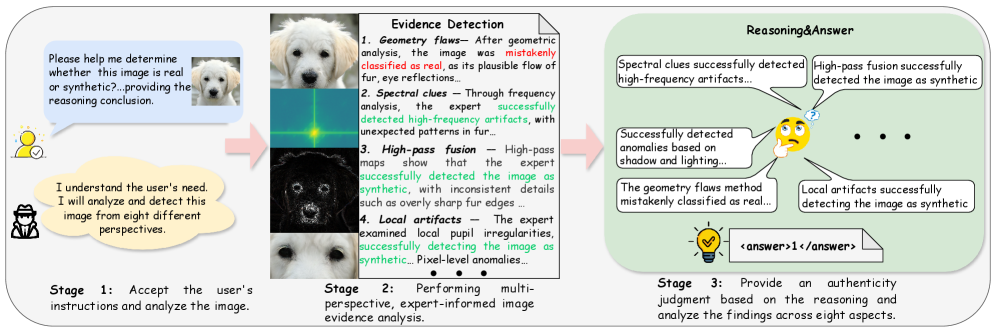
Figure 1: Overview of the proposed REVEAL framework for reasoning-enhanced explainable synthetic image detection. The framework consists of three main stages: (1) receiving user instructions, (2) performing expert-grounded multi-perspective evidence detection, and (3) conducting reasoning through the chain of evidence (CoE) to derive a reliable decision with justifications.
## 1 Introduction
With the rapid evolution of generative artificial intelligence techniques such as Generative Adversarial Networks (GANs) [goodfellow2014generative, karras2019style] and Diffusion Models [dhariwal2021diffusion], the visual realism of synthesized content has advanced to a level that can easily deceive human perception. While these advanced models have unlocked unprecedented creative and economic potential in fields like digital art, design, and film production, they have also raised significant concerns regarding misinformation, privacy violations, and copyright issues. The continual progress in advanced diffusion models such as FLUX [black-forest-labs_flux_2024] and SD3.5 [esser2024scaling], along with autoregressive generation methods (e.g., VAR [tian2024visual]), has further intensified the challenge of distinguishing between real and synthetic content, making reliable detection an urgent research priority.
<details>
<summary>x2.png Details</summary>
### Visual Description
## Diagram: Comparison of Explainable Classification and REVEAL
### Overview
The image displays two distinct architectural workflows for determining whether an image is real or synthetic using Multimodal Large Language Models (MLLMs).
* **Panel (a)**, set against a light blue background, illustrates a standard "Explainable classification" pipeline.
* **Panel (b)**, set against a light yellow background, illustrates a more complex, multi-stage framework labeled "REVEAL".
### Components/Axes
**Panel (a): Explainable classification**
* **Input:** An image of a bird accompanied by the text prompt: "Please help me determine whether this image is real or synthetic?".
* **Processing Unit:** A green trapezoid labeled "MLLM".
* **Decision Logic:** An arrow labeled "Whether the model's prediction y > threshold $\tau$".
* **Output Path:**
* A yellow box labeled "real/fake".
* A subsequent arrow labeled "Next Token Prediction" leading to a yellow box labeled "explanation".
**Panel (b): REVEAL**
* **Input:** An image of a bird and a "+" symbol, accompanied by the text prompt: "Please help me determine whether this image is real or synthetic?".
* **Processing Unit:** A green trapezoid labeled "MLLM".
* **Intermediate State:** A vertical stack of boxes labeled $o_1, o_2, \dots, o_G$.
* **Reward/Logic Block:** A large rounded rectangle containing three distinct sub-components:
* **R1:** "Answer reward" (light blue background).
* **R2:** "Think Reward" (light purple background).
* **R3:** "Multi-view alignment reward" (light orange background).
* **Output Path:**
* An arrow labeled "Generate" leading to a blue box labeled "Group Completion".
* A subsequent arrow leading to a yellow box labeled "evidence analysis".
* A final arrow leading to a yellow box labeled "real/fake".
### Detailed Analysis
**Panel (a) Flow:**
1. The input (image + prompt) enters the MLLM.
2. The MLLM produces a prediction $y$.
3. The system checks if $y > \tau$ (threshold).
4. The system outputs a "real/fake" classification.
5. The system then generates an "explanation" via "Next Token Prediction".
**Panel (b) Flow:**
1. The input (image + prompt) enters the MLLM.
2. The MLLM generates a series of outputs $o_1$ through $o_G$.
3. These outputs are processed through a reward mechanism consisting of three components: Answer reward (R1), Think Reward (R2), and Multi-view alignment reward (R3).
4. The system performs "Group Completion" based on the rewards.
5. The system conducts "evidence analysis".
6. The final output is the "real/fake" classification.
### Key Observations
* **Complexity:** Panel (b) (REVEAL) is significantly more complex than Panel (a). While (a) relies on a single threshold-based decision, (b) incorporates a multi-view reward system and explicit evidence analysis.
* **Logic:** Panel (a) generates an explanation *after* the classification, whereas Panel (b) appears to generate evidence *before* the final classification, suggesting a "chain-of-thought" or evidence-based reasoning approach.
* **Intermediate Steps:** Panel (b) explicitly includes a "Think Reward" (R2) and "Multi-view alignment reward" (R3), indicating that the model is incentivized to reason and verify its own outputs across multiple views before finalizing the classification.
### Interpretation
The data demonstrates a shift from **direct classification** (Panel a) to **reasoning-based classification** (Panel b).
* **Panel (a)** represents a standard, potentially brittle approach where the model makes a binary decision based on a probability threshold and then attempts to justify it post-hoc. This is prone to hallucination or "lazy" reasoning.
* **Panel (b)**, labeled "REVEAL," represents a more robust, verifiable framework. By introducing intermediate outputs ($o_1 \dots o_G$) and specific rewards (Answer, Think, Multi-view alignment), the system is forced to perform internal verification. The inclusion of "evidence analysis" before the final "real/fake" decision suggests that the model is designed to ground its classification in verifiable facts rather than just statistical probability. This architecture is likely intended to improve the reliability and interpretability of synthetic image detection.
</details>
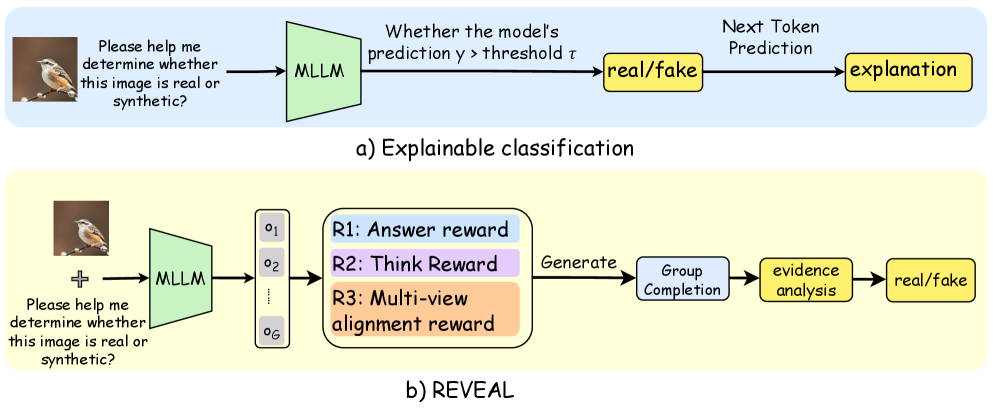
Figure 2: a) Existing post-hoc rationalization detection. b) REVEAL framework, a reasoning-enhanced paradigm for truly explainable forensic analysis.
Recent research [wang2020cnn, chai2020makes, wang2023dire, ojha2023towards, liu2024forgery, tan2024rethinking] has made notable progress in detecting AI-generated images. However, most traditional methods focus solely on discrimination, offering limited forensic analysis. The emergence of multimodal large language models (MLLMs) offers new opportunities, enabling models to combine visual perception with textual descriptions. Recent endeavours such as GPT-4 based detection [jia2024can], AIGI-Holmes [zhou2025aigi], FakeBench [li2025fakebench], and RAIDX [li2025raidx] have initiated this transition towards explainability. Yet, as illustrated in Figure 2, these methods share fundamental limitations: they primarily rely on post-hoc rationalizations or leverage the MLLMs merely as a powerful general-purpose visual classifier to identify high-level visual anomaly patterns (e.g.“unnatural lighting”, “blurry edge”). They fail to construct a causally grounded reasoning-based forensic pipeline where specialized evidence is systematically collected, analyzed, and synthesized through logical deduction. Specifically, these prior works: 1) use datasets (e.g. FakeBench [li2025fakebench]) that lack fine-grained, structured evidence, limiting support for deep causal reasoning; and 2) rely on methods (e.g. RAIDX [li2025raidx] with RAG) where explanations exhibit surface-level coherence derived from pattern matching, rather than being grounded in verifiable forensic evidence traces.
The critical gap highlights two major challenges in developing reasoning-enhanced synthetic image detection: 1) Lack of a reasoning-oriented forensic dataset. Existing datasets contain either binary labels or shallow textual justifications, without structured and rigorous chain-of-evidence annotations necessary to build auditable forensic judgments. 2) Limited reasoning-based explainability. Current MLLM-based detectors tend to produce post-hoc rationalizations instead of verifiable reasoning chains, leading to fragile generalization and unreliable claims in the forensic context.
To this end, we introduce REVEAL-Bench, a novel reasoning-oriented benchmark for AI-generated image forensics. Our data generation pipeline is fundamentally distinct from existing approaches: we shift from general visual correlation to expert-grounded evidence analysis. For each image, we first leverage eight lightweight expert models to provide structured, reliable, low-level forensic evidence. Such evidence then forms the input for a subsequent large model to generate a chain-of-evidence (CoE) annotation. By consolidating the multi-round forensic analysis from these specialized experts into a single, structured CoE trace, REVEL-Bench becomes the first dataset to explicitly provide an expert-grounded, verifiable forensic analysis that connects low-level cues to high-level conclusions.
Building upon this dataset, we propose the REVEAL framework, a two-stage training paradigm designed to enforce reasoning-based forensic evidence analysis. In the first stage, we employ a supervised fine-tuning (SFT) to teach the MLLM the canonical CoE structure. In the second stage, we introduce R-GRPO (Reasoning-enhanced Group Relative Preference Optimization), an expert-grounded policy optimization algorithm, featuring a novel reward function critical for enhancing the logical coherence and verifiability of forensic analysis. Specifically, R-GRPO jointly optimizes (i) detection accuracy, (ii) reasoning stability, and (iii) multi-view consistency. The novel optimization enforces the MLLM to perform logical synthesis over explicit forensic evidence rather than simple visual pattern matching, thereby achieving accurate, reliable, and explainable forensic analysis.
In summary, our work makes three major contributions:
REVEAL-Bench. We pioneer the first reasoning-based and explainable dataset for AI-generated image detection. Unlike prior datasets that offer only post-hoc explanations, REVEAL-Bench is uniquely structured around expert-grounded, verifiable forensic evidence that embeds an explicit chain-of-evidence following a systematic evidence-then-reasoning paradigm.
REVEAL Framework. We introduce the REVEAL Framework, a progressive two-stage training paradigm designed to instill standardized and explainable reasoning in multimodal LLMs. Its core, R-GRPO, optimizes the MLLM to perform logical synthesis for forensic evidence, jointly enhancing accuracy, reasoning consistency, and generalization.
Empirical Performance. Our approach achieves superior detection accuracy, generalization, and explanation fidelity, benchmarking a new state of the art for reasoning-based forensic research.
## 2 Related Work
#### Detection of AI-Generated Fake Images
The rapid evolution of generative models, e.g., GANs [goodfellow2014gan, esser2021taming], autoregressive models [oord2017vqvae], diffusion-based models [esser2024rectifiedflow, song2020ddim, ho2020ddpm, gu2022vqdiffusion, saharia2022imagen, ji2025mllm], has driven AI-generated images to near-photorealistic quality, challenging conventional detection methods. Early forensic studies focused on traditional manipulations like splicing or copy-move, analyzing noise inconsistencies, boundary anomalies, or compression artifacts [zhou2018manipulation, li2022splicing]. Researchers then shifted focus to generation artifacts, such as up-sampling grid effects, texture mismatches, or abnormal high-frequency decay [frank2020frequency, liu2020texture, dzanic2020fourier]. For example, the Spectral Learning Detector [karageorgiou2025spectral] models the spectral distribution of authentic images, treating AI-generated samples as out-of-distribution anomalies, achieving consistent detection across generators. However, as generators incorporate post-processing techniques like super-resolution, these low-level statistical clues become increasingly subtle and less reliable for robust detection.
Recent methods employ general-purpose feature extractors, such as CNN- or ViT-based detectors, to learn discriminative features directly. While lightweight CNNs achieve strong benchmark performance [ladevic2024cnn], methods like the Variational Information Bottleneck (VIB) network [zhang2025vib] aim to enhance generalization by constraining feature representations through the information bottleneck principle to retain only task-relevant information. Post-hoc Distribution Alignment (PDA) [wang2025pda] attempts to improve robustness to unseen generators by aligning regenerated and real distributions to detect unseen generators. Recently, NPR [tan2024rethinking] has become a representative approach by capturing low-level artifacts, demonstrating strong generalization capability. Similarly, HyperDet [cao2024hyperdet] and AIDE [yan2024sanity] achieve robust generalization through high-frequency spectrum analysis. Despite their discriminatory power, these approaches remain limited in forensic value, as their conclusions rely on global statistics and lack the semantic, verifiable evidence required for comprehensive explainability.
#### Explainable AI-generated Image Detection
The emergence of MLLMs [liu2023visual, wang2024qwen2] has accelerated the development of explainable image forensics by leveraging their advanced cross-modal understanding [wu2024comprehensive, talmor2019commonsenseqa]. Early efforts reformulated detection as a Visual Question Answering (VQA) task [jia2024can, keita2025bi, chang2023antifakeprompt], allowing MLLMs to provide accompanying descriptive text. FatFormer [liu2024forgery] extended this with a forgery-aware adapter to improve generalization on the CLIP-ViT [radford2021learning] encoder.
Subsequent studies focused on constructing task-specific multimodal datasets for fine-tuning. FakeBench [li2025fakebench] and LOKI [ye2024loki] provide synthetic images with manually written, high-level forgery descriptions. Holmes-Set [zhou2025aigi] utilized small models for initial image filtering and a Multi-Expert Jury mechanism to generate postt-hoc explanatory texts. At the methodological level, FakeShield [xu2024fakeshield], ForgerySleuth [sun2024forgerysleuth], ForgeryGPT [liu2024forgerygpt] and SIDA [huang2025sida] fine-tune MLLMs to achieve explainable forgery detection and localization. AIGI-Holmes [zhou2025aigi] integrates low-level visual experts with reasoning modules. RAIDX [li2025raidx] combines retrieval-augmented generation (RAG) [lewis2020retrieval] with GRPO optimization to improve the ability to describe texts.
Critically, existing datasets and methods suffer from two key limitations: First, the explanations are attributed to post-hoc rationalizations, often relying on the MLLM’s general knowledge and visual classification capabilities, failing to achieve logical synthesis of specialized forensic evidence. Second, they lack structured, fine-grained forensic evidence required to support a verifiable causal link between low-level artifacts and the final forensic judgments.
## 3 REVEAL-Bench
<details>
<summary>x3.png Details</summary>
### Visual Description
## Diagram: Expert-Grounded Synthetic Image Detection Workflow
### Overview
This diagram illustrates a multi-stage pipeline designed to detect synthetic images. The workflow progresses from data curation and pre-filtering to an "Expert-grounded" evidence collection phase utilizing an LLM (Large Language Model), culminating in a "Chain-of-Evidence" synthesis that provides a reasoned determination of whether an image is synthetic or real.
### Components/Axes
**1. Data Curation & Pre-filtering (Top-Left)**
* **Inputs:** Chameleon, Fake2M, GenImage, Autoregressive GAN, Diffusion.
* **Process:** Pre-filtering -> Expert Filtering (Lightweight Model as Expert).
* **Expert Filtering Categories:** Local artifacts, Spectral clues, Pixel noise, Spatial consistency, Geometry flaws, Shadow logic, Texture fusion, High-pass fusion.
**2. Image Dataset Distribution (Bottom-Left)**
* **Structure:** A circular sunburst/donut chart.
* **Center:** "Image Dataset" split into "Real 30000" (Green) and "Fake 30000" (Blue).
* **Outer Ring:** Categorical breakdown of the dataset.
**3. Expert-grounded Evidence Collection (Top-Right)**
* **Process:** A flow diagram where specific "clues" (the categories listed in the top-left) are fed into a "prompt design" phase, which then interacts with an LLM.
* **Outputs:** Three distinct LLM response blocks (two green "success" boxes, one red "failed" box).
* **Specific Examples:**
* *Local artifacts:* "By observing the bird's eyes, we find that the reflection of the eyeball is missing..."
* *Spectral clues:* "Periodic artifacts of the synthesized image are revealed along the spectral axis..."
* *High-pass fusion:* "By examining the high-frequency map, it is observed that the area around the bird appears smooth and contains no signs of forgery..."
**4. Chain-of-Evidence Synthesis (Bottom-Right)**
* **Input:** Visual evidence (bird image).
* **Process:** A `<answer>1</answer>`
---
### Key Observations
* **Two-Tiered Detection:** The system uses a "Lightweight Model" for initial filtering, likely to reduce computational load, before passing suspicious samples to a more resource-intensive LLM for detailed analysis.
* **Failure Handling:** The diagram explicitly includes a "failed" detection case (the red box in the top-right), suggesting the system is designed to handle ambiguity or false negatives by re-evaluating with different methods (e.g., high-pass fusion).
* **Evidence-Based Reasoning:** The system does not just output a binary label; it generates specific textual evidence (e.g., "reflection of the eyeball is missing") to justify its conclusion.
* **Consolidation:** The curved arrow from the LLM to the "Chain-of-Evidence" block indicates that the LLM's outputs are consolidated into the final reasoning step.
### Interpretation
This diagram outlines an **Explainable AI (XAI) framework for synthetic image detection**.
The core philosophy here is that binary classification (Real vs. Fake) is insufficient for high-stakes verification. By forcing the model to perform a "Chain-of-Thought" (CoT) analysis—checking specific forensic markers like shadow logic, spectral artifacts, and high-frequency textures—the system mimics human forensic investigation.
The inclusion of the "failed" detection case is particularly notable; it implies that the system is iterative. If one method (e.g., local artifacts) fails to provide a conclusive result, the system pivots to other forensic modalities (e.g., high-pass fusion) to reach a final determination. This suggests a robust, multi-modal approach to identifying AI-generated forgeries.
</details>
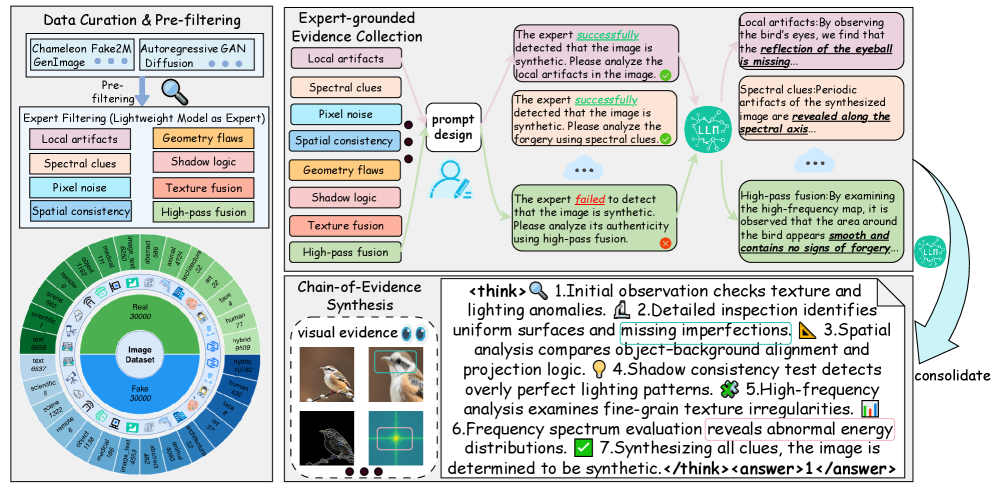
Figure 3: The pipeline of REVEAL-Bench. This figure illustrates our data processing pipeline, which consists of three stages: Data Curation & Pre-filtering, Expert-grounded Evidence Collection, and Chain-of-Evidence (CoE) Synthesis
As illustrated in Figure 3, this study constructs the REVEAL-Bench dataset through a rigorous, three-stage pipeline designed for reasoning-based image forensic: Data Curation & Pre-filtering, Expert-grounded Evidence Collection, and Chain-of-Evidence (CoE) Synthesis. This approach is fundamentally distinct as it replaces manual, subjective labeling with a process that systematically integrates verifiable evidence from specialized models with the logical synthesis capabilities of large vision-language models. The resulting dataset contains explicit, expert knowledge-grounded Chain-of-Evidence annotations, which is crucial for training forensic detectors with superior transparency and generalization capability.
#### Data Curation & Prefiltering
To ensure sufficient content, generator, and artifact diversity, we aggregate several prominent AI-generated detection benchmarks, including CNNDetection [wang2020cnn], UnivFD [ojha2023towards], AIGCDetectBenchmark [zhong2023patchcraft], GenImage [zhu2023genimage], Fake2M [lu2023seeing], and Chameleon [yan2024sanity]. This yielded in an initial corpus of approximately 5,120K synthetic images and 850K authentic images. To manage annotation costs while ensuring high data quality, we implemented a stratified sampling strategy based on automated quality assessments [talebi2018nima] and image resolution. Specifically, we sampled images based on aesthetic scores (50% high, 30% medium, 20% low), and image resolution, high-resolution ( $≥$ 512 $×$ 512) images at 50%, medium-resolution (384 $×$ 384–512 $×$ 512) images at 30%, and low-resolution ( $<$ 384 $×$ 384) images at 20%. Images were also semantically classified into 13 major categories (e.g., humans, architecture, artworks). After rigorous multi-stage filtering and preprocessing to eliminate non-representative or low-quality samples, we finalized a balanced corpus of 30K synthetic and 30K real images, which serves as the foundation for subsequent expert annotation
#### Expert-grounded Evidence Collection
To enable fine-grained, verifiable forensic analysis, we design and employ a set of eight lightweight and specialized expert models [li2025improving, sarkar2024shadows, tan2024rethinking, cao2024hyperdet, tan2024frequency, li2025optimized], each dedicated to screening and localizing a distinct category of synthetic artifact (as depicted in Figure 3). This is a crucial distinction from prior work, such as AIGI-Holmes [zhou2025aigi], which uses experts primarily for global filtering. Our experts, by contrast, provide structured, machine-readable evidence, including artifact masks and diagnostic labels. These eight outputs constitute the necessary forensic evidence foundation. By conditioning the LVLM on these high-fidelity, structured references, we ensure the final generated explanations are faithful, logically consistent, and verifiable against objective, low-level artifact data. This expert-grounded decompositional analysis effectively bridges the gap between small-model perception of artifacts and large-model logical reasoning.
<details>
<summary>x4.png Details</summary>
### Visual Description
## Diagram: Two-Stage Training Framework (CoE Tuning and R-GRPO)
### Overview
The image presents a two-stage machine learning framework designed to train a Multimodal Large Language Model (MLLM) to detect synthetic images.
* **Stage 1 (Left):** Focuses on "CoE Tuning" (Chain-of-Thought/CoE), where the model is trained to generate reasoning steps and a final answer.
* **Stage 2 (Right):** Focuses on "R-GRPO" (Reinforcement Learning with Group Relative Policy Optimization), where the model generates multiple completions and is evaluated using a multi-faceted reward system (Answer, Think, and Multi-view alignment).
---
### Components/Axes
#### Left Panel: Stage 1: CoE Tuning
* **Inputs (Top):** A document icon containing the text: "Please help me determine whether this image is real or synthetic?" and an image of a bird.
* **Processing (Center):** An MLLM block marked with a fire icon.
* **Output (Bottom):** A text block containing reasoning and an answer: `<answer>1</answer>`.
* **Loss Functions:**
* $\mathcal{L}_{\text{think}}$ (indicated by a blue arrow pointing to the reasoning process).
* $\mathcal{L}_{\text{answer}}$ (indicated by a blue arrow pointing to the answer).
#### Right Panel: Stage 2: R-GRPO
* **Inputs (Top):** A document icon containing the text: "Please help me determine whether this image is real or synthetic?" and an image of a bird.
* **Processing (Center):** An MLLM block generating a group of completions ($G$).
* **Reward System:**
* **(1) Answer reward:** Binary evaluation of the final answer.
* **(2) Think reward:** Evaluates reasoning steps:
* Match: R=1
* Similar: R=0.5
* Mismatch: R=0
* **(3) Multi-view alignment reward:** Evaluates reasoning based on visual evidence.
* **Match (Green check):** Reasoning -> Robot icon -> R=1.
* **Mismatch (Red x):** Reasoning -> Robot icon -> R=0.
---
### Detailed Analysis
#### Stage 1: CoE Tuning
The model is trained using a supervised approach where the loss is split between the reasoning process ($\mathcal{L}_{\text{think}}$) and the final classification ($\mathcal{L}_{\text{answer}}$). The example shows the model identifying "uneven features" and "synthetic traces" before concluding the image is synthetic (Answer: 1).
#### Stage 2: R-GRPO
This stage employs reinforcement learning. The model generates a group of completions ($G$). These completions are scored based on three distinct criteria:
1. **Answer Accuracy:** Binary reward (1 or 0) for the final answer.
2. **Reasoning Quality (Think reward):** A graded reward (1, 0.5, or 0) based on how well the reasoning matches the ground truth.
3. **Multi-view Alignment:** A sophisticated reward mechanism that checks if the model's reasoning aligns with specific visual forensic cues.
* The diagram highlights that "Match" scenarios involve identifying "structural irregularities" and "high-frequency artifacts."
* The "Mismatch" scenario involves a model failing to identify artifacts or misinterpreting the visual evidence (e.g., claiming the eyeball "appears natural" when it actually contains artifacts).
---
### Key Observations
* **Granular Supervision:** The framework does not rely solely on the final answer. It explicitly rewards the "thinking" process and the ability to correlate reasoning with specific visual evidence (Multi-view alignment).
* **Forensic Focus:** The "Multi-view alignment" reward specifically targets image forensics, such as looking for "high-frequency artifacts" and "structural irregularities" in zoomed-in views.
* **Feedback Loop:** The green arrow in Stage 2 indicates an iterative reinforcement learning process where the model learns from the rewards of its generated completions.
---
### Interpretation
This diagram outlines a robust training pipeline for AI-based synthetic image detection.
The transition from **Stage 1 (CoE Tuning)** to **Stage 2 (R-GRPO)** represents a shift from learning *what* to say (supervised reasoning) to learning *how to be accurate and consistent* (reinforcement learning).
The most critical component is the **Multi-view alignment reward**. This suggests that the researchers are training the model to act like a forensic analyst. By rewarding the model when its "thought" process correctly identifies specific, subtle visual artifacts (like high-frequency noise or structural irregularities) and penalizing it when it misses them (even if the final answer might be correct by chance), the framework forces the model to develop a deeper, more reliable understanding of synthetic image characteristics rather than relying on superficial patterns.
</details>
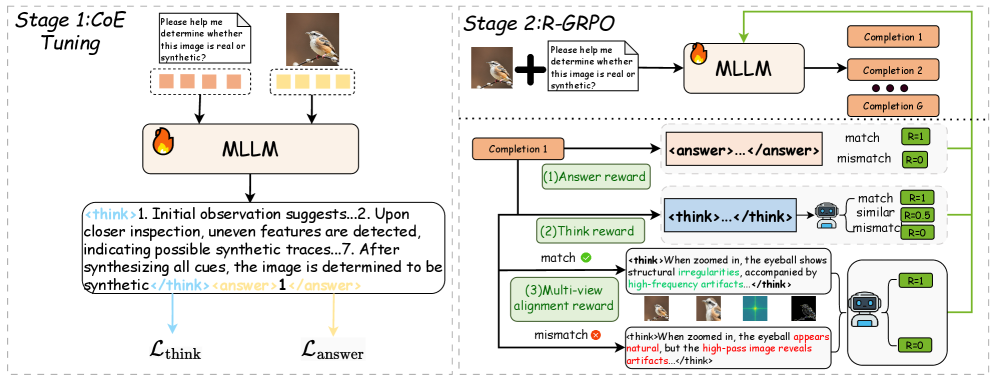
Figure 4: Overview of REVEAL. The pipeline mainly consists of two stages: CoE Tuning and R-GRPO.
#### Chain-of-Evidence Synthesis
As shown in Figure 3, after the specialized expert annotation, the initial eight rounds of multi-perspective diagnostic outputs are diverse and fragmented. To construct a unified and progressive reasoning dataset suitable for Chain-of-Thought (CoT) fine-tuning, we leverage a high-capacity LVLM (Qwen-2.5VL-72B [bai2025qwen2]) to perform structured knowledge consolidation. This process reconstructs the diverse, specialized evidence into a single, cohesive, and auditable reasoning trace, formatted using a standard <think> $⋯$ </think> $·$ <answer> $⋯$ </answer> structure.
Fundamentally distinct from existing datasets like AIGI-Holmes [zhou2025aigi] and FakeBench [li2025fakebench], which merely provide generic explanations, REVEAL-Bench explicitly formalizes the link between low-level expert evidence and high-level judgments. This two-stage pipeline transforms the detection tasks into a reasoning task, offering coherent CoE annotations that enhance logical consistency, minimizing annotation noise, and support supervision paradigms with advanced reinforcement learning techniques to improve explanation fidelity and generalization.
## 4 Methodology
### 4.1 Overview of REVEAL
As illustrated in Figure 4, the overall training pipeline adopts a two-stage progressive training paradigm inspired by advanced policy optimization-based reinforcement learning techniques [guo2025deepseek].
We first perform supervised fine-tuning (SFT) on a consolidated Chain-of-Evidence (CoE) dataset to obtain a base policy that can deduce the required forensic reasoning procedure. While this stage establishes the fundamental reasoning-based forensic structure, the resulting model still exhibits limitations in logical consistency, forensic accuracy, and robustness. To mitigate these limitations, we propose a novel reinforcement learning algorithm: R easoning- e nhanced Forensic E vid e nce A na l ysis (R-GRPO). R-GRPO extends beyond standard Group Relative Policy Optimization (GRPO) by incorporating a task-specific composite reward that dynamically aligns forensic reasoning trajectories and stabilizes policy updates, significantly enhancing semantic consistency and reasoning robustness.
### 4.2 Progressive Multimodal Training for AI-Generated Image Detection
We introduce REVEAL (Reasoning-enhanced Forensic Evidence AnaLysis), a progressive multimodal training framework comprising two sequential stages designed to cultivate robust, logically consistent, and verifiable forensic reasoning in multimodal models.
Stage 1: Chain-of-Evidence Tuning (CoE Tuning). In the initial stage, we perform cold-start supervised fine-tuning to establish a stable, stepwise reasoning policy and a consistent output paradigm built upon the REVEAL-Bench dataset. Let $x$ denote the visual input, $z=(z_1,\dots,z_T)$ denote the tokenized reasoning sequence (Chain-of-Evidence, CoE), and $y$ denote the final classification label. We adopt an explicit joint reasoning–decision modeling paradigm, where the final prediction $y$ is conditioned on the explicit reasoning trace $z$ . This formulation enforces a think-then-answer mechanism, fundamentally distinct from post-hoc rationalizations (e.g. modeling $p(y\mid x)$ and then $p(z\mid x,y)$ ), thereby achieving causally grounded genuine explanations.
Concretely, we factorize the joint conditional probability as
$$
p(y,z\mid x) = p(z\mid x) p(y\mid x,z), \tag{1}
$$
which structurally encourages the model to first generate verifiable reasoning evidence and subsequently derive the final prediction conditioned directly on that reasoning process.
Maximizing the likelihood under (1) corresponds to minimizing the following negative log-likelihood loss:
$$
L_NLL(x,y,z;θ) = -\log p_θ(z\mid x) - \log p_θ(y\mid x,z). \tag{2}
$$
For training control and to explicitly balance the emphasis on reasoning quality versus final decision accuracy, we decompose $L_NLL$ into two components, the reasoning generation loss $L_think$ and the answer loss $L_answer$ ,
$$
L_think = -∑_t=1^T\log p_θ(z_t\mid z_<t,x), \tag{3}
$$
$$
L_answer = -\log p_θ(y\mid x,z), \tag{4}
$$
We then employ a weighted composite SFT loss:
$$
L_SFT=\begin{aligned} &(1-α) L_think+α L_answer+η KL\big(π_pre\|π_θ\big).\end{aligned} \tag{5}
$$
where $α∈(0,1)$ controls the relative importance of the answer loss versus the reasoning trace, the KL regularization term constrains the fine-tuned policy $π_θ$ to remain proximal to the pretrained policy $π_pre$ , effectively mitigating catastrophic forgetting.
Stage 2: Reasoning-enhanced Group Relative Policy Optimization (R-GRPO).
Group Relative Policy Optimization (GRPO). Group Relative Policy Optimization (GRPO) is a reinforcement learning technique that stabilizes policy updates by comparing a group of candidate trajectories, rather than relying on the noisy reward signals of individual samples. Given an input $x$ , we sample a group of $K$ trajectories $\{τ_i\}_i=1^K$ from the current policy $π_θ$ , where each trajectory $τ_i$ consists of an intermediate reasoning trace $z_i$ and a final output $y_i$ . A group-based composite reward $R_group(τ_i)$ is computed for each trajectory, and the group-relative advantage $A_i$ is defined by subtracting the mean group reward $\overline{R}_group$ :
$$
\displaystyle A_i \displaystyle=R_group(τ_i)-\overline{R}_group, \displaystyle\overline{R}_group \displaystyle=\frac{1}{K}∑_j=1^KR_group(τ_j). \tag{6}
$$
The GRPO objective maximizes the expected group-relative log-probability, regularized by a KL penalty for stable policy convergence:
$$
\max_θ E\Big[∑_i=1^KA_i\logπ_θ(τ_i\mid x)\Big] - λ_KL KL\big(π_old\|π_θ\big). \tag{7}
$$
Reasoning-enhanced GRPO (R-GRPO). To employ GRPO for forensic analysis tasks, we propose R-GRPO, which augments the objective with a task-aware composite reward specifically designed to capture forensic fidelity and reasoning robustness. Let $y$ denote the generated answer, $y^∗$ the reference answer, $z=(z_1,\dots,z_T)$ the reasoning tokens, and $\{v_m(x)\}_m=1^M$ a set of multi-visual visual evidence (e.g., spectral representations, high-pass filtered images, and localized artifact patches).
Rationale for Agent-based Reward Modeling. In preliminary experiments, we observed that simple metric-based rewards (e.g. using cosine similarity of sentence embeddings for $r_sem$ ) fail to adequately reflect the semantic and contextual logic required for high-quality forensic explanations. Therefore, we introduce a dedicated large language model as an intelligent agent (Agent) to evaluate responses. This Agent-based assessment considers contextual logic, explanation coherence, and factual consistency against the provided structured evidence, thereby generating a more human-aligned and interpretable reward signal than purely metric-based approaches (see Appendix A for details).
R-GRPO defines three complementary, evidence-driven reward components:
(1) Answer Reward $r_sem$ . This binary reward ensures the accuracy of the detection:
$$
r_sem(y,y^∗)=\begin{cases}1,&if y=y^∗,\\
0,&otherwise.\end{cases} \tag{8}
$$
(2) Think Reward $r_think$ . This reward quantifies the quality and structural integrity of the reasoning trace $z$ .
Let $z=(z_1,\dots,z_T)$ be the generated reasoning trace and $z^∗=(z^∗_1,\dots,z^∗_T^∗)$ the ground-truth reasoning trace (when available). Define a perturbed trace $\tilde{z}=(z)$ . Then
$$
r_think(z,z^∗,\tilde{z}) = A_sem(z,z^∗)+A_logic(z,\tilde{z}), \tag{9}
$$
where $A_sem$ measures alignment between the generated and reference reasoning, and $A_logic(z,\tilde{z})$ evaluates the logical coherence of the trace. Crucially, $A_logic$ evaluates the logical coherence by penalizing the model if minor structural perturbations $\tilde{z}$ severely alter the inferred conclusion. This mechanism forces the model to maintain sequential consistency and ensure the reasoning steps are robustly connected.
(3) Multi-view Alignment Reward $r_view$ . This reward encourages the generated reasoning trace $z$ to be robustly grounded in evidence that persists across different forensic views of the image.
$$
r_view(z,x) = A_view\Big(z,\{v_m(x)\}_m=1^M\Big), \tag{10}
$$
where $A_view$ measures fidelity of the reasoning to the multi-view visual evidence $\{x_m\}$ . By requiring alignment with evidence visible under different transformations (e.g., spectral, high-pass), this reward promotes cross-artifact generalization and enables the self-supervised discovery of novel, transformation-invariant artifacts.
The composite trajectory reward $R(τ)$ combines these terms:
$$
\displaystyle R(τ)= \displaystyleλ_sr_sem(y,y^∗)+λ_tr_think(z,z^∗,\tilde{z}) \displaystyle+λ_vr_view(z,x), \tag{11}
$$
where $λ_s,λ_t,λ_v≥ 0$ are tunable parameters balancing the rewards. For improved stability, rewards are standardized within each sampled group before calculating the advantage $\widehat{A}_i$ :
$$
\widehat{R}(τ_i)=\frac{R(τ_i)-μ_group}{σ_group}, \tag{12}
$$
$$
μ_group=\frac{1}{K}∑_jR(τ_j), \tag{13}
$$
$$
σ_group=std(\{R(τ_j)\}) \tag{14}
$$
and the normalized group-relative advantage is
$$
\widehat{A}_i=\widehat{R}(τ_i)-\frac{1}{K}∑_j\widehat{R}(τ_j). \tag{15}
$$
Unified GRPO with the R-GRPO objective. Combining the original GRPO formulation (7) with the R-GRPO composite reward (11), the unified optimization objective becomes
$$
\max_θ E\Big[∑_i=1^K\widehat{A}_i\logπ_θ(τ_i\mid x)\Big] - λ_KL KL\big(π_old\|π_θ\big), \tag{16}
$$
where $\widehat{A}_i$ encodes both the group-relative comparison and the reasoning-enhanced composite reward.
This evidence-enhanced reward signals can effectively guide the model to optimize its reasoning trajectories, enforcing both stability and logical coherence in verifiable forensic evidence analysis.
## 5 Experiments
### 5.1 Experimental Settings
TABLE I: Comparison of REVEAL-bench with previous datasets. REVEAL-bench is the first reasoning dataset for synthetic image detection.
Dataset #Image Explanation Multiview Fusion Reasoning Process CNNDetection [wang2020cnn] 720k ✗ ✗ ✗ GenImage [zhu2023genimage] 1M ✗ ✗ ✗ FakeBench [li2025fakebench] 6K ✓ ✗ ✗ Holmes-Set [zhou2025aigi] 69K ✓ ✓ ✗ REVEAL-bench 60K ✓ ✓ ✓
To comprehensively evaluate the performance of REVEAL, we conduct experiments on two datasets: REVEAL-Bench and GenImage [zhu2023genimage] (see Table I). REVEAL-Bench, the first chain-of-evidence-based explainable dataset for synthetic image detection, serves as the in-domain dataset for training and evaluation. GenImage, a large-scale synthetic image dataset containing images generated by multiple generation methods, is used as an out-of-domain dataset to assess generalization. We train REVEAL on REVEAL-Bench and systematically evaluate its performance on both datasets (see Appendix B for detailed training settings). Building on this evaluation setup, we further investigate several core aspects of REVEAL’s capabilities. In particular, we study the impact of different MLLMs used as vision–language backbones, conduct ablation experiments to quantify the contribution of R-GRPO, and assess the model’s robustness under diverse perturbation settings. Appendix C reports the few-shot training results, and Appendix D provides a systematic comparison with existing large-scale model-based detectors.
Baselines We compare REVEAL with state-of-the-art AI-generated image detection methods, including CNNSpot [wang2020cnn], UnivFD [ojha2023towards], NPR [tan2024rethinking], HyperDet [cao2024hyperdet], AIDE [yan2024sanity] and VIB-Net [zhang2025towards]. To ensure a fair comparison, we retrain these methods using the official code under the same experimental settings and datasets.
Evaluation metrics Following existing research, we adopt Accuracy (ACC) as our evaluation metric. Accuracy is defined as the proportion of correctly predicted samples among the total number of samples, reflecting the overall correctness of a classification model. Since our detection results are provided by the MLLM in textual form (Real/Fake), we convert these texts into binary labels to compute accuracy, while baseline methods use the default thresholds provided by their official code. Moreover, because the output of the MLLM is interpretable text rather than logit values, we do not consider metrics that require logit values for computation, such as Average Precision (AP), in our evaluation.
### 5.2 Generalization across datasets
TABLE II: REVEAL demonstrates superior generalization across both in-domain and out-of-domain evaluations. REVEAL outperforms the best competing method by 3.87 %.
| CNNSpot [wang2020cnn] UnivFD [ojha2023towards] NPR [tan2024rethinking] | 87.80 86.95 95.40 | 62.45 75.00 84.80 | 74.25 84.35 88.85 | 73.85 80.95 88.05 | 63.55 85.50 85.10 | 73.60 71.75 94.30 | 73.70 82.00 87.05 | 71.35 80.70 84.45 | 39.45 88.45 88.95 | 68.89 81.74 88.55 |
| --- | --- | --- | --- | --- | --- | --- | --- | --- | --- | --- |
| HyperDet [cao2024hyperdet] | 93.25 | 68.40 | 91.85 | 92.30 | 100.0 | 67.05 | 89.20 | 80.45 | 57.65 | 82.24 |
| AIDE [yan2024sanity] | 95.25 | 79.90 | 95.90 | 94.95 | 87.75 | 90.35 | 94.85 | 90.10 | 91.10 | 91.13 |
| VIB-Net [zhang2025towards] | 67.05 | 53.25 | 60.25 | 57.85 | 65.00 | 68.55 | 60.85 | 52.55 | 38.00 | 58.15 |
| REVEAL | 95.31 | 93.75 | 97.81 | 97.19 | 95.00 | 86.88 | 96.25 | 95.94 | 96.88 | 95.00 |
Table II reports the performance of REVEAL on the in-domain dataset REVEAL-bench and the out-of-domain benchmark GenImage. The results indicate that REVEAL, leveraging a Chain-of-Evidence (CoE) reasoning-and-forensics mechanism, achieves superior cross-domain generalization compared to baseline lightweight binary classifiers: it maintains higher accuracy and more stable performance on GenImage. In the in-domain setting, smaller classifiers, such as those using methods like NPR [tan2024rethinking] and AIDE [yan2024sanity], are more prone to overfitting, demonstrating stronger fitting ability to domain-specific statistical regularities and subtle signals. As a result, REVEAL’s performance in-domain is comparable to that of these compact models. However, REVEAL excels in terms of cross-domain generalization. These findings suggest that while smaller models remain attractive for tasks prioritizing computational efficiency and in-domain accuracy, REVEAL better preserves and propagates key reasoning cues across domains. Therefore, there is a clear trade-off between generalization and domain-specific fit that should inform deployment choices. Notably, in the context of synthetic-image detection, reasoning-based forensic approaches, like REVEAL, exhibit particularly robust generalization.
### 5.3 Generalization across Base MLLMs
TABLE III: Performance across different MLLMs, showing larger models exhibit consistently stronger detection capability.
Training Scheme Phi-3.5 Qwen2.5- VL-3b Qwen2.5- VL-7b llava- v1.5-7b llava- v1.5-13b CoE Tuning 83.75 87.18 85.73 91.56 93.06 CoE Tuning+G-GRPO 87.19 89.06 92.19 92.81 95.31
The proposed algorithm in this study demonstrates strong generalizability and can be flexibly applied to a variety of multimodal large model architectures. To validate the effectiveness of our method, we conduct experiments using Qwen2.5-VL [bai2025qwen2], LLaVA-1.5-VL [liu2023visual], and Phi-3.5 as representative training frameworks. As shown in Table III, the results indicate that our approach achieves excellent detection performance and robust generalization across different multimodal large models.
Furthermore, we observe that as the model size increases, the detection capability improves significantly. This trend suggests the existence of a scaling law for synthetic image detection within the context of large models, similar to other tasks in the large model domain. As multimodal models continue to grow, their ability to handle complex tasks such as synthetic image detection becomes increasingly effective, demonstrating a direct correlation between model scale and performance.
### 5.4 Ablation Studies
TABLE IV: Ablation study of the impact of CoE Tuning, GRPO, and R-GRPO on model accuracy on REVEAL-Bench.
| ✗ | ✗ | ✗ | 61.21 |
| --- | --- | --- | --- |
| ✓ | ✗ | ✗ | 85.73 |
| ✓ | ✓ | ✗ | 91.56 |
| ✓ | ✗ | ✓ | 95.31 |
We conducted ablation experiments to investigate the role of reasoning datasets in synthetic image detection. As shown in Table IV, we first evaluated the performance of models trained without reasoning data (i.e., non-Reasoning SFT) and compared them with models fine-tuned using reasoning data (i.e., CoE Tuning). Additionally, we tested the effects of applying simple GRPO and our proposed R-GRPO method on performance improvement. The experimental results demonstrate that reasoning datasets significantly enhance the performance of MLLMs in synthetic image detection, with models lacking reasoning data performing close to random levels. Moreover, applying G-GRPO further improved the performance, highlighting the critical role of R-GRPO in this task.
### 5.5 Robustness Evaluation of REVEAL
<details>
<summary>x5.png Details</summary>
### Visual Description
## Line Charts: Performance Comparison on REVEAL-bench
### Overview
This image displays two line charts comparing the performance of two methods, "Ours(REVEAL)" and "NPR(2024CVPR)", evaluated on the "REVEAL-bench" dataset. The charts measure accuracy ("Acc") against two different variables: "quality" (left chart) and "sigma" (right chart). Both charts include a horizontal dashed gray line at Acc=50, likely representing a baseline or chance performance level.
### Components/Axes
* **Legend**: Positioned at the top center.
* **Red line with circles**: "Ours(REVEAL)"
* **Blue line with triangles**: "NPR(2024CVPR)"
* **Left Chart ("quality")**:
* **X-axis**: Labeled "quality", ranging from 100 to 60 (descending order).
* **Y-axis**: Labeled "Acc", ranging from 50 to 100.
* **Right Chart ("sigma")**:
* **X-axis**: Labeled "sigma", ranging from 0 to 4 (ascending order).
* **Y-axis**: Labeled "Acc", ranging from 50 to 100.
### Detailed Analysis
#### Left Chart: Quality vs. Accuracy
* **Trend**: Both data series show a downward trend as "quality" decreases from 100 to 60.
* **Ours(REVEAL) (Red)**: Starts at approximately 95% accuracy at quality 100. It drops to ~77% at quality 90, ~65% at quality 80, ~60% at quality 70, and ~58% at quality 60.
* **NPR(2024CVPR) (Blue)**: Starts at approximately 57% accuracy at quality 100. It drops to ~52% at quality 90, ~51% at quality 80, and plateaus near ~50.5% at qualities 70 and 60.
#### Right Chart: Sigma vs. Accuracy
* **Trend**: Both data series show a downward trend as "sigma" increases from 0 to 4.
* **Ours(REVEAL) (Red)**: Starts at approximately 95% accuracy at sigma 0. It drops to ~80% at sigma 1, ~66% at sigma 2, ~60% at sigma 3, and ~58% at sigma 4.
* **NPR(2024CVPR) (Blue)**: Starts at approximately 95% accuracy at sigma 0. It drops to ~81% at sigma 1, ~58% at sigma 2, ~55% at sigma 3, and ~54% at sigma 4.
### Key Observations
* **Performance Gap**: "Ours(REVEAL)" consistently outperforms "NPR(2024CVPR)" across all data points in the "quality" chart.
* **Robustness to Noise**: In the "sigma" chart, both models perform nearly identically at low noise levels (sigma 0 and 1). However, as noise increases (sigma 2, 3, and 4), "Ours(REVEAL)" maintains a significantly higher accuracy compared to "NPR(2024CVPR)".
* **Baseline Convergence**: In the "quality" chart, the "NPR" method approaches the 50% baseline very quickly (by quality 80), whereas "Ours" maintains a substantial margin above the baseline even at the lowest quality tested (60).
### Interpretation
The data demonstrates that "Ours(REVEAL)" is significantly more robust than the "NPR(2024CVPR)" baseline under conditions of both reduced image quality and increased noise (sigma).
* **Quality Sensitivity**: The "quality" chart suggests that the NPR method struggles to maintain accuracy even with minor reductions in quality, whereas the REVEAL method degrades more gracefully.
* **Noise Sensitivity**: The "sigma" chart indicates that while both models are highly capable under clean conditions (sigma 0), the REVEAL method is architecturally or algorithmically superior at handling higher levels of noise, as evidenced by the divergence of the two lines starting at sigma 2.
In summary, REVEAL appears to be a more stable and reliable model for the REVEAL-bench tasks when input data is degraded or noisy.
</details>
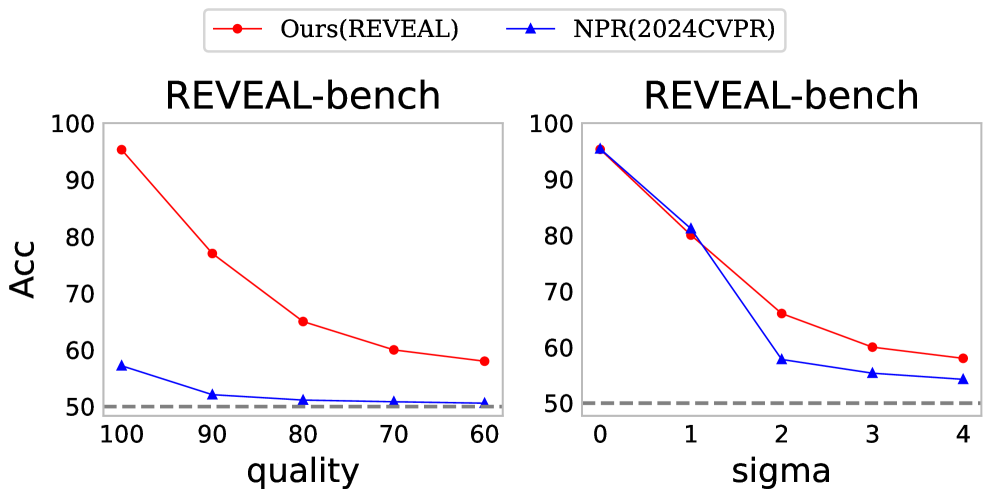
Figure 5: The accuracy comparison between the two methods under various perturbation conditions.
To evaluate the robustness of REVEAL against common post-processing distortions, we conducted a systematic robustness study on the REVEAL-bench dataset. The experiments apply two typical post-processing operations to the original test images: Gaussian blur ( $σ=1,2,3,4$ ) and JPEG compression (quality = 90, 80, 70, 60). For each distortion level, we compare REVEAL with the state-of-the-art baseline methods (results are shown in Figure 5). The results indicate that REVEAL demonstrates stronger robustness and improved cross-domain generalization across the considered post-processing settings.
## 6 Conclusion
We presented REVEAL, a reasoning-centered approach for explainable AI-generated image detection. First, we introduced REVEAL-Bench, the first dataset organized around expert-grounded, verifiable forensic evidence and an explicit chain-of-evidence following an evidence-then-reasoning paradigm. Second, we proposed the REVEAL Framework, a progressive two-stage training scheme whose core component R-GRPO explicitly teaches multimodal LLMs to perform logical synthesis over forensic evidence, jointly improving accuracy, reasoning consistency, and generalization. Empirically, REVEAL attains superior detection accuracy, stronger out-of-domain generalization, and higher explanation fidelity, establishing a new state of the art for reasoning-based image forensics.