Toward Safe and Responsible AI Agents:
A Three-Pillar Model for
Transparency, Accountability, and Trustworthiness
Edward C. Cheng
echeng04@stanford.edu
Jeshua Cheng
jeshua.cheng@inquiryon.com
Alice Siu asiu@stanford.edu
[Warning: Draw object ignored]
Abstract – This paper presents a conceptual and operational framework for developing and operating safe and trustworthy AI agents based on a Three-Pillar Model grounded in transparency, accountability, and trustworthiness. Building on prior work in Human-in-the-Loop systems, reinforcement learning, and collaborative AI, the framework defines an evolutionary path toward autonomous agents that balances increasing automation with appropriate human oversight. The paper argues that safe agent autonomy must be achieved through progressive validation, analogous to the staged development of autonomous driving, rather than through immediate full automation. Transparency and accountability are identified as foundational requirements for establishing user trust and for mitigating known risks in generative AI systems, including hallucinations, data bias, and goal misalignment, such as the inversion problem. The paper further describes three ongoing work streams supporting this framework: public deliberation on AI agents conducted by the Stanford Deliberative Democracy Lab, cross-industry collaboration through the Safe AI Agent Consortium, and the development of open tooling for an agent operating environment aligned with the Three-Pillar Model. Together, these contributions provide both conceptual clarity and practical guidance for enabling the responsible evolution of AI agents that operate transparently, remain aligned with human values, and sustain societal trust.
Keywords— Generative AI, AI Agent, Human-in-the-Loop, HITL, RLHF, Responsible AI, Trustworthy AI
[Warning: Draw object ignored]
1. Introduction
The emergence of AI agents marks a new phase in the evolution of generative AI. While traditional chatbots focus on generating text-based responses, AI agents extend this capability into real-world action. These systems can execute tasks, reason over goals, and make decisions on behalf of humans. This shift from text generation to autonomous task execution holds the key to unlocking the economic and practical value of generative AI. Yet, as these systems gain autonomy and agency, the risks of error, bias, and misalignment also multiply. When AI agents make consequential real-life decisions, such as transferring funds, filing drug prescriptions, drafting contracts, or guiding robotic actions, their mistakes may lead to financial losses, privacy breaches, or even physical harms. These errors may arise from training biases, lack of situational context, hallucinated reasoning, or misalignment between user intent and model objectives. Consequently, the field is confronted with an urgent challenge: how to ensure safe, transparent, and accountable AI agents that enhance productivity without compromising accuracy, trust or human values.
A growing body of recent research has emerged to address this challenge, focusing on the Human-in-the-Loop (HITL) paradigm and its extensions as means to govern, calibrate, and align AI agent behavior. These works explore how human expertise, oversight, and ethical grounding can be woven into the AI learning and action loop to produce systems that are both impactful and controllable. Collectively, they represent a growing consensus that human-AI collaboration, rather than full automation, is the most promising pathway toward efficient, effective, and safe AI agents that will result in higher productivity gain [1].
To organize this literature, we can group the representative surveys into three major thematic clusters that trace the conceptual evolution of safe AI agent design:
1. Foundational theories of human-in-the-loop AI and machine learning.
1. Operational frameworks and platforms for human-AI collaboration.
1. Emerging approaches for uncertainty alignment and human-governed AI agents.
1. Foundational Theories of Human-in-the-Loop AI
Early research established the theoretical and ethical foundations for integrating humans into the AI lifecycle. Zanzotto (2019) proposed Human-in-the-loop Artificial Intelligence (HitAI) as both a moral and structural correction to the unregulated growth of autonomous AI [2]. He argued that humans are not mere annotators but the original “knowledge producers” whose insights underpin AI performance and thus must remain central to both credit and control. Wu et al. (2022) expanded this notion through a systematic survey of HITL for machine learning, framing it as a data-centric methodology that unites human cognition with computational scalability. They demonstrated that effective human involvement improves labeling efficiency, interpretability, and robustness, forming the foundation for iterative feedback loops in model development [3].
Building on these theoretical bases, Mosqueira-Rey et al. (2023) presented a unifying taxonomy of Human-in-the-Loop Machine Learning (HITL-ML) paradigms [4]. They identified key interaction modes, which include Active Learning, Interactive ML, Machine Teaching, Curriculum Learning, and Explainable AI. They revealed that human-AI relationships exist along a continuum of control: from machine-driven query optimization to human-driven knowledge transfer and interpretation. These early frameworks collectively redefined HITL as not simply supervision, but shared agency between human reasoning and machine inference, setting the epistemic groundwork for subsequent advances in safety and transparency.
Extending the HITL perspective beyond technical design, recent studies from MIT Sloan introduced a management-oriented framework known as AI Alignment. This paradigm emphasizes that model accuracy, reliability in real-world contexts, and stakeholder relevance must be achieved through continuous human engagement. It reframes human involvement not only as a safeguard but also as a means for organizations to learn and adapt as they deploy AI. Grounded in empirical case studies, this framework shows that practices such as expert feedback and stakeholder participation are essential for building safe, context-aware AI systems [5]. A complementary MIT Sloan study found that asking critical safety questions early in the AI development process helps prevent systemic errors and security vulnerabilities, further reinforcing the importance of proactive human oversight [6].
1. Operational Frameworks for Safe and Collaborative AI Agents
As Human-in-the-Loop principles matured, a second wave of research shifted toward practical frameworks and system architectures that enable effective human-AI collaboration in real-world, embodied environments. Bellos and Siskind (2025) exemplify this transition by introducing a structured evaluation framework, a multimodal dataset, and an augmented-reality (AR) AI agent designed to guide humans through complex physical tasks such as culinary cooking and battlefield medicine. Their empirical studies demonstrate that interactive, context-aware guidance significantly improves task success rates, reduces procedural errors, and enhances user experience. Importantly, their results also show that exposure to AI-assisted guidance leads to measurable improvements in subsequent unassisted task performance, indicating that AI agents can support not only immediate task completion but also longer-term human skill acquisition. These findings position AI agents as collaborative partners that augment human capability rather than as purely automated systems [7].
In parallel, Mozannar et al. (2025) introduced Magentic-UI, an open-source user-interface platform for human-in-the-loop agentic systems. Built on Microsoft’s Magentic-One framework, it enables users to co-plan, co-execute, approve, and verify AI actions in complex digital tasks such as coding and document handling [8]. The platform embeds human oversight through structured, repeatable mechanisms. It supports co-planning, co-tasking, action approval, and answer verification, establishing a controlled environment for studying trust calibration, safety, and usability in AI agents. Together, these efforts move the field from abstract advocacy to practical system engineering, demonstrating that safety and transparency can be designed into agent interfaces, workflows, and orchestration protocols.
1. Emerging Approaches for Uncertainty-Aware and Human-Governed AI Agents
Recent work has deepened the mathematical and procedural foundations of safety and alignment. Retzlaff et al. (2024) surveyed the domain of Human-in-the-Loop Reinforcement Learning (HITL-RL), arguing that reinforcement learning (RL) inherently depends on human feedback and should be understood as a HITL paradigm. Their work outlined design requirements such as feedback quality, trust calibration, and explainability for moving from human-guided to human-governed learning [9]. Complementing this, Ren et al. (2023) proposed the KNOWNO (“Know When You Don’t Know”) framework for LLM-driven robotic planners to identify critical moments that require human involvement. By employing conformal prediction to quantify uncertainty, KNOWNO enables robots to detect when their confidence falls below a safety threshold and proactively request human input to ensure safe and reliable task execution [10]. This model of uncertainty alignment provides formal statistical guarantees on task success while minimizing unnecessary human intervention. This work represents a crucial step toward self-aware, help-seeking agents.
At a broader institutional level, research from Harvard University has expanded the discussion of AI safety to include ethics, governance, and societal accountability. Allen et al. (2024) proposed a democratic model of power-sharing liberalism, emphasizing human flourishing, shared authority, and institutional accountability. They argued that AI governance must move beyond risk management to actively promote public goods, equality, and autonomy through inclusive participation and transparent oversight. Their framework identifies six core governance tasks: mitigating harm, managing emergent capabilities, preventing misuse, advancing public benefit, building human capital, and strengthening democratic capacity [11]. Complementing this perspective, Barroso and Mello (2024) examined AI as both a revolutionary and perilous force shaping humanity’s future, calling for a global governance framework grounded in human dignity, transparency, accountability, and democratic oversight [12]. Together, these contributions frame AI not as a force to restrain but as a catalyst for renewing democracy and reinforcing collective well-being.
Finally, Natarajan et al. (2025) reframed the entire discussion through the concept of AI-in-the-Loop (AI2L). Their analysis reveals that many systems labeled as HITL should be considered as AI2L, where humans, not AI, remain the decision-makers. They argue that this distinction is critical for designing systems that emphasize collaboration over automation, human impact over algorithmic efficiency, and co-adaptive intelligence over substitution [13]. This reorientation marks a philosophical inflection point: moving from human-assisted AI to AI-assisted humanity.
1. Toward a Framework for Safe, Transparent AI Agents
Across these studies, a clear trajectory emerges. The field has progressed from recognizing the ethical necessity of human oversight, to engineering collaborative systems, and to developing experimentally grounded mechanisms for uncertainty and governance. Collectively, these efforts affirm that the challenge of AI agent safety, transparency, and alignment is both urgent and tractable. Embedding humans as teachers, collaborators, and governors within the AI lifecycle consistently improves reliability and trustworthiness, yet fragmentation persists across methodologies and evaluation metrics.
This paper advances the next step to synthesize these developments into a unified conceptual framework and a set of guiding principles that integrate HITL, AI2L, uncertainty alignment, and human-governed learning into a progressively improving autonomous environment. Together, these foundations define an operational setting for a new generation of AI agents that are transparent by design, collaborative by nature, and accountable in operation, with the explicit goal of enabling increasing level of autonomy in a safe, controlled, and trustworthy manner.
1. The Evolution Path Towards Autonomous Agents
The vision of achieving fully autonomous AI agents represents one of the most ambitious goals in artificial intelligence. However, this vision cannot be realized in a single leap. It must evolve through progressive stages of validation and oversight, where human involvement is reduced only as confidence in the system’s performance and alignment grows through proven safety, reliability, and accountability. This evolutionary approach has clear precedents in other industries, particularly in the development of autonomous driving.
1. Lessons from Autonomous Driving
The field of autonomous driving provides an instructive example of how automation can evolve responsibly. Early driver-assist systems such as adaptive cruise control and lane-keeping support were designed to assist rather than replace human judgment. These systems required the driver to maintain foot on the pedal, hands on the wheel, and eyes on the road at all times. As perception models, control algorithms, and sensor fusion technologies advanced, vehicles began to handle more complex scenarios independently, such as automatic parking and highway lane changes. At this stage, the human driver could briefly disengage from active control but still had to monitor the road and be prepared to intervene if necessary.
<details>
<summary>SafeAIAgent-img001.png Details</summary>

### Visual Description
## Diagram: Car Seat Adjustment Stages
### Overview
The image is a diagram illustrating the stages of adjusting a car seat, represented by a series of blue icons. The diagram shows a person sitting in a car seat, followed by stages where the seat is adjusted until it is empty, with the steering wheel remaining in a fixed position relative to the seat. Arrows indicate the progression from one stage to the next.
### Components/Axes
* **Icons:** Blue icons representing a person sitting in a car seat and the car seat itself.
* **Arrows:** Light blue arrows indicating the sequence of stages.
* **Red Circles:** Three red circles highlight specific areas in the first stage: the head, hands on the steering wheel, and foot on the pedal.
* **Dashed Arrows:** Three dashed arrows originating from the head area in the first stage, pointing upwards and to the right.
### Detailed Analysis or ### Content Details
1. **Stage 1:** A blue icon of a person sitting in a car seat, holding a steering wheel, and with their foot on a pedal. Three red circles highlight the head, hands on the steering wheel, and foot on the pedal. Three dashed arrows originate from the head area, pointing upwards and to the right.
2. **Stage 2:** A light blue arrow points to the right, leading to a blue icon of a person sitting in a car seat, holding a steering wheel. The person is in a more upright position compared to Stage 1.
3. **Stage 3:** A light blue arrow points to the right, leading to a blue icon of a person sitting in a car seat, holding a steering wheel. The person is leaning back further in the seat.
4. **Stage 4:** A light blue arrow points to the right, leading to a blue icon of an empty car seat and a steering wheel.
### Key Observations
* The diagram illustrates a sequence of adjustments to a car seat, starting with a person sitting in it and ending with an empty seat.
* The person's posture changes in each stage, indicating different seat positions.
* The steering wheel remains in a fixed position relative to the seat throughout the stages.
* The red circles in the first stage highlight key areas of interaction between the driver and the car.
* The dashed arrows in the first stage may indicate the driver's line of sight or focus.
### Interpretation
The diagram likely demonstrates the process of adjusting a car seat to achieve an optimal driving position. The sequence suggests that the seat is being adjusted to accommodate different body types or driving preferences. The fixed position of the steering wheel implies that the seat adjustment is independent of the steering wheel position. The red circles emphasize the importance of head position, hand placement on the steering wheel, and foot placement on the pedals for safe and comfortable driving. The dashed arrows may represent the driver's field of vision, suggesting that the seat adjustment aims to optimize visibility.
</details>
Figure 1: Full Autonomous Driving was a Gradual Evolving Process
This gradual and transparent evolution allowed engineers to identify edge cases, improve algorithms, and refine user interfaces based on real-world feedback. Most importantly, it allowed trust of the society to grow incrementally. Each technological improvement was accompanied by clearer communication about the system’s limitations and capabilities. Drivers learned when to rely on the system and when to take over. Through testing, validation, and iterative learning, both the technology and its human users matured on autonomous driving together. Only through this patient process did the industry approach Level 4 and Level 5 autonomy, where vehicles can operate without human intervention in most or all conditions [12, 13]. The success of this journey lies not only in technological innovation but also in earning human trust through transparency, communication of system limits, and clear accountability.
1. Parallels in AI Agents Development
A similar path must be followed in the evolution of autonomous AI agents. These systems act on behalf of humans in both digital and physical environments, making decisions that can have significant consequences. Like early autonomous vehicles required drivers to remain attentive, current AI agents still depend on Human-in-the-Loop (HITL) oversight to ensure that their actions align with human intent. Human involvement serves as both a safeguard and a source of learning, helping the system adapt responsibly. As discussed in the earlier introduction, research by Wu (2022), Mosqueira-Rey (2023), and Retzlaff (2024) consistently shows that HITL systems improve interpretability, accountability, and model reliability [3, 4, 9]. Rather than viewing human oversight as an administrative overhead, it should be recognized as a critical step in the learning and governance process that helps agents mature progressively.
1. HITL as a Mechanism for Trust and Safety
Human oversight is particularly essential during the intermediate stages of agent development and deployment. At this point, agents are capable of complex reasoning but still lack the contextual, ethical, and situational awareness required for independent operation [16]. Well-designed HITL mechanisms allow humans to validate outputs, correct errors, and prevent harm caused by hallucinations, data biases, or incorrect assumptions. This feedback loop not only safeguards users but also enables the system to learn and improve over time. As the system demonstrates consistent accuracy and reliability, the level of human intervention can be reduced. However, this reduction must be based on measurable improvements, not assumption.
The importance of this gradual approach becomes even more evident in trust-sensitive domains such as finance, human resources, healthcare, legal, and areas that require regulatory compliance. Human oversight ensures share responsibility between humans and AI, maintaining compliance with both legal standard and societal expectations. Just as self-driving systems underwent years of supervised testing before being trusted on public roads, autonomous AI agents must demonstrate reliability before operating independently in high-stakes environments. Yet, their journey to full automation will likely unfold more rapidly, driven by the accelerating pace of AI research and development.
1. A Collaborative Path Toward Full Autonomy
The journey toward fully autonomous agents is both a technological and social process. Technological progress enables higher levels of independence, while social acceptance depends on observable safety and accountability. Research from Bellos (2025) and Mozannar (2025) has shown that when humans and AI collaborate effectively, the result is higher task success rates, improved trust, and greater user confidence [7, 8]. Collaboration thus provides a bridge between current assisted systems and the future of full autonomy.
This process can be viewed as four evolutionary stages of AI agency:
1. Assisted Agents: Humans make decisions while AI supports them through recommendations and reasoning.
1. Collaborative Agents: Humans and AI share responsibility in decision-making and task execution, combining human contextual understanding with AI computational precision and scalability. Human participation remains essential within the agentic workflow, as it enriches situational and semantic context, ensuring that AI agents produce responses and actions that are relevant, accurate, and aligned with user intent and real-world constraints [16].
1. Supervised Autonomy: AI operates independently in constrained environments while remaining accountable through human review.
1. Full Autonomy with Human Governance: AI functions independently within transparent, auditable frameworks that preserve human oversight at the policy level.
Advancement through these stages must be validated by evidence of safety, predictability, and alignment with human intent. This progressive process reflects the same progression that made autonomous driving successful. Skipping these steps would risk premature deployment and loss of confidence, which could set back both innovation and adoption.
1. Toward Trustworthy Autonomy
True autonomy cannot be declared by design; it must be demonstrated through experience and data. Each stage of progress should confirm that the agent can act responsibly and transparently within defined boundaries. By embedding Human-in-the-Loop principles throughout the development process ensures that autonomy and trust grow in tandem. As seen in autonomous driving, confidence arises from steady progress and accountable design. While AI agents may reach maturity more quickly due to faster digital feedback loops and lower physical risks, their path to autonomy must still be guided by the same principles of transparency, validation, and ethical oversight.
1. A Three-Pillar Model for a Safe AI-Agent Operating Environment
In the previous sections, we demonstrated that as AI systems evolve from passive chatbots to fully autonomous agents capable of acting on behalf of humans, the potential for both benefit and harm expands dramatically. In addition, as AI agents evolve to become increasingly independent of humans, their autonomy must emerge through a gradual, trust-building process in which human oversight and collaboration remain essential until AI systems demonstrate consistent reliability and alignment.
Building on these foundations, this section proposes that to enable this evolutionary process to unfold safely and productively, AI agents must operate within a structured environment designed to support growth, supervision, and accountability. Without such an environment, autonomous evolution would occur in an uncontrolled manner, exposing organizations and individuals to unacceptable risks.
To address this need, we propose a Three-Pillar Model (3PM) to support a safe AI-agent operating environment. This model defines the fundamental principles and environmental conditions required to develop, deploy, and operate safe autonomous agents while maintaining a balance between automation and human collaboration. The three pillars are:
1. Transparency of AI Agents ensures visibility into how agents operate across their life cycles.
1. Accountability in Decision-Making provides mechanisms to attribute and explain decisions made by both humans and AI.
1. Trustworthiness through Human-AI Collaboration establishes confidence in agentic systems through well-timed human oversight and fallback safeguards.
Together, these pillars create the foundation for a safe and productive ecosystem where AI agents and humans can share responsibilities and co-evolve toward higher levels of autonomy. They support the long-term goal of achieving responsible, human-aligned AI while ensuring that enterprises can realize measurable return on investment through efficient, reliable, and trustworthy automation.
1. Pillar One: Transparency and Building Trust with AI
Transparency provides the visibility necessary for humans to understand, monitor, guide, and audit agent behavior. It allows operators to know how the agent works, what it is doing, and why it acts in a particular way. This visibility is critical during the evolutionary path described earlier, because it enables humans to supervise and calibrate the agent’s performance as autonomy increases.
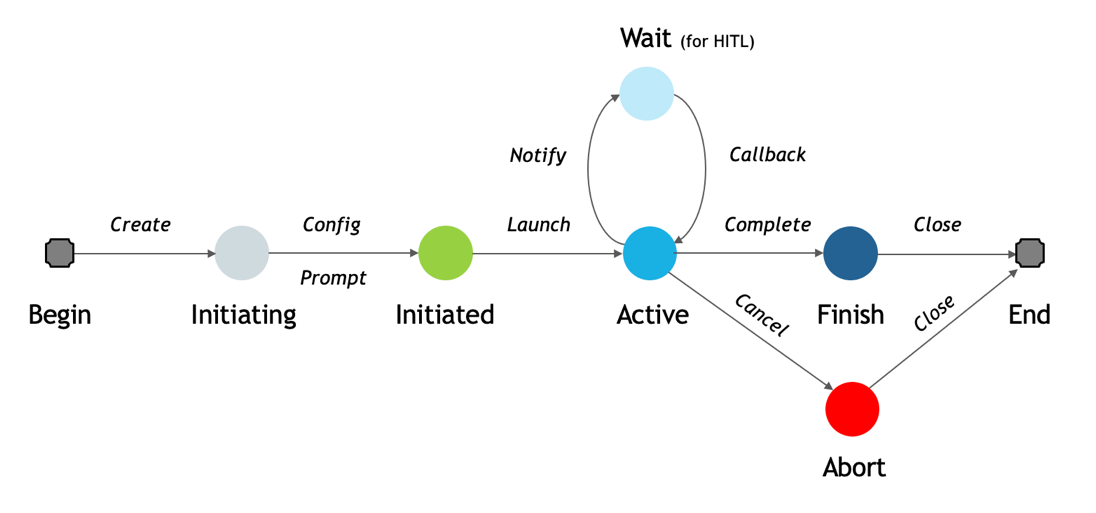
Every agent instance passes through a lifecycle consisting of three stages: initiation, active operation, and completion or termination. Transparency must exist throughout each stage to make the process comprehensible and auditable.
<details>
<summary>SafeAIAgent-img002.png Details</summary>
### Visual Description
## Diagram: State Transition Diagram
### Overview
The image is a state transition diagram illustrating the lifecycle of a process, possibly related to software or system execution. It depicts various states, transitions between them, and associated actions.
### Components/Axes
* **Nodes (States):**
* Begin (Gray square)
* Initiating (Light gray circle)
* Initiated (Green circle)
* Active (Light blue circle)
* Wait (for HITL) (Very light blue circle)
* Finish (Dark blue circle)
* Abort (Red circle)
* End (Gray square)
* **Edges (Transitions):** Arrows indicating the flow between states.
* **Labels:** Text describing the states and the actions that trigger the transitions.
### Detailed Analysis or ### Content Details
1. **Begin** (Gray square): The starting point of the process.
* Transition: "Create" to Initiating.
2. **Initiating** (Light gray circle): The process is being initialized.
* Transition: "Config/Prompt" to Initiated.
3. **Initiated** (Green circle): The process has been initialized.
* Transition: "Launch" to Active.
4. **Active** (Light blue circle): The process is actively running.
* Transition 1: "Complete" to Finish.
* Transition 2: "Cancel" to Abort.
* Transition 3: "Notify" to Wait (for HITL).
5. **Wait (for HITL)** (Very light blue circle): The process is waiting, possibly for human interaction (HITL - Human-in-the-Loop).
* Transition: "Callback" to Active.
6. **Finish** (Dark blue circle): The process has completed successfully.
* Transition: "Close" to End.
7. **Abort** (Red circle): The process has been terminated prematurely.
* Transition: "Close" to End.
8. **End** (Gray square): The terminal state of the process.
### Key Observations
* The diagram shows a linear progression from Begin to Initiating to Initiated to Active.
* The Active state has multiple outgoing transitions, indicating branching possibilities (successful completion, cancellation, or waiting).
* The Wait state loops back to the Active state, suggesting a potential for repeated waiting and activation.
* Both Finish and Abort states lead to the End state.
### Interpretation
The state transition diagram describes the lifecycle of a process, highlighting the different states it can be in and the events that cause transitions between these states. The process starts with initialization, proceeds to an active state, and can either finish successfully, be aborted, or enter a wait state. The diagram provides a clear visual representation of the process flow and the possible paths it can take. The "Wait (for HITL)" state suggests that human intervention might be required at some point during the process. The diagram is useful for understanding the process's behavior and for designing or troubleshooting the system it represents.
</details>
Figure 2 Agent State Transition Diagram Within the 3-Pillar Model
Initiation State. During initiation, a human defines the scope, context, and objectives of the agent’s work. This stage establishes the foundation for safe collaboration. For example, a Research Agent tasked with supporting a product’s go-to-market strategy must receive a clearly defined configuration that includes market segments, data sources, and success criteria. By setting these parameters, the human ensures that the agent’s goals are properly aligned with organizational objectives and ethical standards. This stage also serves as a point of human control, where configurations, role definitions, and constraints can be verified before the agent begins operation.
Active State. Once launched, the agent enters its active state, where it performs the actions for which it was designed. For instance, a Research Agent may conduct web searches and synthesize findings. Likewise, a Payment Agent may initiate payment transactions. A Collection Letter Agent may draft personalized communications based on debtor information and credit conditions. During this phase, activity recording and observability become essential. The environment must automatically generate activity journals that record the agent’s decisions, interactions, and results.
These logs enable oversight and provide a transparent record for post-task evaluation. Moreover, during this phase, the Human-in-the-Loop (HITL) mechanism plays an important role. When the agent encounters uncertainty or ambiguity, it may consult a human collaborator for guidance. Depending on task complexity and risk level, human involvement can vary from direct supervision to collaborative decision-making to minimal observation. Transparency allows both sides to know when and why such handoffs occur.
Abort State. Both human operators and authorized AI subsystems should have the ability to abort or suspend an active agent when necessary. Abort events may occur if the agent cannot fulfill its mission due to missing resources, time constraints, or safety violations. The authority to abort should follow clearly defined governance rules, reflecting the contractual and regulatory conditions under which the agent operates.
Finish State. When an agent finishes or terminates its task, it should produce a clear output along with a record of its entire operation. Transparency requires three complementary forms of documentation:
1. State transition records: Marking changes from initiation to finish.
1. Work progress records: Showing the detailed actions taken by the agent.
1. HITL records: capturing every human–AI interaction and decision.
These records serve as the backbone of transparency within the agent operating environment. They allow developers, regulators, and users to reconstruct events, assess system performance, and identify opportunities for improvement. Without sufficient transparency, human collaborators cannot effectively supervise agent behavior, learn from outcomes, or develop trust in autonomous agent systems. While these three record types are not exhaustive, they represent the minimum information required to achieve acceptable transparency. In practice, the agent system may also maintain additional journals, such as system logs, user feedback logs, performance metrics, and other operational traces, to further support monitoring, analysis, and continuous improvement.
1. Pillar Two: Accountability and Responsibility
While transparency answers what happened, accountability answers why it happened and who is responsible. In the previous section on the evolutionary path, we emphasized that autonomy must be earned gradually. Accountability provides the ethical and operational framework that makes this process safe. As AI agents gain more independence, the environment must ensure that each decision, whether made by a human or AI, is traceable to its source and understandable and explainable in context.
Achieving accountability requires comprehensive decision journaling that records not only the outcomes but also the reasoning and contextual factors behind each choice. This is closely related to the principle of explainability in AI. Agents must be able to provide, upon request, the rationale for their decisions, including the data sources consulted, the constraints considered, and the degree of confidence associated with their outputs.
A practical example illustrates this need. Suppose an automated food-ordering agent failed to account for a customer’s allergy to wheat or soy, resulting in a serious medical incident. In such a case, assigning responsibility requires a clear understanding of each participant’s role in the agentic workflow. Was the customer’s input ambiguous? Did a human worker at the restaurant fail to verify the order details during preparation? Did the AI agent miscommunicate the constraints? Or did the underlying language model generate an inaccurate summary of the order that omitted critical information? Without explicit records of each decision and the reasoning behind it, no clear accountability can be established or assigned.
Accountability serves both corrective and developmental purposes. From a legal or regulatory perspective, it ensures that organizations can assign responsibility when things go wrong. From a technical perspective, it enables learning and continuous improvement. By identifying which part of the agentic workflow led to an undesirable outcome, AI and engineers can make targeted improvements to prevent recurrence. Accountability thus becomes the engine of continuous improvement within the agent ecosystem, reinforcing the learning loop necessary for safe autonomy and growing trust.
1. Pillar Three: Trustworthiness & Human-in-the-Loop
The third pillar, trustworthiness, unites and build on top of the previous two. Transparency makes operations visible, accountability clarifies responsibility, and trustworthiness converts these attributes into confidence and willingness to rely on autonomous systems.
As discussed in the evolutionary path section, human trust is not granted by design but earned through consistent, observable, and reliable performance. During the early phases of adoption, enterprises and end users will trust AI agents only if they can see clear boundaries of control and know that humans can intervene when necessary. Therefore, the operating environment must include mechanisms to specify risk thresholds and escalation rules that determine when human oversight is required.
For example, in domains such as finance or healthcare, high-risk actions such as large transactions or clinical recommendations should automatically trigger human review. These checkpoints form structured Human-in-the-Loop interventions that ensure oversight at critical moments. Conversely, in high-volume, low-risk tasks, AI may operate independently for greater efficiency. Over time, as the system demonstrates reliability, the frequency of human interventions can be gradually reduced, following the same incremental trust-building logic that was illustrated in the autonomous driving analogy. However, any decision to increase the level of autonomy must be explicitly approved by a human authority and clearly documented. In addition, periodic spot checks should be conducted to verify safety and correctness, even after incremental advances in autonomous decision-making have been introduced.
Trustworthiness also recognizes that in some contexts, AI can be more dependable than humans. Machines do not suffer from fatigue, emotional fluctuation, or inconsistency, and in repetitive or data-intensive tasks, AI may exhibit higher reliability than human operators. Accordingly, a trustworthy operating environment must support mutual confidence. Humans must trust AI agents to function within clearly defined safety boundaries, while AI systems must be designed to rely on validated human inputs and to defer judgment appropriately when required. The objective is not blind reliance but calibrated trust, grounded in empirical performance evidence and shared accountability. To support this calibration, every decision and every change must be properly recorded and remain auditable.
Finally, trustworthiness ensures that when failures occur, they do not propagate unchecked. The environment must include robust fallback and recovery mechanisms that detect anomalies based on historical patterns, suspend automated actions, and transfer control to human operators before harm occurs. These safety measures ensure that risk remains manageable in very large-scale deployments with thousands of concurrently operating agents, even as autonomy levels continue to increase.
1. Integrating the Three Pillars in the Evolutionary Process
The Three-Pillar Model is not a theoretical abstraction but a practical extension of the evolutionary approach described earlier. As agents progress from Assisted to Collaborative, to Supervised Autonomy, and ultimately to Full Autonomy under Human Governance, the balance among the three pillars must evolve in parallel with each successive stage of autonomy.
In early stages, transparency plays the dominant role, ensuring that every action is observable, explainable, and auditable. As systems progress into collaborative stages, accountability becomes increasingly important because humans and AI share responsibility for decisions and outcomes. In the later stages, once agents have demonstrated consistent reliability and alignment, trustworthiness becomes the decisive factor that enables increasing levels of autonomy. Importantly, companies and users will always retain the ability to determine the degree of autonomy they are comfortable and willing to grant to different agents operating in their environments. This flexibility allows organizations to balance efficiency with risk tolerance, enabling a gradual and confident transition toward greater autonomy while maintaining control and trust throughout the process.
These pillars together form a feedback ecosystem in which humans and AI learn from each other. Transparency provides data for accountability. Accountability identifies what needs improvement. Trustworthiness motivates greater delegation of control. Through this cycle, autonomy grows safely and progressively.
In conclusion, the 3PM for agent creation, deployment, and operation establishes the essential conditions for safe evolution toward autonomous agents. It ensures that the journey from collaboration to independence occurs within a structure that is observable, responsible, and trustworthy. Only through such an environment can enterprises accelerate adoption, build user confidence, and achieve the full potential of AI agents while preserving human values and safety.
1. A Sample Use Case: Group Email Agent
To illustrate the application of the Three-Pillar Model within a practical context, we consider a Group Email Agent operating in an enterprise-grade agentic environment. This use case demonstrates how transparency, accountability, and trustworthiness jointly ensure safe and effective collaboration between humans and AI.
A Group Email Agent is a common and valuable application for enterprises that need to compose, review, and distribute communications to internal employees, customers, or business partners. Such messages can include policy updates, marketing announcements, product release communications, event invitations, or crisis management notifications. Because of their wide impact, group emails typically require coordination among multiple stakeholders, including representatives from the business unit, marketing and communications teams, legal and compliance departments, and senior management. These participants contribute to drafting, editing, verifying, and approving both the message content and the list of recipients. The Group Email Agent acts as an author, a coordinator, and executor, automating repetitive tasks while preserving human oversight where contextual understanding and judgment are critical.
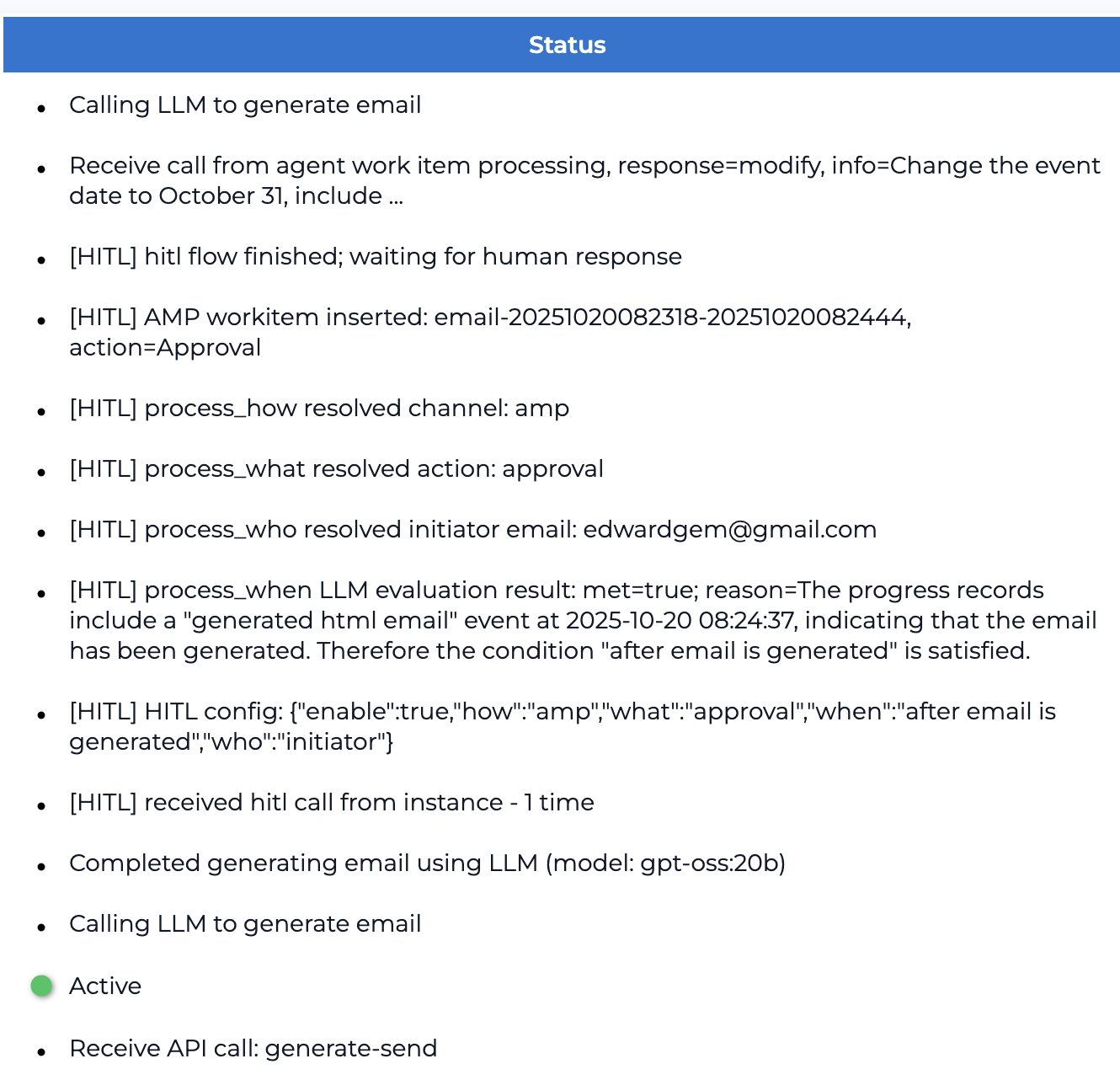
Figure 3 displays the agent activity records captured by the system throughout the lifecycle of a Group Email Agent instance. These records include state transitions, detailed task progress, and Human-in-the-Loop interactions, illustrating how the operating environment maintains continuous transparency and traceability from initiation to completion.
<details>
<summary>SafeAIAgent-img003.png Details</summary>
### Visual Description
## Status Log: LLM Email Generation
### Overview
The image presents a status log detailing the steps involved in generating an email using a Large Language Model (LLM). The log includes information about LLM calls, agent work item processing, Human-in-the-Loop (HITL) interactions, and configuration details. The final status is "Active".
### Components/Axes
* **Title:** Status (located at the top of the image)
* **Log Entries:** A series of bullet points, each representing a step or event in the email generation process.
* **Status Indicator:** A green circle with the label "Active" near the bottom.
### Detailed Analysis
The log entries are as follows:
* "Calling LLM to generate email"
* "Receive call from agent work item processing, response=modify, info=Change the event date to October 31, include ..."
* "[HITL] hitl flow finished; waiting for human response"
* "[HITL] AMP workitem inserted: email-20251020082318-20251020082444, action=Approval"
* "[HITL] process_how resolved channel: amp"
* "[HITL] process_what resolved action: approval"
* "[HITL] process_who resolved initiator email: edwardgem@gmail.com"
* "[HITL] process_when LLM evaluation result: met=true; reason=The progress records include a "generated html email" event at 2025-10-20 08:24:37, indicating that the email has been generated. Therefore the condition "after email is generated" is satisfied."
* "[HITL] HITL config: {"enable":true,"how":"amp","what":"approval","when":"after email is generated","who":"initiator"}"
* "[HITL] received hitl call from instance - 1 time"
* "Completed generating email using LLM (model: gpt-oss:20b)"
* "Calling LLM to generate email"
* "Active" (accompanied by a green circle)
* "Receive API call: generate-send"
### Key Observations
* The process involves multiple calls to the LLM.
* HITL (Human-in-the-Loop) is used for certain steps, including approval.
* The LLM model used is "gpt-oss:20b".
* The process includes agent work item processing and API calls.
* The final status is "Active", indicating successful email generation.
### Interpretation
The status log provides a detailed view of the automated email generation process. It highlights the interaction between the LLM, HITL, and other system components. The log demonstrates a complex workflow involving multiple steps and decision points. The presence of HITL suggests that human intervention is required for certain aspects of the process, such as approval. The log also indicates that the system is capable of tracking and recording various events and parameters related to the email generation process.
</details>
Figure 3: Agent Activity Records Captured While Running a Group Email Agent
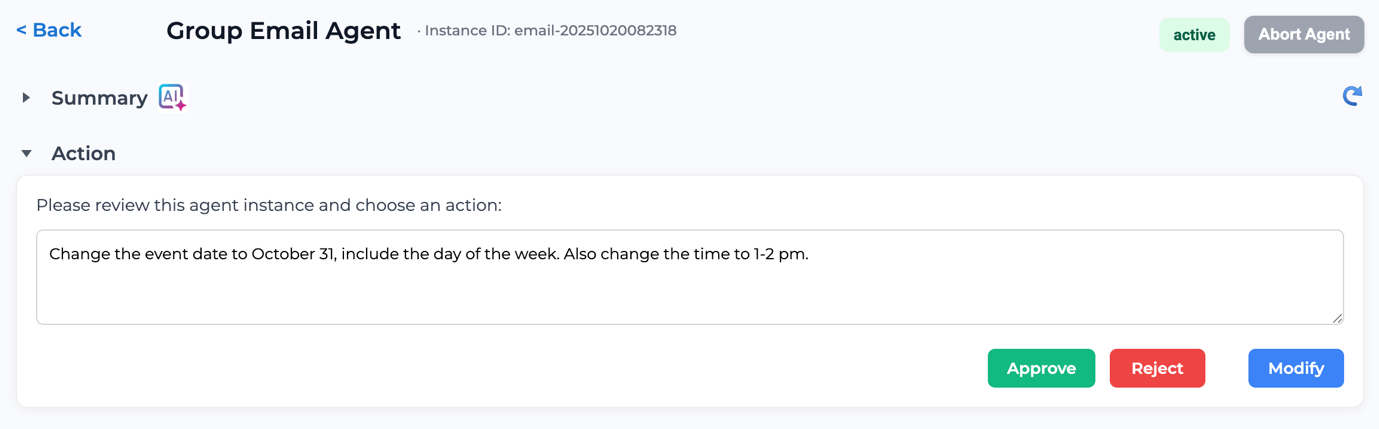
Figure 4 demonstrates a user interface (UI) portal that enables an authorized human participant to provide contextual inputs, review agent activities, and intervene when necessary. This interface supports Human-in-the-Loop collaboration by allowing users to configure, guide, or correct the agent’s actions in real time, ensuring that human oversight remains an integral part of the agent’s operational workflow.
<details>
<summary>SafeAIAgent-img004.png Details</summary>
### Visual Description
## Screenshot: Group Email Agent Instance
### Overview
The image is a screenshot of a user interface for managing a "Group Email Agent" instance. It displays the agent's instance ID, status, and provides options to review and modify its settings. The interface includes sections for "Summary" and "Action," with the "Action" section expanded to show a request to change the event date and time.
### Components/Axes
* **Header**:
* "Back" button (labeled "< Back")
* Title: "Group Email Agent"
* Instance ID: "email-20251020082318"
* Status: "active" (in a green button)
* "Abort Agent" button (in a grey button)
* Refresh icon (circular arrow)
* **Summary Section**:
* Section title: "Summary" (collapsed)
* AI icon next to the title
* **Action Section**:
* Section title: "Action" (expanded)
* Instruction text: "Please review this agent instance and choose an action:"
* Text area: Contains the text "Change the event date to October 31, include the day of the week. Also change the time to 1-2 pm."
* Action buttons:
* "Approve" (green button)
* "Reject" (red button)
* "Modify" (blue button)
### Detailed Analysis or ### Content Details
The screenshot shows a specific instance of a "Group Email Agent" with the ID "email-20251020082318." The agent is currently "active." The "Action" section is expanded, indicating that the user is prompted to take action regarding a proposed change. The proposed change involves updating the event date to October 31st, including the day of the week, and changing the time to between 1 and 2 pm. The user has the option to "Approve," "Reject," or "Modify" these changes.
### Key Observations
* The agent is in an "active" state.
* The user is being prompted to review and act on a proposed change to the agent's event date and time.
* The UI provides clear options for approving, rejecting, or modifying the proposed changes.
### Interpretation
The screenshot represents a workflow where a user is reviewing and potentially modifying the settings of an automated email agent. The agent's status is "active," suggesting it is currently operational. The prompt to change the event date and time indicates a need to update the agent's schedule or configuration. The presence of "Approve," "Reject," and "Modify" buttons provides the user with control over the agent's behavior, allowing them to either accept the proposed changes, decline them, or make further adjustments. The AI icon next to the Summary title suggests that AI is involved in the agent's functionality or configuration.
</details>
Figure 4: UI for Obtaining Human-in-the-Loop Inputs During an Agentic Workflow
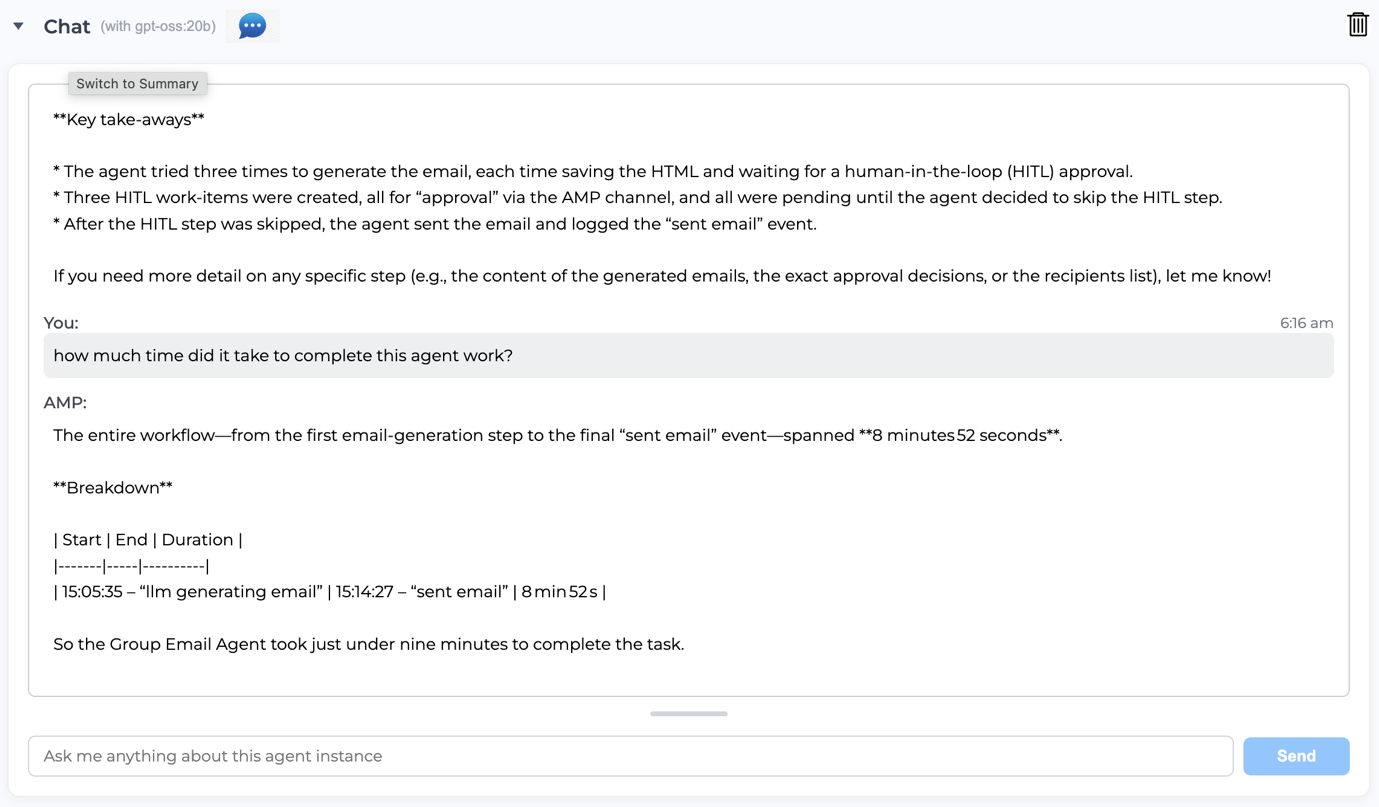
Figure 5 illustrates how users can interact with the large language model (LLM) to discover, query, and inspect the progress of agents operating within the environment. Through conversational interfaces, users can retrieve explanations, review activity logs, and monitor task completion status. This interactive transparency fosters mutual understanding and trust between humans and AI agents, allowing confidence to grow naturally as agents demonstrate reliability and accountability over time.
<details>
<summary>SafeAIAgent-img005.png Details</summary>
### Visual Description
## Chat Log: Agent Workflow Duration
### Overview
The image is a chat log between a user and an AI assistant (AMP) regarding the time it takes for an agent to complete a task. The log includes key takeaways, a breakdown of the workflow duration, and specific timestamps.
### Components/Axes
* **Header:** "Chat (with gpt-oss:20b)" and a "Switch to Summary" button.
* **Key Takeaways:** A bulleted list summarizing the agent's actions.
* **User Question:** "how much time did it take to complete this agent work?"
* **AMP Response:**
* Overall duration: "The entire workflow—from the first email-generation step to the final 'sent email' event—spanned **8 minutes 52 seconds**."
* Breakdown table with columns: "Start", "End", "Duration".
* **Footer:** A prompt "Ask me anything about this agent instance" and a "Send" button.
### Detailed Analysis or ### Content Details
* **Key Takeaways:**
* "The agent tried three times to generate the email, each time saving the HTML and waiting for a human-in-the-loop (HITL) approval."
* "Three HITL work-items were created, all for 'approval' via the AMP channel, and all were pending until the agent decided to skip the HITL step."
* "After the HITL step was skipped, the agent sent the email and logged the 'sent email' event."
* **Breakdown Table:**
* Start: 15:05:35 - "Ilm generating email"
* End: 15:14:27 - "sent email"
* Duration: 8 min 52s
* **Overall Duration:** 8 minutes 52 seconds.
* **Final Statement:** "So the Group Email Agent took just under nine minutes to complete the task."
* **Timestamp of User Question:** 6:16 am
### Key Observations
* The agent attempted to generate the email three times, each time waiting for HITL approval.
* The HITL step was eventually skipped.
* The total workflow duration is approximately 8 minutes and 52 seconds.
* The breakdown table provides the start and end times for the email generation process.
### Interpretation
The chat log provides a detailed account of the time taken by an agent to complete an email generation task. The key takeaways highlight the iterative nature of the process, with multiple attempts and HITL approvals. The breakdown table offers a precise timeline of the workflow, while the overall duration provides a summary metric. The final statement reinforces the approximate time taken, rounding it up to "just under nine minutes." The data suggests that the agent's workflow involves multiple steps and potential delays due to the HITL approval process.
</details>
Figure 5: Transparency Enables Human-AI Collaboration with Trustworthiness in Agent Operation
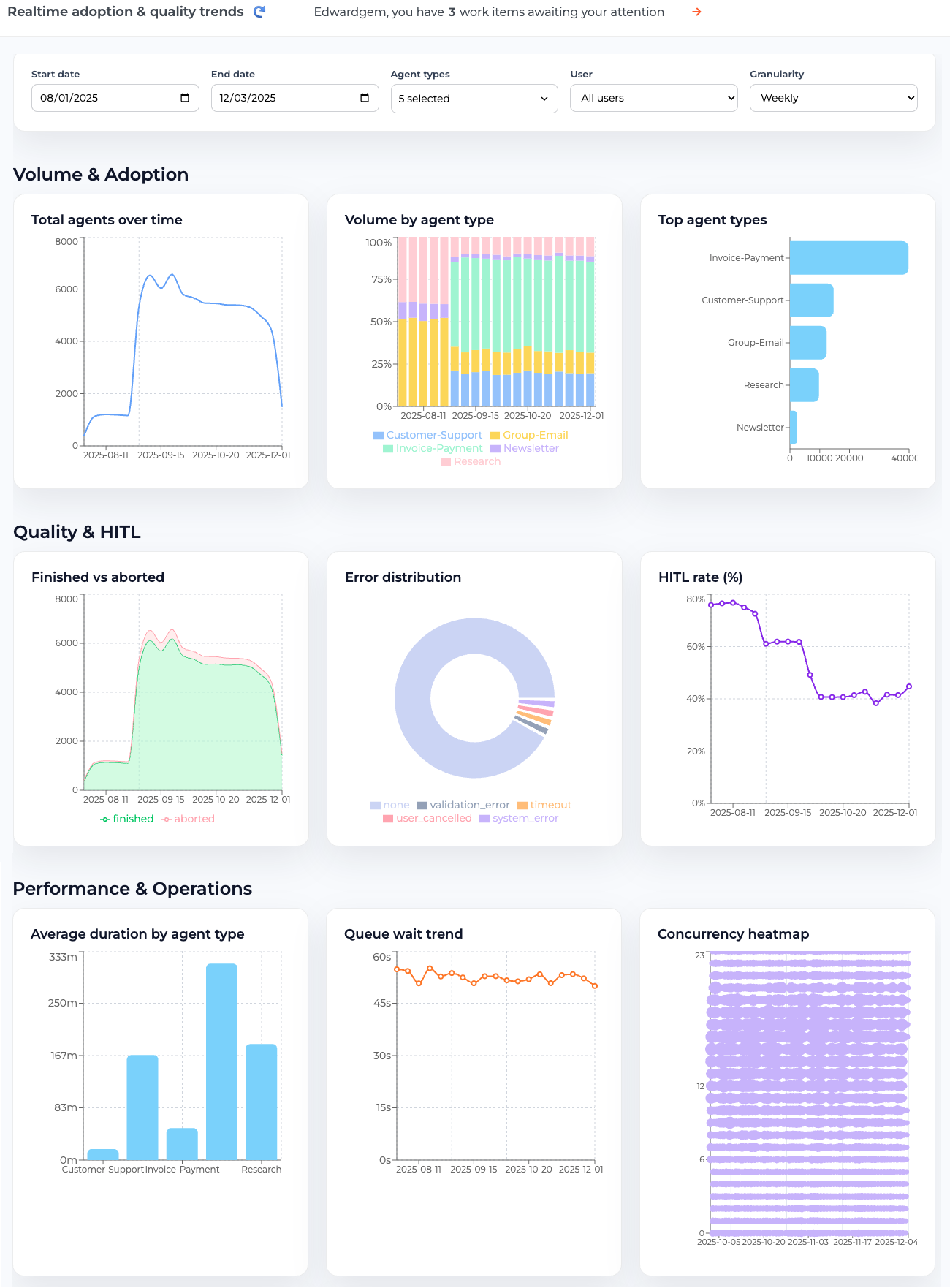
By systematically capturing and recording agent activities, the operating environment enables a high degree of transparency that supports comprehensive analytics on both agent behavior and Human-in-the-Loop interactions. This transparency makes it possible to surface aggregated insights through a dashboard component, which serves as a central interface for monitoring, managing, and improving a large-scale agent operating environment. The dashboard plays a critical role in supporting operational oversight, performance evaluation, and continuous improvement, while also informing decisions about when and how to safely increase the level of autonomy within agentic workflows.
Figure 6 illustrates the dashboard view, which presents a collection of analytic charts summarizing agent execution patterns, lifecycle states, intervention frequencies, and HITL engagement metrics. These visualizations allow users to quickly assess system health, identify bottlenecks, detect anomalous behavior, and understand where human involvement is most frequently required. By consolidating this information at scale, the dashboard enables organizations to manage thousands of concurrently operating agents in a controlled and informed manner.
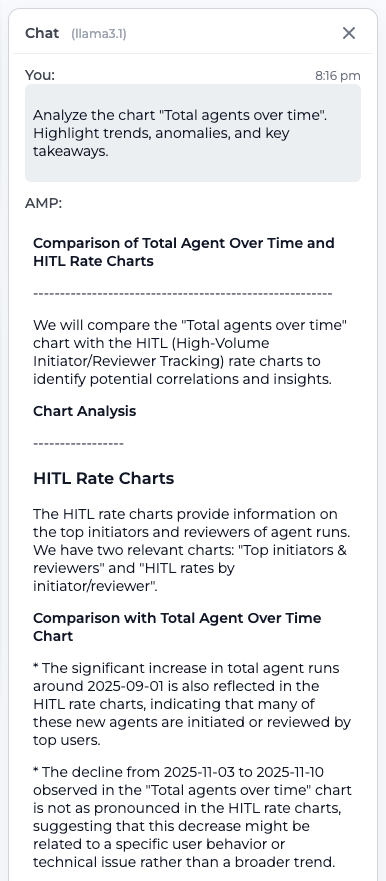
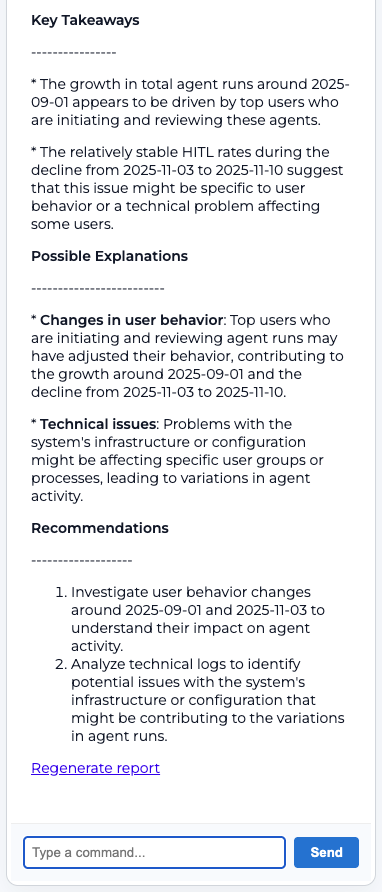
In addition to static visualization, the dashboard integrates interactive analysis through a natural language interface powered by a large language model. As shown in Figure 7, selecting a chart allows users to open an LLM-driven chat window that generates a contextual analysis report explaining observed trends and patterns. Users can further engage in dialogue with the LLM to ask follow-up questions, explore root causes, and derive business insights related to efficiency, risk, and workflow optimization. This combination of visual analytics and conversational analysis supports deeper understanding of agentic behavior and helps users identify targeted opportunities to refine processes, improve safety, and incrementally advance the autonomy of the overall agentic workflow system.
<details>
<summary>SafeAIAgent-img006.png Details</summary>
### Visual Description
## Dashboard Analysis: Adoption, Quality, and Performance Trends
### Overview
The image presents a dashboard displaying various charts and graphs related to agent adoption, quality, and performance trends over time. The dashboard includes visualizations of total agents, agent types, error distributions, HITL rates, average duration, queue wait times, and concurrency. The data spans from approximately August 2025 to December 2025.
### Components/Axes
**Header:**
* **Title:** Realtime adoption & quality trends
* **Notification:** "Edwardgem, you have 3 work items awaiting your attention"
* **Start Date:** 08/01/2025
* **End Date:** 12/03/2025
* **Agent Types:** 5 selected
* **User:** All users
* **Granularity:** Weekly
**Volume & Adoption Section:**
1. **Total agents over time:**
* **Y-axis:** Total agents, ranging from 0 to 8000.
* **X-axis:** Time, with labels at 2025-08-11, 2025-09-15, 2025-10-20, and 2025-12-01.
2. **Volume by agent type:**
* **Y-axis:** Percentage, ranging from 0% to 100%.
* **X-axis:** Time, with labels at 2025-08-11, 2025-09-15, 2025-10-20, and 2025-12-01.
* **Legend (bottom-left):**
* Customer-Support (light blue)
* Invoice-Payment (green)
* Research (pink)
* Group-Email (dark blue)
* Newsletter (yellow)
3. **Top agent types:**
* **X-axis:** Count, ranging from 0 to 40000.
* **Y-axis:** Agent types (Invoice-Payment, Customer-Support, Group-Email, Research, Newsletter).
**Quality & HITL Section:**
1. **Finished vs aborted:**
* **Y-axis:** Count, ranging from 0 to 8000.
* **X-axis:** Time, with labels at 2025-08-11, 2025-09-15, 2025-10-20, and 2025-12-01.
* **Legend (bottom):**
* Finished (green)
* Aborted (pink)
2. **Error distribution:**
* **Chart Type:** Donut chart.
* **Categories:** none (light blue), validation_error (dark blue), timeout (yellow), user_cancelled (pink), system_error (grey).
3. **HITL rate (%):**
* **Y-axis:** Percentage, ranging from 0% to 80%.
* **X-axis:** Time, with labels at 2025-08-11, 2025-09-15, 2025-10-20, and 2025-12-01.
**Performance & Operations Section:**
1. **Average duration by agent type:**
* **Y-axis:** Duration in minutes (m), ranging from 0m to 333m.
* **X-axis:** Agent types (Customer-Support, Invoice-Payment, Research).
2. **Queue wait trend:**
* **Y-axis:** Time in seconds (s), ranging from 0s to 60s.
* **X-axis:** Time, with labels at 2025-08-11, 2025-09-15, 2025-10-20, and 2025-12-01.
3. **Concurrency heatmap:**
* **Y-axis:** Count, ranging from 0 to 23.
* **X-axis:** Time, with labels at 2025-10-05, 2025-10-20, 2025-11-03, 2025-11-17, and 2025-12-04.
### Detailed Analysis
**Total agents over time:**
* The number of agents starts around 1200.
* There is a sharp increase to approximately 6800 around 2025-09-15.
* The number of agents peaks around 7000.
* The number of agents then decreases to approximately 5000 by 2025-12-01.
**Volume by agent type:**
* The stacked bar chart shows the distribution of agent types over time.
* Customer-Support (light blue) and Invoice-Payment (green) are the dominant agent types.
* The proportions of each agent type appear relatively stable over time.
**Top agent types:**
* Invoice-Payment has the highest count, approximately 38000.
* Customer-Support has a count of approximately 18000.
* Group-Email has a count of approximately 12000.
* Research has a count of approximately 8000.
* Newsletter has a count of approximately 2000.
**Finished vs aborted:**
* The number of finished tasks (green) and aborted tasks (pink) are tracked over time.
* Both finished and aborted tasks increase sharply around 2025-09-15.
* The number of finished tasks is consistently higher than the number of aborted tasks.
* Both decrease to approximately 5000 and 4000 respectively by 2025-12-01.
**Error distribution:**
* The donut chart shows the distribution of error types.
* "None" errors are the most frequent.
* Validation errors, timeouts, user-cancelled errors, and system errors are present in smaller proportions.
**HITL rate (%):**
* The HITL rate starts at approximately 78%.
* It decreases to approximately 62% around 2025-09-15.
* It further decreases to approximately 40% around 2025-10-20.
* It remains relatively stable around 40% until 2025-12-01.
* There is a slight increase to approximately 44% by 2025-12-01.
**Average duration by agent type:**
* Invoice-Payment has the highest average duration, approximately 280m.
* Customer-Support has an average duration of approximately 170m.
* Research has an average duration of approximately 200m.
**Queue wait trend:**
* The queue wait time fluctuates between approximately 48s and 52s.
* There is no clear trend of increasing or decreasing wait times.
**Concurrency heatmap:**
* The concurrency heatmap shows the distribution of concurrent tasks over time.
* The concurrency count is mostly between 10 and 23.
* There are some periods with lower concurrency counts.
### Key Observations
* There is a significant increase in total agents and finished/aborted tasks around 2025-09-15.
* Invoice-Payment is the top agent type in terms of count and average duration.
* The HITL rate decreases significantly between 2025-08-11 and 2025-10-20.
* Queue wait times remain relatively stable over time.
### Interpretation
The dashboard provides insights into the adoption, quality, and performance of agents over time. The increase in total agents and tasks around 2025-09-15 suggests a period of increased activity or a change in the system. The high volume and duration of Invoice-Payment agents indicate their importance in the overall workflow. The decreasing HITL rate may indicate improvements in automation or agent efficiency. The stable queue wait times suggest that the system is handling the workload effectively. The error distribution highlights areas where improvements can be made to reduce errors and improve the overall quality of the system. The concurrency heatmap provides insights into the utilization of resources and can be used to optimize system performance.
</details>
Figure 6 Analytic Charts Illustrating Realtime Adoption and Quality Trends of the Agentic System
<details>
<summary>SafeAIAgent-img007.png Details</summary>
### Visual Description
## Chat Log Analysis: Total Agents Over Time vs. HITL Rate Charts
### Overview
The image presents a chat log where a user requests an analysis of a "Total agents over time" chart, focusing on trends, anomalies, and key takeaways. The response compares this chart with HITL (High-Volume Initiator/Reviewer Tracking) rate charts to identify potential correlations and insights. The analysis highlights a significant increase in total agent runs around 2025-09-01, reflected in the HITL rate charts, and a less pronounced decline from 2025-11-03 to 2025-11-10 in the HITL rate charts compared to the "Total agents over time" chart.
### Components/Axes
* **Chat Header:** "Chat (llama3.1)"
* **Timestamp:** "8:16 pm"
* **User Request:** Analyze the chart "Total agents over time". Highlight trends, anomalies, and key takeaways.
* **Response Header:** "AMP:"
* **Comparison Title:** "Comparison of Total Agent Over Time and HITL Rate Charts"
* **Chart Analysis Title:** "Chart Analysis"
* **HITL Rate Charts Title:** "HITL Rate Charts"
* **HITL Rate Charts Description:** The HITL rate charts provide information on the top initiators and reviewers of agent runs. We have two relevant charts: "Top initiators & reviewers" and "HITL rates by initiator/reviewer".
* **Comparison with Total Agent Over Time Chart:**
* The significant increase in total agent runs around 2025-09-01 is also reflected in the HITL rate charts, indicating that many of these new agents are initiated or reviewed by top users.
* The decline from 2025-11-03 to 2025-11-10 observed in the "Total agents over time" chart is not as pronounced in the HITL rate charts, suggesting that this decrease might be related to a specific user behavior or technical issue rather than a broader trend.
### Detailed Analysis or Content Details
The analysis focuses on two key periods:
1. **Around 2025-09-01:** A significant increase in total agent runs is observed and is reflected in the HITL rate charts. This suggests that many new agents are being initiated or reviewed by top users.
2. **From 2025-11-03 to 2025-11-10:** A decline is observed in the "Total agents over time" chart, but this decline is less pronounced in the HITL rate charts. This suggests that the decrease might be related to a specific user behavior or technical issue rather than a broader trend.
### Key Observations
* The analysis correlates trends in the "Total agents over time" chart with the HITL rate charts.
* The increase around 2025-09-01 is attributed to new agents being initiated or reviewed by top users.
* The decline from 2025-11-03 to 2025-11-10 is potentially linked to specific user behavior or technical issues.
### Interpretation
The analysis suggests a relationship between the total number of agents and the activity of top initiators/reviewers. The increase in agent runs around 2025-09-01 indicates that top users are actively involved in initiating or reviewing new agents. The less pronounced decline in HITL rates during the 2025-11-03 to 2025-11-10 period, despite a decline in total agents, suggests that the decrease in total agents might not be directly related to the activity of top initiators/reviewers, and could be due to other factors like user behavior or technical issues. This highlights the importance of considering multiple factors when analyzing trends in agent activity.
</details>
<details>
<summary>SafeAIAgent-img008.png Details</summary>
### Visual Description
## Text Extract: Key Takeaways, Explanations, and Recommendations
### Overview
The image presents a text-based report outlining key takeaways, possible explanations, and recommendations related to agent runs, HITL rates, and user behavior. The report suggests a growth in total agent runs around 2025-09-01, potentially driven by top users. It also notes relatively stable HITL rates during a decline from 2025-11-03 to 2025-11-10, indicating a possible user-specific or technical issue.
### Components/Axes
The report is structured into the following sections:
1. **Key Takeaways:** Summary of observed trends.
2. **Possible Explanations:** Hypotheses for the observed trends.
3. **Recommendations:** Suggested actions to investigate the trends.
4. **Input Field:** A text box to "Type a command..."
5. **Send Button:** A button to send the command.
### Detailed Analysis or ### Content Details
**Key Takeaways:**
* "The growth in total agent runs around 2025-09-01 appears to be driven by top users who are initiating and reviewing these agents."
* "The relatively stable HITL rates during the decline from 2025-11-03 to 2025-11-10 suggest that this issue might be specific to user behavior or a technical problem affecting some users."
**Possible Explanations:**
* "Changes in user behavior: Top users who are initiating and reviewing agent runs may have adjusted their behavior, contributing to the growth around 2025-09-01 and the decline from 2025-11-03 to 2025-11-10."
* "Technical issues: Problems with the system's infrastructure or configuration might be affecting specific user groups or processes, leading to variations in agent activity."
**Recommendations:**
1. "Investigate user behavior changes around 2025-09-01 and 2025-11-03 to understand their impact on agent activity."
2. "Analyze technical logs to identify potential issues with the system's infrastructure or configuration that might be contributing to the variations in agent runs."
**Other elements:**
* A "Regenerate report" link is present.
* A text input field with the placeholder "Type a command..." is present at the bottom.
* A "Send" button is present next to the text input field.
### Key Observations
* The report focuses on the period around 2025-09-01 and 2025-11-03 to 2025-11-10.
* User behavior and technical issues are highlighted as potential drivers of the observed trends.
* The recommendations emphasize investigation into both user behavior and technical logs.
### Interpretation
The report suggests a correlation between user activity and agent run behavior. The growth in agent runs around 2025-09-01 is attributed to top users, while stable HITL rates during a decline are linked to potential user-specific or technical problems. The recommendations call for a deeper investigation into user behavior changes and technical issues to understand their impact on agent activity. The presence of a "Regenerate report" link and a command input field suggests an interactive system where the report can be updated or customized based on user input.
</details>
Figure 7 LLM-Integrated Chat Interface Enabling Analytic Insights From Agent Dashboard Charts
1. Next Steps and Future Work
The work presented in this paper establishes both a conceptual framework and an operational foundation for developing safe, transparent, and trustworthy AI agents through the 3PM. Building on insights from prior research in Human-in-the-Loop systems and safe AI, the model is extended into a comprehensive operational approach supported by practical principles and implementation guidelines. As a practical and applicable framework, the 3PM is lightweight, easy to understand, and straightforward to apply in the development, deployment, and operation of large-scale, enterprise-grade agentic systems. At the same time, it is grounded in a complete and coherent theoretical foundation and is designed to evolve as the scope, scale, and complexity of the agentic environment expand. The next phase of this initiative focuses on translating these principles into real-world practice, ensuring that both industry and society can fully benefit from the responsible adoption of autonomous agents. To achieve this, three primary work streams have been initiated to extend, validate, and operationalize the ideas introduced in this study.
1. Public Deliberation through the Stanford Deliberative Democracy Lab
The first work stream involves a collaboration with the Deliberative Democracy Lab (DDL) at Stanford University, which is conducting a series of public deliberative forums focused on the social and ethical dimensions of AI agents [17, 18]. These forums bring together a diverse range of stakeholders, including AI industry leaders, policymakers, researchers, and members of the public, to engage in structured, open discussions about the Three Pillars of transparency, accountability, and trustworthiness.
In the initial phase, the DDL will conduct forums in North America and in India. The goal of this initiative is to bridge the gap between technological innovation and societal readiness. By involving the public in open, informed conversations, this work stream seeks to better understand how people perceive the risks and benefits of autonomous agents, what level of transparency they expect, and what safeguards they require to build trust. The insights from these dialogues will guide both technical and policy frameworks, ensuring that the development of AI agents aligns with public values and expectations across both business and consumer contexts.
Through these deliberative processes, the AI community can establish mutual understanding and legitimacy around agent governance, helping society evolve toward an era of AI-enabled collaboration rather than resistance or fear.
1. Industry Collaboration through the Safe AI Agent Consortium
The second work stream focuses on industry collaboration through the Safe AI Agent Consortium, an emerging alliance of leading organizations that share a commitment to advancing the responsible use of autonomous agents [19]. The consortium’s core members include Anthropic, Cohere, DoorDash, Meta, Microsoft, Oracle, PayPal, Stanford, and other key players across academia, technology and enterprise sectors.
This group is jointly developing a set of industry guidelines and best practices grounded in the 3PM. These guidelines aim to operationalize the concepts of transparency, accountability, and trustworthiness in a way that developers, implementers, and users can readily apply to real-world AI systems. By creating common standards for agent design, documentation, observability, and governance, the consortium seeks to promote safe adoption of AI agents at scale. This initiative enables enterprises to capture productivity gains without compromising human oversight or public trust.
The consortium’s open work may also expand to developing shared benchmarks, safety testing protocols, and interoperability frameworks for agent operating environments. These outcomes will serve as practical tools for both startups and large organizations to evaluate the maturity, safety, and reliability of their agentic systems. Through collective action and transparency among participants, this initiative aspires to make safety and responsibility a competitive advantage in the growing agent economy.
1. Open Tools and the Three-Pillar Agent Operating Environment
The third work stream extends this research into applied development and community tooling. The objective is for industry leaders and startups to design and release a set of open-source tools and frameworks that embody the 3PM and accelerate the adoption of safe agentic systems. This includes the creation of an agent operating environment, as illustrated in this paper, that integrates transparency, accountability, and trustworthiness by design across the full agent lifecycle.
This environment will provide a standardized foundation for safe and effective agent operations, offering key capabilities such as:
- Agent activity logging and lifecycle tracking to ensure full transparency and traceability across initiation, execution and completion stages.
- Decision journaling and explainability modules to support accountability by recording the reasoning, context, and outcomes behind each agent decision.
- Configurable human oversight controls and fallback mechanisms to maintain trustworthiness and provide dynamic risk management through defined intervention thresholds.
- AI generated analytics derived from agent activity logging and decision journals, with LLM deployed throughout the 3PM operating environment to enable interactive monitoring, health assessment, and insight generation. This capability allows users to better understand system behavior, identify improvement opportunities, and make informed decisions about progressively increasing levels of agent autonomy.
- AI-assisted 24x7 monitoring of agentic workflows to continuously learn behavioral patterns, detect anomalies, and trigger timely human involvement when necessary to preserve system safety and security.
By providing a shared technical foundation, this work stream aims to lower the entry barrier for organizations to adopt AI agents. It allows developers to embed safety and governance principles from the outset, rather than retrofitting compliance and oversight after deployment. The tools will be open for collaboration and extension by the research and developer communities, designed to integrate with existing agentic interoperability standards such as the Model Context Protocol (MCP) and the Agent-to-Agent (A2A) communication protocol. This openness will encourage cross-industry experimentation, validation, and interoperability, fostering a unified ecosystem where safe, transparent, and accountable AI agents can evolve and operate seamlessly across different environments.
Through continuous contribution from the developer community and iterative improvement, the resulting ecosystem will foster a trusted agent economy in which innovation can advance both responsibly and efficiently. Over time, this environment may serve as a reference implementation for regulators, researchers, and practitioners seeking to harmonize safety and governance standards across industries and geographic regions, thereby accelerating the safe and scalable adoption of autonomous agents worldwide.
1. Conclusion
This paper has presented a conceptual and operational framework for developing safe, transparent, and trustworthy AI agents through the 3-Pillar Model (3PM), consisting of Transparency, Accountability, and Trustworthiness. Building upon prior research in Human-in-the-Loop (HITL) systems, reinforcement learning with human feedback, and collaborative AI, this model provides a practical foundation for guiding the evolution of AI agents from assisted to fully autonomous operation. The framework emphasizes that autonomy must be achieved through a gradual, verifiable process in which trust is earned over time, rather than assumed by design.
We have argued that the development of autonomous agents parallels the evolutionary path of autonomous driving, where safety, reliability, and human confidence were cultivated through progressive stages of shared control. Similarly, the journey toward trustworthy AI autonomy requires environments that support visibility, ethical reasoning, and human collaboration. The proposed Three-Pillar Model ensures that every stage of agent development and deployment remains transparent, accountable, and grounded in timely and appropriate human oversight. Transparency provides observability into agent behavior and decision-making processes; accountability ensures that both actions and decisions are traceable, explainable, and correctable; and trustworthiness transforms these safeguards into lasting confidence among users, organizations, and the broader public.
To move from concept to practice, this research has initiated three complementary work streams. The first engages the public through the Deliberative Democracy Lab at Stanford University, facilitating informed dialogue between citizens and AI industry leaders about the social implications of agent transparency, accountability, and trust. The second advances industry collaboration through the Safe AI Agent Consortium, uniting leading technology organizations to establish shared best practices, evaluation benchmarks, and governance standards for safe agentic systems. The third work stream focuses on open tooling, with the goal of developing an open agent operating environment that embodies the Three-Pillar principles and supports interoperability among both native and external agents through protocols, including the Model Context Protocol (MCP), Agent-to-Agent (A2A) communication, Agent Communication Protocol (ACP), and Agent Network Protocol (ANP).
Through these efforts, the 3PM progresses from theoretical construct to actionable framework, enabling the responsible evolution of autonomous agents. Through sustained collaboration across academia, industry, and society, we can shape a future in which AI agents operate in alignment with human values, advancing innovation while upholding safety, transparency, and ethical integrity.
References
1. Sanders, T. How AI Agents Are Overcoming Market Hype to Deliver Real Business Impact. 2025 AI Agents G2 Insight Report, October 2025. https://company.g2.com/news/2025-ai-agent-report
1. Zanzotto, F.M. Viewpoint: Human-in-the-loop Artificial Intelligence. Journal of Artificial Intelligence Research 64 (2019) 243-252. February 2029.
1. Wu, X. et al. A Survey of Human-in-the-Loop for Machine Learning. arXiv:2108.00941 (v3). April 2022. https://arxiv.org/abs/2108.00941
1. Mosqueira-Rey, E. et al. Human-in-the-Loop Machine Learning: A State of the Art. Artificial Intelligence Review (2023) 56:3005–3054. August 2022. https://link.springer.com/article/10.1007/s10462-022-10246-w
1. Wixom, B., Someh, I., and Gregory, R. AI Alignment: A New Management Paradigm. MIT Center for Information Systems Research (MIT CISR). No. XX-11. November 2020. https://cisr.mit.edu/publication/2020_1101_AI-Alignment_WixomSomehGregory
1. Burnham, K. New framework helps companies build secure AI systems. MIT Management Sloan School. July 2025. https://mitsloan.mit.edu/ideas-made-to-matter/new-framework-helps-companies-build-secure-ai-systems
1. Bellos, F. et al. Towards Effective Human-in-the-Loop Assistive AI Agents. arXiv:2507.18374 (v1). July 2025. https://arxiv.org/abs/2507.18374
1. Mozannar, H. et al. Magentic-UI: Towards Human-in-the-loop Agentic Systems. Microsoft Research AI Frontiers. arXiv:2507.22358 (v1). July 2025. https://arxiv.org/abs/2507.22358
1. Retzlaff, C. O. et al. Human-in-the-Loop Reinforcement Learning: A Survey and Position on Requirements, Challenges, and Opportunities. Journal of Artificial Intelligence Research 79 (2024) 359-415. January 2024.
1. Ren, A. Z. et al. Robots That Ask For Help: Uncertainty Alignment for Large Language Model Planners. Google DeepMind. arXiv:2307.01928 (v2). September 2023. https://arxiv.org/abs/2307.01928
1. Allen, D. et al. A Roadmap for Governing AI: Technology Governance and Power Sharing Liberalism. ASH Center for Democratic Governance and Innovation. Harvard Kennedy School. January 2024. https://ash.harvard.edu/wp-content/uploads/2024/01/340040_hks_ashgovroadmap_v2.pdf
1. Barroso, L. R. and Mello, P. P. C. Artificial Intelligence: Promises, Risks, and Regulation: Something New Under the Sun. CARR Center for Human Rights Policy. Harvard Kennedy School. December 2024. https://www.hks.harvard.edu/sites/default/files/2024-12/24_Barroso_Digital_v3.pdf
1. Natarajan, S. et al. Human-in-the-loop or AI-in-the-loop? Automate or Collaborate? The Thirty-Ninth AAAI Conference on Artificial Intelligence (AAAI-25). March 2025.
1. Wang, J., Zhang, L., Huang, Y., and Zhao, J. Safety of Autonomous Vehicles. Journal of Advanced Transportation. October 2020. https://doi.org/10.1155/2020/8867757
1. Khan, M. A. et al. Level-5 Autonomous Driving—Are We There Yet? A Review of Research Literature. ACM Journals, ACM Computing Surveys (CSUR), Vol. 55, Issue 2, Article No. 27. January 2022. https://doi.org/10.1145/3485767
1. Cheng, J. Context-Aware Prompt Enhancement (CAPE) Framework for a Multi-Agent Application System. Inquiryon, Inc. July 2025.
1. Siu, A. Industry-Wide Deliberative Forum Invites Public to Weigh In on the Future of AI Agents. First public announcement. June 2025. https://deliberation.stanford.edu/industry-wide-deliberative-forum-invites-public-weigh-future-ai-agents
1. Siu, A. DoorDash and Microsoft join Industry-Wide Deliberative Forum on Future of AI Agents. Second public announcement. August 2025. https://deliberation.stanford.edu/doordash-and-microsoft-join-industry-wide-deliberative-forum-future-ai-agents
1. Katsanevas, A. et al. AI Agent for Good: Alignment, Safety, & Impact. 2025 Summer Symposium Hosted by Stanford Deliberative Democracy Lab. July 2025. https://deliberation.stanford.edu/ai-agent-good-alignment-safety-impact