## Histogram: Rating Frequency
### Overview
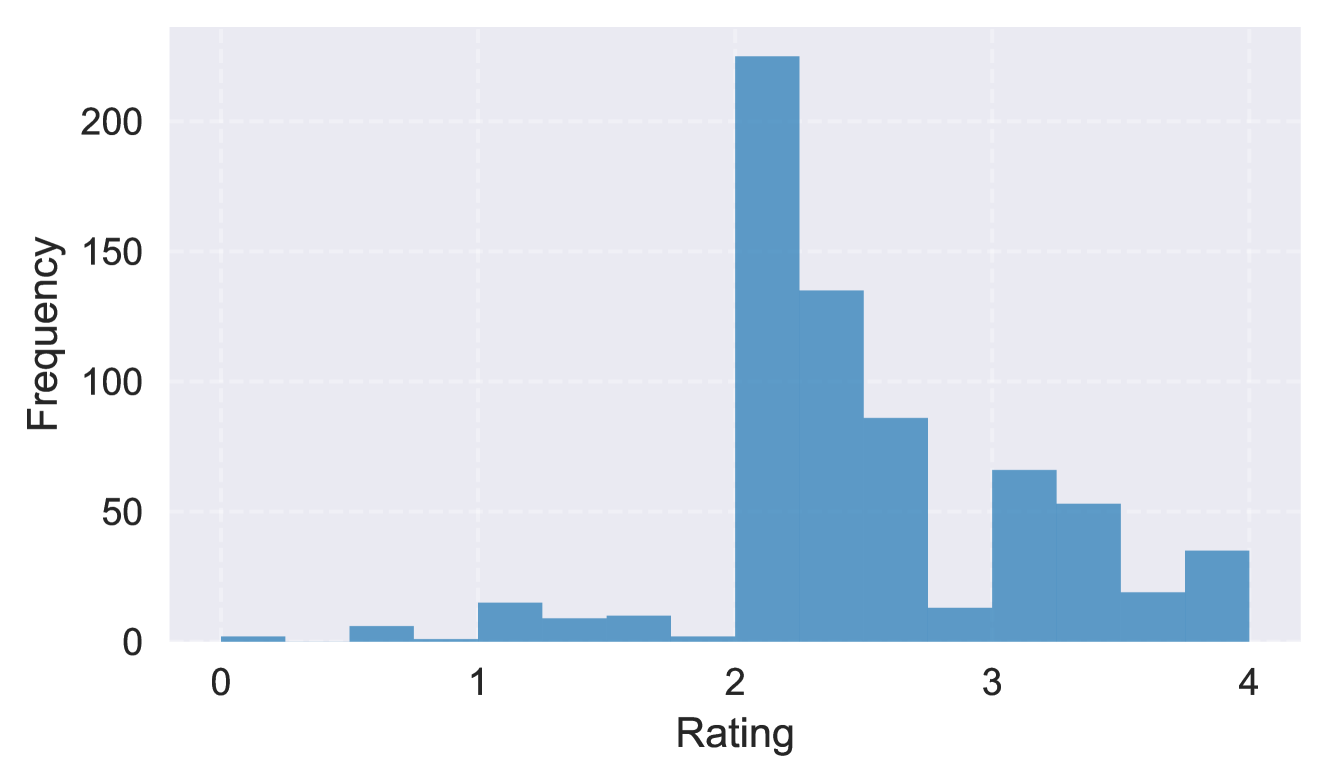
The image is a histogram displaying the frequency of ratings. The x-axis represents the rating values, ranging from 0 to 4, and the y-axis represents the frequency of each rating. The histogram shows the distribution of ratings, with a clear peak around the rating of 2.
### Components/Axes
* **X-axis:** Rating (values from 0 to 4, incrementing by 1)
* **Y-axis:** Frequency (values from 0 to 200+, incrementing by 50)
* **Bars:** Represent the frequency of each rating value. The bars are all the same shade of blue.
### Detailed Analysis
Here's a breakdown of the approximate frequency for each rating value:
* **Rating 0:** Frequency is approximately 2.
* **Rating 1:** Frequency is approximately 15.
* **Rating 1.5:** Frequency is approximately 10.
* **Rating 2:** Frequency is approximately 220.
* **Rating 2.5:** Frequency is approximately 140.
* **Rating 3:** Frequency is approximately 65.
* **Rating 3.5:** Frequency is approximately 50.
* **Rating 4:** Frequency is approximately 35.
### Key Observations
* The most frequent rating is 2, with a frequency of approximately 220.
* The frequency decreases as the rating moves away from 2 in either direction.
* The distribution is skewed to the right, indicating that lower ratings are less common than higher ratings.
### Interpretation
The histogram suggests that the majority of ratings are centered around the value of 2. This could indicate a general tendency towards moderate ratings, or it could reflect a specific characteristic of the data being analyzed. The skewness to the right suggests that there are fewer instances of very low ratings compared to higher ratings. This could be due to various factors, such as a selection bias in the data or an inherent tendency for people to rate things positively.