## Bar Chart: Hallucination Types vs. Association Levels
### Overview
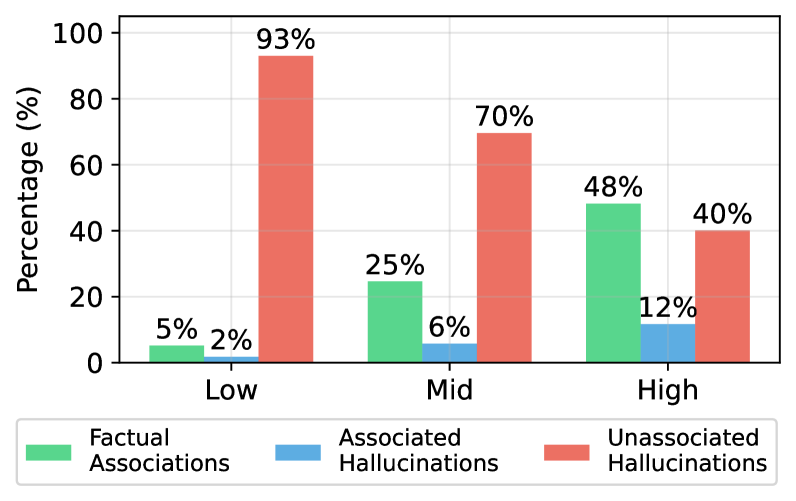
The image is a bar chart comparing the percentages of three types of associations (Factual Associations, Associated Hallucinations, and Unassociated Hallucinations) across three levels: Low, Mid, and High. The chart uses different colored bars to represent each association type.
### Components/Axes
* **Y-axis:** Percentage (%), with a scale from 0 to 100.
* **X-axis:** Categorical axis with three levels: Low, Mid, and High.
* **Legend:** Located at the bottom of the chart.
* Green: Factual Associations
* Blue: Associated Hallucinations
* Red: Unassociated Hallucinations
### Detailed Analysis
Here's a breakdown of the percentage values for each association type at each level:
* **Low:**
* Factual Associations (Green): 5%
* Associated Hallucinations (Blue): 2%
* Unassociated Hallucinations (Red): 93%
* **Mid:**
* Factual Associations (Green): 25%
* Associated Hallucinations (Blue): 6%
* Unassociated Hallucinations (Red): 70%
* **High:**
* Factual Associations (Green): 48%
* Associated Hallucinations (Blue): 12%
* Unassociated Hallucinations (Red): 40%
### Key Observations
* **Unassociated Hallucinations (Red):** The percentage of unassociated hallucinations decreases as the level increases (93% at Low, 70% at Mid, 40% at High).
* **Factual Associations (Green):** The percentage of factual associations increases as the level increases (5% at Low, 25% at Mid, 48% at High).
* **Associated Hallucinations (Blue):** The percentage of associated hallucinations remains relatively low across all levels (2% at Low, 6% at Mid, 12% at High).
### Interpretation
The data suggests an inverse relationship between the level and the occurrence of unassociated hallucinations. As the level increases, the percentage of unassociated hallucinations decreases, while the percentage of factual associations increases. This could indicate that higher levels are associated with more factual and less random or unassociated content. The relatively low percentage of associated hallucinations across all levels suggests that this type of hallucination is less prevalent compared to the other two categories.