## Photograph: Wooden Cabinet with Glass Display Sections
### Overview
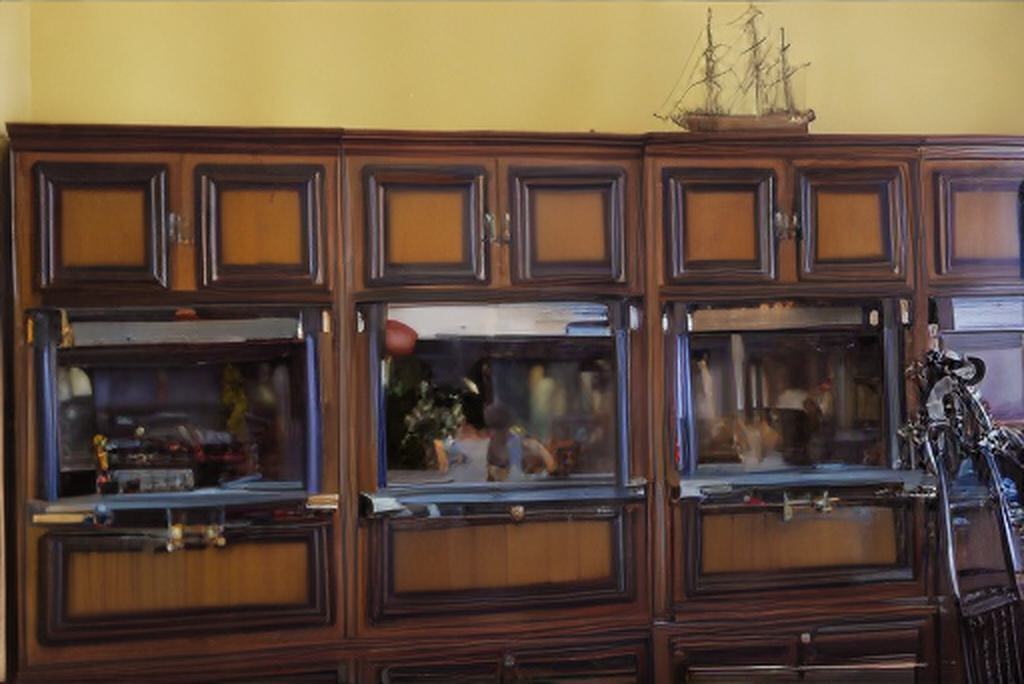
The image depicts a large, dark-stained wooden cabinet with multiple glass-fronted sections. Each section contains indistinct items, likely collectibles or decorative objects. A small model ship is placed atop the cabinet. The background wall is painted a warm yellow, and the cabinet occupies the majority of the frame.
### Components/Axes
- **Cabinet Structure**:
- Dark wood finish with recessed paneling.
- Glass-fronted compartments (at least three visible).
- Metal hinges and handles on lower sections.
- **Model Ship**:
- Positioned centrally on the cabinet’s top surface.
- Wooden construction with three masts and rigging.
- **Items in Display Sections**:
- Blurred contents visible through glass (no discernible labels or text).
- Objects include figurines, books, and possibly mechanical or glassware items.
### Detailed Analysis
- **Cabinet Design**:
- Uniform dark brown wood with lighter wood inlays.
- Glass panels are rectangular, framed by dark metal.
- Lower sections have horizontal drawers or doors with brass handles.
- **Model Ship**:
- Scale model, approximately 1:100 ratio.
- Rigging details suggest a historical sailing vessel (e.g., 18th/19th century).
- **Display Items**:
- No visible text, labels, or branding.
- Items appear curated, suggesting personal or thematic significance.
### Key Observations
1. **No Textual Elements**: The image contains no legible text, labels, or legends.
2. **Uniformity of Sections**: All glass-fronted compartments share identical design and spacing.
3. **Decorative Focus**: The cabinet and model ship emphasize aesthetic display over functional storage.
### Interpretation
The cabinet serves as a curated display unit, likely for personal or historical artifacts. The absence of text suggests the items are valued for their visual or sentimental appeal rather than informational content. The model ship atop the cabinet may indicate a nautical theme or personal interest in maritime history. The blurred contents of the glass sections imply the items are intentionally obscured, possibly to maintain privacy or focus attention on the cabinet’s craftsmanship.
No data trends, numerical values, or structured datasets are present. The image prioritizes visual composition over technical or analytical content.